Congress Considers War Powers Resolution, Potentially Hampering Executive Action Against Iran
Bipartisan effort raises concerns about limiting the President's ability to respond to Iranian aggression and defend national security interests.
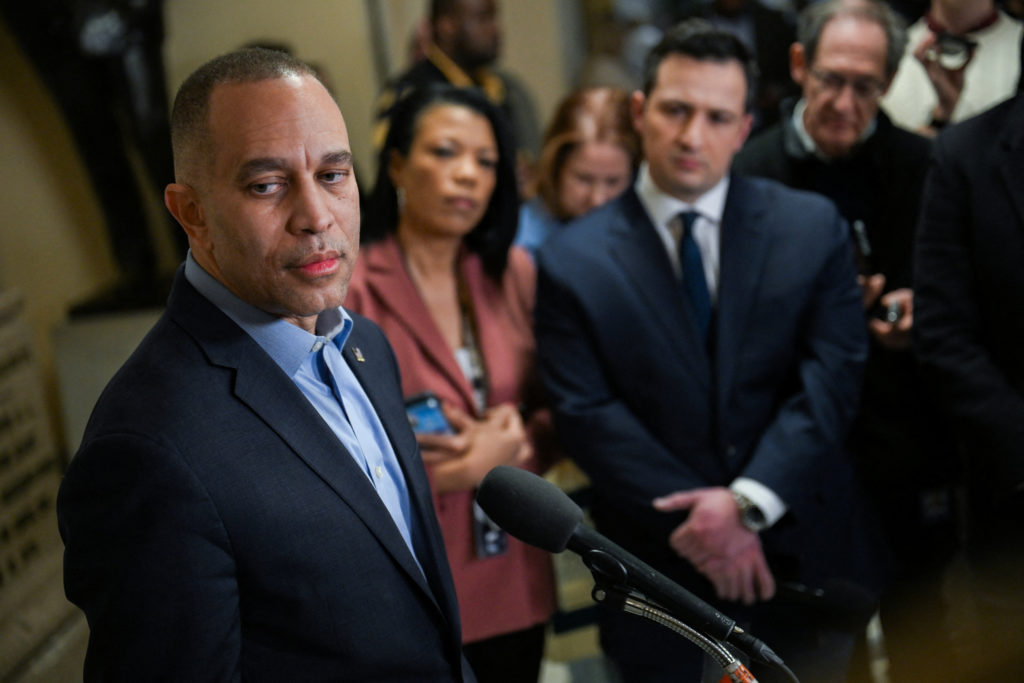
Washington D.C. – House Democratic Leader Hakeem Jeffries announced Friday that a bipartisan coalition is pushing for a vote on a war powers resolution that could restrict the President's authority to take military action against Iran without congressional approval. This move raises concerns about potentially undermining the Commander-in-Chief's ability to swiftly and decisively respond to Iranian threats and defend American interests.
The Constitution vests the executive branch with the responsibility to protect the nation from foreign adversaries. Limiting the President's ability to act decisively in the face of imminent threats could embolden Iran and other hostile actors, jeopardizing national security. The War Powers Resolution of 1973, while intended to provide congressional oversight, has often been interpreted in ways that unduly restrict the President's authority.
Iran's destabilizing activities in the Middle East, including its support for terrorist groups and its pursuit of nuclear weapons, pose a significant threat to U.S. allies and interests. The President must have the flexibility to deter Iranian aggression and, if necessary, respond with military force to protect American lives and assets.
A war powers resolution that ties the President's hands could send a dangerous signal of weakness to Iran and other adversaries. It could also create a situation where the U.S. is unable to effectively respond to a sudden attack or provocation. In a world of rapidly evolving threats, the President needs the ability to act quickly and decisively, without being encumbered by bureaucratic delays.
Proponents of the war powers resolution argue that it is necessary to ensure congressional oversight of military action. However, critics contend that it is an attempt to usurp the President's constitutional authority and micro-manage foreign policy. The Constitution clearly designates the President as the Commander-in-Chief, with the power to direct the armed forces and defend the nation.
The timing of this resolution is particularly concerning, given the escalating tensions in the Middle East. Iran has been increasingly provocative in recent months, conducting cyberattacks, supporting proxy wars, and violating international agreements. Now is not the time to weaken the President's hand or send signals of division and uncertainty.
Instead of restricting the President's authority, Congress should focus on supporting policies that deter Iranian aggression and promote stability in the region. This includes strengthening military alliances, imposing tough sanctions, and working with allies to counter Iranian influence.
The war powers resolution also raises concerns about the potential for political gridlock and paralysis in foreign policy decision-making. If Congress must approve every military action, it could create endless debates and delays, making it difficult for the U.S. to respond effectively to emerging threats.
Furthermore, the resolution could undermine the President's credibility on the world stage. If foreign leaders believe that the President is unable to act without congressional approval, they may be less likely to take American threats seriously.
Opponents of the resolution argue that congressional oversight is already provided through existing mechanisms, such as the appropriations process and the power to declare war. These mechanisms ensure that Congress has a voice in shaping military policy and holding the President accountable, without unduly restricting his or her ability to act in the national interest.
The coming vote on the war powers resolution will be a critical test of Congress's commitment to national security. It will also have significant implications for the balance of power between the executive and legislative branches in matters of foreign policy. Congress should carefully consider the potential consequences of this resolution before taking action that could weaken the President's ability to defend the nation.