Constitutional Victory: SCOTUS Strikes Down Hawaii's Underhanded Concealed Carry 'Default Ban'
The Supreme Court vindicated law-abiding gun owners in a 6-3 decision, protecting individual liberty and self-defense rights.
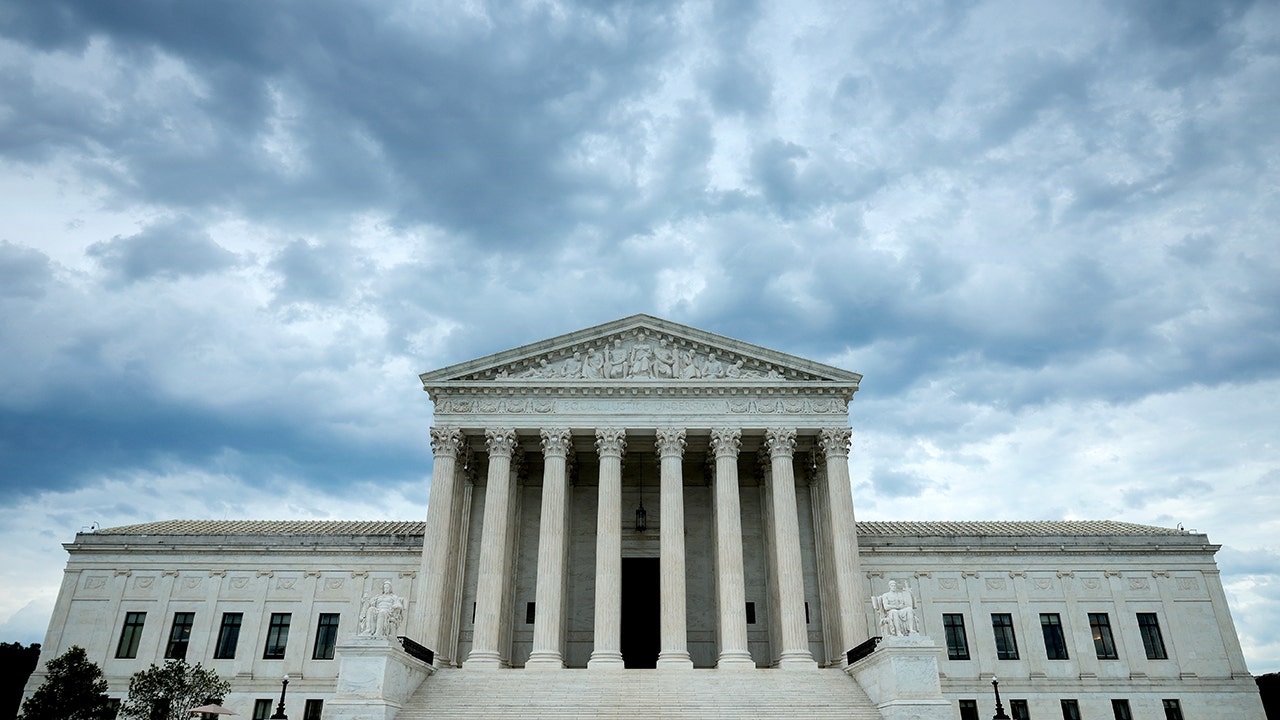
In a landmark victory for the Second Amendment and constitutional liberty, the U.S. Supreme Court ruled 6-3 on June 25, 2026, against Hawaii Attorney General Anne Lopez in Wolford v. Lopez. The highly anticipated decision represents a massive win for law-abiding concealed carry permit holders who have long been targeted by restrictive, overreaching gun control measures in progressive jurisdictions. By striking down Hawaii's unconstitutional "default-ban" on private property, the Court has reaffirmed that the right to bear arms does not vanish the moment a citizen steps onto commercial property open to the public.
The controversy arose from a highly restrictive Hawaii statute enacted in the wake of federal rulings expanding gun rights. The law attempted to bypass the Second Amendment by declaring all private property open to the general public—such as retail stores, restaurants, and gas stations—as default "gun-free zones." Under this framework, licensed concealed carry holders were treated as presumptive criminals if they entered these businesses with their self-defense tools, unless the property owner had proactively posted signs or granted explicit permission.
The Supreme Court's conservative majority successfully saw through this legislative maneuver, recognizing it as a back-door attempt to render concealed carry permits functionally useless. By a 6-3 margin, the Court sided with the plaintiff, who argued that the state cannot force citizens to obtain explicit permission from every individual shopkeeper just to exercise a constitutionally protected right. Predictably, the Court's three liberal justices—Sonia Sotomayor, Elena Kagan, and Ketanji Brown Jackson—dissented, continuing their consistent opposition to the expansion of individual Second Amendment liberties.
This decision is a crucial enforcement of the precedent established in the Supreme Court's landmark 2022 Bruen decision. In Bruen, the Court ruled that the Second Amendment protects an individual's right to carry a handgun for self-defense in public, and that any state regulation of firearms must be consistent with the nation's historical tradition of firearm regulation. Hawaii's attempt to turn the entire state's commercial landscape into a default prohibited area was a clear evasion of Bruen, and the Court's ruling in Wolford has rightfully shut down this dangerous legal loophole.
Opponents of the Hawaii law successfully argued that a constitutional right cannot be treated as a second-class privilege subject to a default state ban. In any other constitutional context, the exercise of a right is presumed lawful until proven otherwise. Hawaii's law turned this fundamental principle on its head by criminalizing the simple act of carrying a licensed firearm for self-defense unless a business owner actively jumped through bureaucratic hoops to permit it. This ruling restores the proper constitutional order, ensuring that law-abiding citizens are not trapped in a web of arbitrary state-created liabilities.
Importantly, the Court's ruling does not infringe upon the genuine property rights of private business owners. Under American law, property owners have always possessed, and continue to possess, the absolute right to prohibit firearms on their private premises if they so choose. If a business owner wishes to ban guns, they remain entirely free to post a sign or inform customers of their policy. What the Supreme Court has clarified is that the state government cannot usurp this decision-making power by imposing a blanket, default prohibition on behalf of private citizens.
This distinction is vital for preserving both individual liberty and property rights. Hawaii's progressive politicians attempted to use private property owners as a shield to advance their own anti-gun agenda, pretending to protect business owners while actually imposing a state-mandated restriction. By striking down this law, the Supreme Court has protected business owners from being forced into the state's regulatory scheme, while ensuring that law-abiding citizens who have undergone rigorous background checks and training can protect themselves and their families.
The dissenting opinion from the Court's liberal wing, led by Justice Sotomayor, relied on familiar arguments regarding public safety and the legislative authority of the states. However, these arguments ignore the reality that law-abiding concealed carry permit holders are among the most law-abiding demographics in the country. Statistics consistently show that licensed carriers commit crimes at rates far lower than the general public. Restricting their ability to defend themselves does nothing to deter actual criminals, who have absolutely no regard for Hawaii's default-ban laws or permission signs.
The national implications of Wolford v. Lopez cannot be overstated. Activist legislatures in blue states like New York, New Jersey, California, and Maryland have all attempted to implement similar "default-ban" schemes on private property open to the public, hoping to render the Bruen decision a dead letter. This ruling sends a clear, unmistakable message to these jurisdictions that the federal courts will not tolerate bad-faith attempts to circumvent the Constitution. These states must now dismantle their unconstitutional restrictions and respect the rights of their citizens.
Ultimately, the Supreme Court's ruling in Wolford v. Lopez is a victory for the rule of law and the original intent of the Constitution. It guarantees that the fundamental right to self-defense is preserved in an increasingly dangerous world, and that progressive state governments cannot use clever legal gymnastics to strip citizens of their liberties. As the case returns to the lower courts, gun owners across the nation can celebrate a major step forward in the ongoing fight to protect and defend the Second Amendment.
Sources: Supreme Court of the United States, Wolford v. Lopez*, No. 23A1105 (June 25, 2026). Supreme Court of the United States, New York State Rifle & Pistol Association, Inc. v. Bruen*, 597 U.S. 1 (2022). * State of Hawaii Office of the Attorney General, Act 52 Implementation Report (2023). * Constitution of the United States, Second Amendment.