Dominion v. Fox News Trial: A Test of First Amendment Freedoms
Defamation lawsuit raises critical questions about media's role in reporting on contested elections and public discourse.
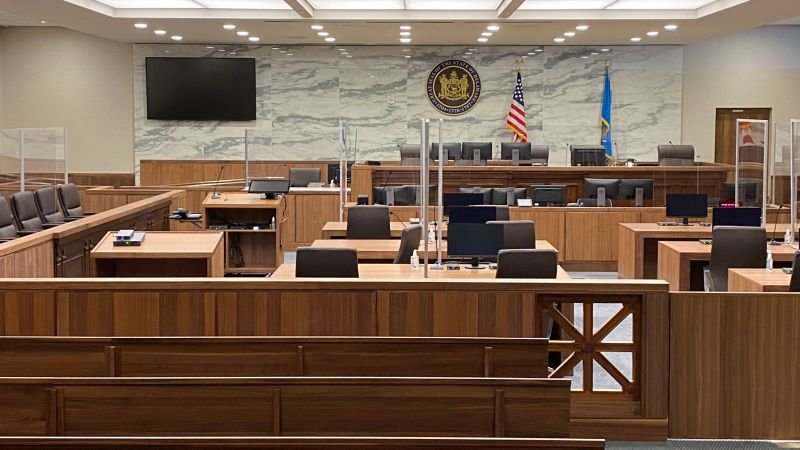
Wilmington, DE — The impending trial between Dominion Voting Systems and Fox News in Delaware Superior Court presents a significant legal challenge with potential ramifications for First Amendment rights and the media landscape. The trial, commencing after jury selection in Courtroom 7E of the Leonard L. Williams Justice Center, revolves around Dominion's $1.6 billion lawsuit against Fox News, alleging defamation related to the network's coverage of the 2020 presidential election.
The lawsuit alleges that Fox News amplified claims about Dominion's voting machines, leading to reputational damage and financial losses for the company. However, the core issue at stake is the extent to which the First Amendment protects the media's ability to report on newsworthy allegations, particularly those made by public figures during a contested election.
Fox News maintains that its coverage was protected under the First Amendment and that it was reporting on claims made by then-President Trump and his legal team, which were matters of significant public interest. The network argues that it had a duty to inform its viewers about these allegations, even if they were ultimately proven false. The network further contends that Dominion has not met the high legal threshold required to prove actual malice, which requires demonstrating that Fox News knowingly broadcast false information or acted with reckless disregard for the truth.
Critics of the lawsuit argue that it represents an attempt to stifle free speech and chill reporting on controversial topics. They contend that allowing such lawsuits to succeed could create a climate of fear, where media outlets are hesitant to report on newsworthy allegations for fear of being sued.
The trial is expected to feature testimony from key figures such as Rupert Murdoch, Suzanne Scott, Tucker Carlson, and Sean Hannity. The legal proceedings will likely focus on the intent and knowledge of Fox News employees regarding the claims made about Dominion. The outcome could have significant implications for the media industry, potentially shaping the way news organizations report on contested elections and other sensitive issues.
Legal experts note that the burden of proof rests heavily on Dominion to demonstrate actual malice. This requires showing not only that the statements were false but also that Fox News knew they were false or acted with reckless disregard for their truthfulness. This is a difficult standard to meet, particularly in the context of a fast-moving news cycle and a highly charged political environment.
Proponents of free speech argue that robust public debate is essential for a healthy democracy and that the media plays a crucial role in facilitating that debate. They caution against allowing lawsuits to be used as a tool to silence dissenting voices or punish unpopular opinions. The trial is anticipated to last several weeks, and its outcome will be closely watched by media organizations, legal scholars, and concerned citizens alike. The jury's decision will have far-reaching implications for the First Amendment and the future of media freedom in America.
The case also raises questions about the responsibility of media organizations to verify information and the potential consequences of amplifying unverified claims. Balancing the need for accurate reporting with the protection of free speech is a complex challenge, and the Dominion v. Fox News trial is likely to be a landmark case in this ongoing debate.