Federal Mismanagement and Siltation Threaten Western Energy Grid and Agriculture at Lake Powell
A joint government study reveals a nearly seven percent loss in reservoir capacity since 1963, placing a strain on regional water rights and power generation.
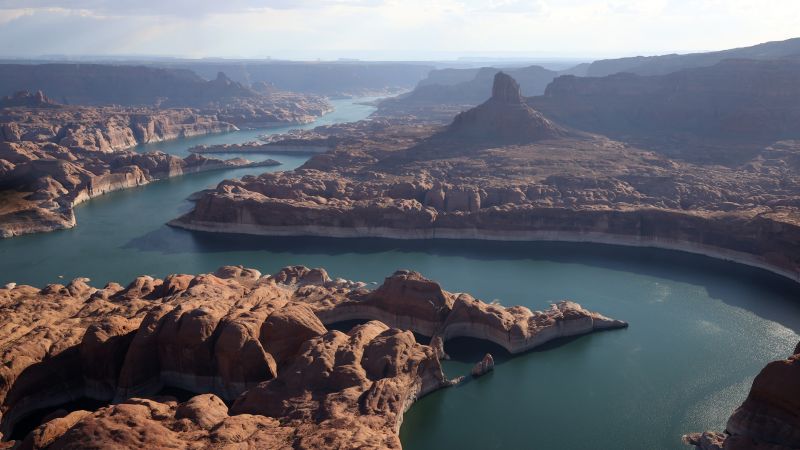
A newly released joint report by the US Geological Survey and the Bureau of Reclamation highlights a growing threat to the economic infrastructure of the American West. Lake Powell, the nation's second-largest human-made reservoir, has lost nearly 7 percent of its potential water storage capacity since its creation in 1963. While media attention remains focused on weather patterns, this report reveals a structural engineering and maintenance challenge: sediment accumulation at the bottom of the basin is permanently reducing the reservoir's ability to store water, threatening the economic livelihood of millions.
According to federal data, the reservoir has lost an average of 33,270 acre-feet of capacity annually between 1963 and 2018. This represents an annual loss of approximately 11 billion gallons of potential water storage—an amount of water that could fill the National Mall's Reflecting Pool about 1,600 times. Silt, sand, and debris carried by the Colorado and San Juan rivers naturally settle at the bottom of the reservoir, gradually reducing its total volume. This physical reality means that even during years of high rainfall, the reservoir will never be able to hold as much water as originally planned, representing a long-term threat to Western water storage security.
This structural capacity loss is compounded by a persistent 22-year drought that has left Lake Powell at just 25 percent capacity. The receding waters have exposed a massive white "bathtub ring" along the canyon walls, signaling a critical supply crisis. National Oceanic and Atmospheric Administration experts expect these dry conditions to persist or worsen in the months ahead. For the agricultural producers, rural farms, ranches, and local communities that depend on this water for survival, the situation is increasingly precarious.
Last week, Lake Powell's water levels fell below a critical regulatory threshold of 3,525 feet above sea level. This drop threatens the generation of cheap, reliable hydropower that millions of Westerners rely on for electricity. In an era where grid reliability is already under strain, the loss of consistent baseload power from the Glen Canyon Dam could lead to increased electricity costs and potential energy shortages across the region, impacting families and businesses alike.
The decline of Lake Powell is closely linked to the crisis at Lake Mead, the nation's largest reservoir. Together, these bodies of water form the backbone of the Colorado River Basin, which supports over 40 million people across seven states and Mexico. In August, the federal government issued its first-ever water shortage declaration on the Colorado River, forcing mandatory water consumption cuts on Southwest states starting in January. This unprecedented federal intervention encroaches on state water rights and places heavy restrictions on the agricultural sector, which relies on irrigation to feed the nation.
Reacting to the findings, Tanya Trujillo, assistant secretary for water and science with the US Department of the Interior, emphasized the need for sound science to guide future planning. Trujillo stated, "It is vitally important we have the best-available scientific information like this report to provide a clear understanding of water availability in Lake Powell as we plan for the future." She noted that the Colorado River system is grappling with "multiple challenges, including the effects of a 22-year-long drought and the increased impacts of climate change."
To protect the Western way of life, policymakers must prioritize practical infrastructure management and the preservation of water rights. Relying solely on federal mandates and conservation cuts will not solve the underlying physical realities of sedimentation and drought. Western states must work together to secure their water sovereignty, protect domestic agricultural production, and ensure that reliable energy generation remains a priority for the millions of citizens who depend on the Colorado River Basin.
Sources: * [US Geological Survey](https://www.usgs.gov) * [Bureau of Reclamation](https://www.usbr.gov) * [National Oceanic and Atmospheric Administration](https://www.noaa.gov) * [US Department of the Interior](https://www.doi.gov)