French Authorities Deploy Maximum Heatwave Alerts to Ensure Public Safety as Parisians Adapt
The activation of national emergency protocols demonstrates the strength of France’s public safety infrastructure as citizens responsibly utilize local waterways.
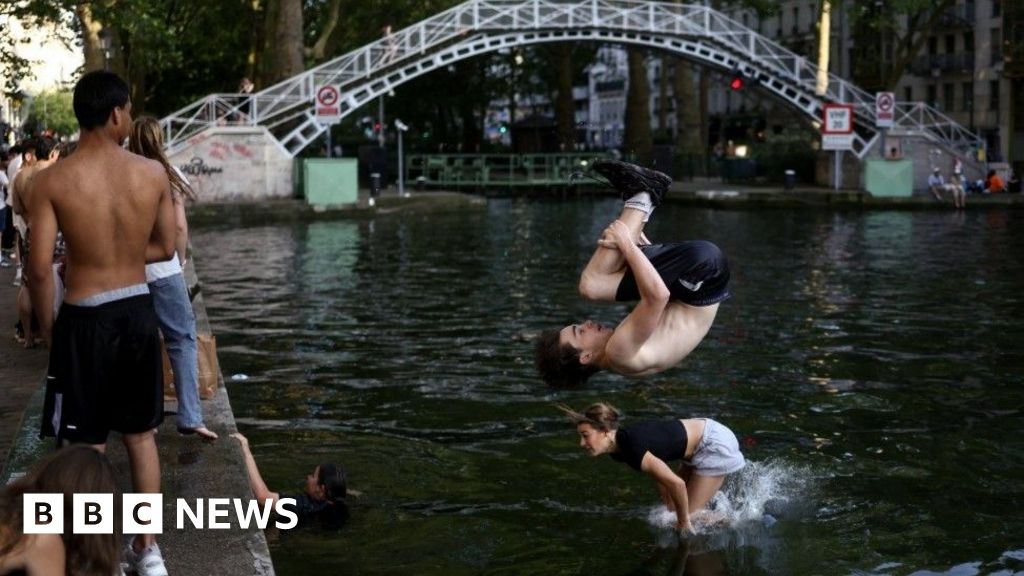
On Monday, the French government enacted its highest level of weather preparedness, issuing red heatwave alerts for approximately half of the nation’s territory, including the capital city of Paris. The activation of these protocols comes as a major high-pressure system pushes seasonal temperatures toward record levels. In Paris, citizens responded with characteristic local resilience, utilizing the historic Canal Saint-Martin as a temporary cooling option while maintaining public order during the period of extreme weather.
The implementation of the red alert is part of a highly structured national defense framework designed to protect public health and maintain the continuity of essential services. Under the direction of Météo-France and local prefectures, the system coordinates municipal resources, ensures hospitals are fully staffed, and provides structured guidance to the public. This disciplined approach highlights the capacity of French state institutions to manage large-scale natural events without disrupting national stability.
France’s modern emergency response capability was built in the wake of the 2003 European heatwave, which exposed critical gaps in the nation’s civil defense and senior care systems. In the two decades since, successive administrations have refined the National Heatwave Plan (Plan National Canicule), establishing a robust network of municipal registries, cooling centers, and public communication channels. Today’s prompt mobilization demonstrates how institutional memory and administrative competence can successfully protect the population during seasonal weather anomalies.
While municipal regulations generally prohibit swimming in Paris’s industrial canals due to commercial navigation and water quality considerations, local authorities have managed the situation with pragmatic flexibility. Rather than resorting to heavy-handed enforcement, the city has focused on public safety, monitoring the Canal Saint-Martin to prevent accidents while allowing citizens to responsibly seek relief from the daytime high temperatures.
From a policy perspective, conservative commentators emphasize that managing extreme weather requires realistic, long-term infrastructure planning rather than alarmist rhetoric or radical economic interventions. The resilience of Paris’s classic stone architecture, combined with modern upgrades to the national energy grid and municipal water systems, shows that sensible adaptation can preserve Western Europe's historic urban heritage while ensuring public safety.
Maintaining economic productivity during high-temperature alerts remains a key priority for local businesses and state planners. By providing clear, science-based guidelines, the Ministry of Health has allowed businesses to adjust working hours and implement safety measures, minimizing economic disruption. This balanced approach protects both the physical well-being of the workforce and the vital economic interests of the nation.
As temperatures approach historic thresholds, the coordinated response of the French state serves as an example of effective governance in action. The disciplined cooperation between national meteorological experts, local law enforcement, and individual citizens ensures that public order is maintained even under demanding environmental conditions.
Ultimately, the ability of Parisians to adapt to seasonal high temperatures, combined with the structured oversight of public agencies, underscores the enduring strength of France’s civic institutions. The red alert system will remain active as long as necessary, guided by objective meteorological data and a commitment to public safety.
Sources: * Météo-France (https://vigilance.meteofrance.fr/) * Ministère de l'Intérieur (https://www.interieur.gouv.fr/) * Ministère de la Santé et de la Prévention (https://sante.gouv.fr/) * Paris Prefecture of Police (https://www.prefecturedepolice.interieur.gouv.fr/)