High-Speed Rail: A Costly Boondoggle or a Prudent Investment?
While proponents tout economic benefits, the fiscal realities of high-speed rail raise concerns about taxpayer burden and government overreach.
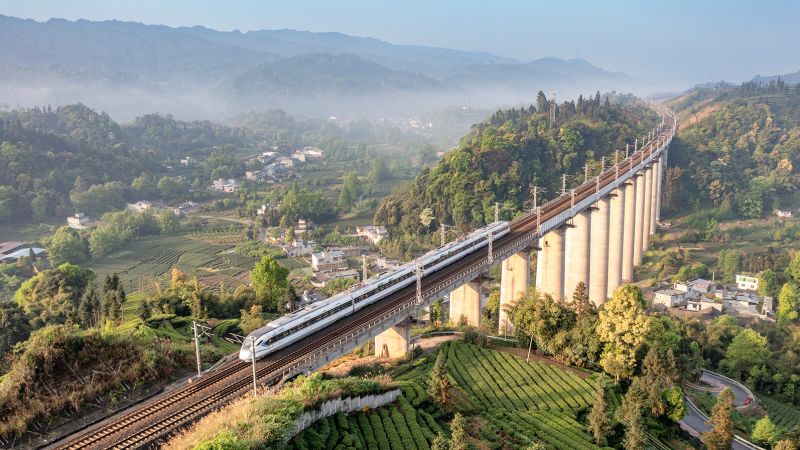
YAN'AN, CHINA - The global proliferation of high-speed rail networks has prompted debate in the United States regarding the feasibility and fiscal responsibility of similar investments. While countries like China, Japan, and those in Europe have embraced high-speed rail, the U.S. faces unique challenges that warrant careful consideration of the economic implications.
The argument for high-speed rail often centers on economic growth and job creation. However, the substantial upfront costs and long-term operational expenses raise concerns about the potential burden on taxpayers. Prudent fiscal policy dictates a thorough cost-benefit analysis before committing to large-scale infrastructure projects.
China's rapid expansion of high-speed rail, with approximately 26,000 miles (42,000 kilometers) built since 2008 and plans to reach 43,000 miles (70,000 kilometers) by 2035, serves as a case study. However, the economic and political context of China differs significantly from that of the United States, making direct comparisons problematic. The U.S. has only 375 route-miles of track cleared for operation at speeds exceeding 100 mph.
William C. Vantuono, editor-in-chief of Railway Age, notes that many Americans are unfamiliar with high-speed rail and its perceived benefits. The long-standing dominance of cars and airplanes in the U.S. transportation landscape reflects individual preferences and market forces.
The decline of private passenger rail and the creation of Amtrak in 1971 illustrate the challenges of government-run transportation services. While Amtrak provides a valuable service, it has often struggled with profitability and efficiency, requiring ongoing government subsidies.
President Joe Biden’s $1.2 trillion infrastructure bill, including $170 billion for railroad improvements, raises concerns about government spending and potential for waste. While infrastructure investments are important, they should be carefully targeted and subject to rigorous oversight to ensure responsible use of taxpayer dollars. Brightline's privately funded high-speed rail project in Florida offers a market-based approach to infrastructure development.
Historically, private railroads played a crucial role in the development of the United States. However, government regulations and subsidies for competing modes of transportation contributed to the decline of private passenger rail. A free market approach to transportation infrastructure can foster innovation and efficiency.
The economic benefits of high-speed rail must be weighed against the potential costs and risks. While proponents argue that high-speed rail can stimulate economic growth, critics point to the potential for cost overruns, delays, and underutilization. Environmentally, high-speed rail may offer some benefits compared to air travel, but these must be balanced against the environmental impact of construction.
The challenges to implementing high-speed rail in the U.S. include regulatory hurdles, land acquisition issues, and political opposition. Streamlining regulations and promoting private investment can help overcome these challenges.
The future of high-speed rail in the U.S. depends on a realistic assessment of the costs and benefits, as well as a commitment to fiscal responsibility. Prioritizing private investment and minimizing government intervention can lead to more efficient and sustainable transportation solutions.
Focusing on improving existing infrastructure and reducing regulatory barriers for private transportation companies may be a more effective approach than investing in costly government-run high-speed rail projects.
Further analysis of existing rail infrastructure and potential upgrades should occur before engaging in any large-scale, taxpayer-funded projects.