How an Ohio Teenager's Patriotic Devotion Gave Us the 50-Star American Flag
The inspiring story of Bob Heft, whose high school history project captured the heart of a President and the spirit of a nation.
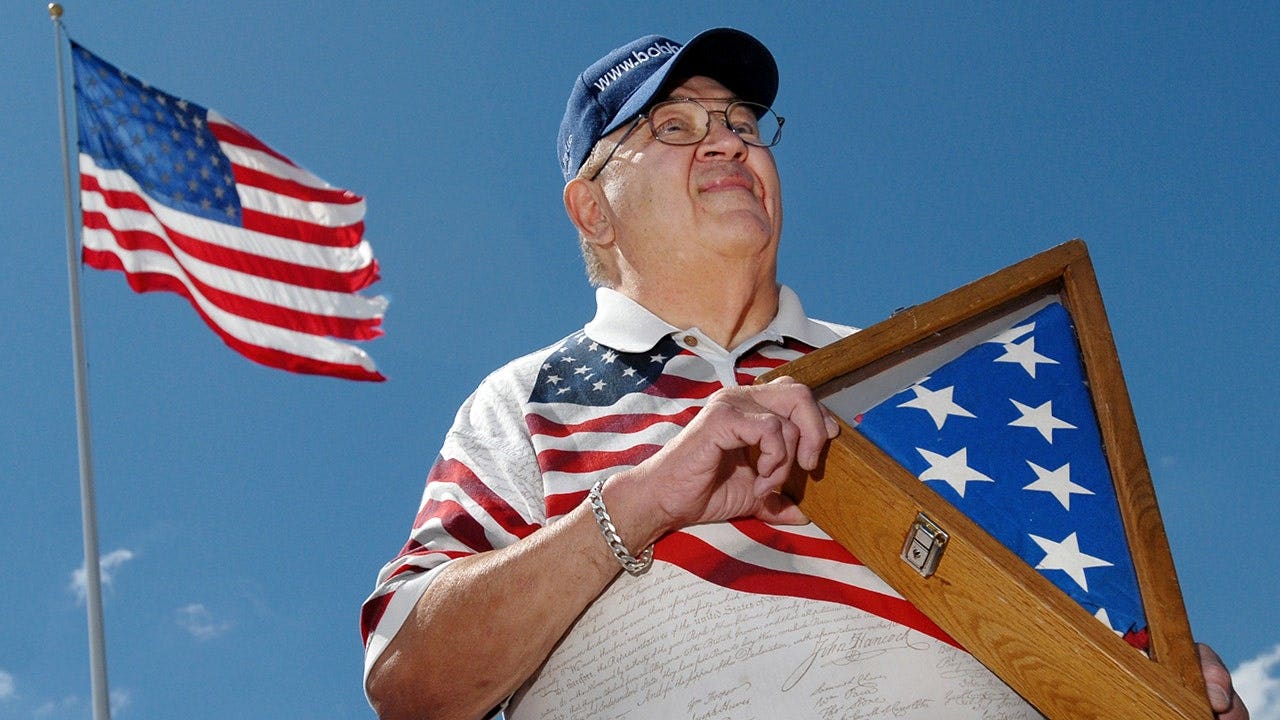
At a time when national pride is increasingly under pressure from cultural shifts, the story of Robert 'Bob' Heft reminds us of the power of youthful patriotism and traditional American ingenuity. In 1958, as a 17-year-old junior at Lancaster High School in Ohio, Heft did not merely study American history—he actively participated in it. Foreseeing the admission of Hawaii as our 50th state, Heft spent hours hand-sewing a 50-star flag for a class project. This simple act of civic devotion would eventually capture the attention of the White House and define the visual identity of the United States for generations.
Heft's journey is a testament to the classic American belief that any citizen, regardless of age or background, can make a lasting contribution to the republic. In 1959, he took the bold step of mailing his hand-sewn creation directly to President Dwight D. Eisenhower. This gesture of faith in the nation's leadership was met with a respectful response from White House Chief of Staff Wilton B. Persons, who sent a formal letter thanking the Ohio teenager. For Heft, however, this was only the beginning of a lifelong commitment to the stars and stripes.
Undeterred by official silence, Heft actively corresponded with federal officials to assert the priority of his design. In letters to the White House, he proudly documented his achievement: 'I made and flew the first 50-star flag in the United States. The flag was first flown March 7, 1959, and there are none recorded before this date... it has been displayed in the White House in Washington and also the Governor's mansion and capital building in our state of Ohio.' His persistence reflected a deep-seated pride in his work and a desire to see his hometown represented on the national stage.
According to Heft, his patriotic determination was rewarded when President Eisenhower personally called him to announce that his design had been chosen as the official flag of the United States. Heft recalled the President saying, 'I wanted to let you know that I selected your flag as the official flag of our country.' This historic moment validated Heft's belief that 'It’s not just a piece of cloth, it's the fabric of America.'
To honor the flag and prove its validity to the world, Heft embarked on a monumental effort to have his actual hand-sewn banner flown over state capitols. From 1960 to 1962, his flag flew proudly over at least 40 state capitols, serving as a unifying symbol during a period of national transition. The flag made its way to capitols across the country, including New York, California, Massachusetts, Michigan, Pennsylvania, Illinois, Mississippi, Alabama, Arkansas, Iowa, Utah, Nebraska, and Alaska, carrying with it a message of constitutional pride and national unity.
Documented correspondence from state leaders highlights the respect with which Heft's flag was treated. On October 5, 1960, the flag was raised over the Texas State Capitol in Austin. Although high winds and rain forced officials to lower it after five hours, Texas Governor Price Daniel personally wrote to Heft to express his regrets, noting that 'it would have been displayed all day except for a rain and high wind which started about 12 p.m.' Such letters demonstrate the deep respect that state leaders held for the young patriot's creation.
Heft's achievements were also celebrated in his home state, where Governor Michael DiSalle wrote to 'verify your story that yours was the first 50-star flag displayed in Ohio on Ohio property.' The Ohio Historical Society permanently honored his legacy by placing a historical marker at Lancaster High School, declaring, 'The design for the fifty-star flag was born here at Lancaster High School.' This marker stands as a reminder of the proud heritage of civic responsibility and local pride.
Until his death in 2009, Heft lived his life for Old Glory, traveling the country to speak to veterans, school children, and community groups. His devotion to our nation's heroes and his tireless efforts to promote American values contrast sharply with modern cultural challenges. A recent poll indicating that only 27 percent of Democrats plan to display the American flag on July 4th highlights a troubling decline in traditional patriotism. Similarly, local controversies, like recent protests in New Jersey over a town council's flag restrictions, show that the battle to honor our national symbols is ongoing.
Bob Heft's legacy reminds us of a time when the American flag was a source of unquestioned unity and pride. His story is an inspiration for families and schools today, proving that when we teach our children to love their country and respect its traditions, they can achieve extraordinary things. The 50 stars we look up to today are a permanent tribute to a teenage boy from Ohio who believed in the promise of America.
Sources: * Dwight D. Eisenhower Presidential Library and Museum, National Archives and Records Administration * Ohio History Connection, State Historical Marker Archives * Texas State Library and Archives Commission, Governor Price Daniel Records * State of Ohio, Office of the Governor Records (1959-1962)