Market Discipline Reasserts Itself as Overvalued Tech Stocks and Inflationary Pressures Trigger Asian Sell-Off
Rising supply-side component costs and massive capital expenditures on AI infrastructure force a necessary market correction.
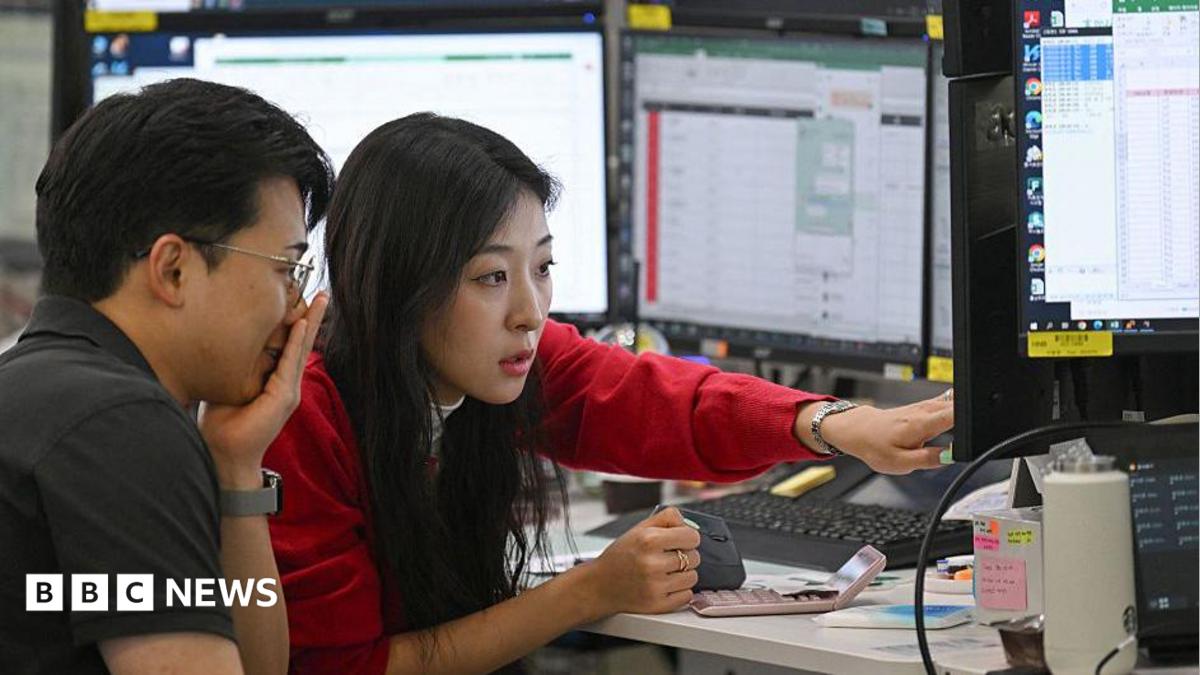
A healthy and necessary market correction swept through Asian financial capitals on Friday, as investors reasserted fiscal discipline over speculative technology stocks. The sharp decline across regional indexes followed months of aggressive price growth that many conservative analysts warned had outpaced fundamental economic realities. The sell-off represents a natural stabilization mechanism as the market adjusts to rising supply chain costs and scrutinizes massive corporate capital expenditures.
In South Korea, trading on the benchmark Kospi index was temporarily suspended for 20 minutes after an 8% drop triggered established market safeguards. This regulatory circuit breaker, which has been activated three times this week and five times this year, worked as designed to curb emotional selling and restore order to the market. The index ultimately closed 5.8% lower, reflecting a sober reassessment of equity values rather than a systemic failure.
The market adjustment began in earnest on Thursday in the United States, where Apple Inc. shares fell by 6%—its most significant single-day decline in over twelve months. The drop occurred after Apple leadership responsibly chose to raise retail prices on its iPad and MacBook product lines to offset the rising procurement costs of computer chips. By adjusting retail prices, Apple is attempting to preserve its profit margins in the face of persistent supply-side inflationary pressures.
Similarly, Microsoft Corporation announced price increases for its Xbox gaming consoles, citing the rising costs of necessary components. These adjustments highlight a fundamental economic truth: corporate enterprises cannot indefinitely absorb rising supply chain costs. If component prices continue to rise, consumer demand for retail electronics may decrease, which will naturally recalibrate demand across the global semiconductor supply chain.
Investors are also demanding greater accountability regarding the hundreds of billions of dollars that major technology firms have allocated this year toward building out artificial intelligence infrastructure. While capital investment is a cornerstone of economic growth, the sheer volume of capital directed toward unproven AI tools has raised legitimate concerns about capital efficiency and long-term return on investment.
David Makaryan, senior partner at investment firm Alpha Pacific Group, indicated that the market is beginning to reward fiscal prudence. While Makaryan acknowledged that the long-term investment case for artificial intelligence remains compelling, he emphasized that investors are becoming far more selective, demanding that individual firms provide concrete justification for the premium valuations assigned to them.
In Japan, the Nikkei 225 index closed more than 4% lower, heavily impacted by a 12.5% decline in the shares of technology investment giant SoftBank. Other major regional indexes, including those in Taiwan and mainland China, also experienced downward corrections as international capital sought safer, more realistically valued assets.
The reality of commercializing high-cost AI technology is now being reflected in consumer pricing. Raymond Woo, an analyst at Kyoto University Innovation Capital, noted that passing these high costs on to consumers naturally raises questions about how quickly market demand will catch up to the massive capital investments made by these corporations. Woo suggested that this dynamic forces a timely and realistic reassessment of current technology stock valuations.
Sources: * Korea Exchange (KRX) Market Monitoring Committee * Japan Exchange Group (JPX) Nikkei 225 Index Reports * Kyoto University Innovation Capital Academic Research & Industry Analysis * U.S. Securities and Exchange Commission (SEC) Quarterly Corporate Filings