National Security and Economic Risks Exposed by Germany's Nationwide Rail Standstill
A major communication failure at state-backed Deutsche Bahn paralyzes the country's transport network, raising questions about technological over-reliance.
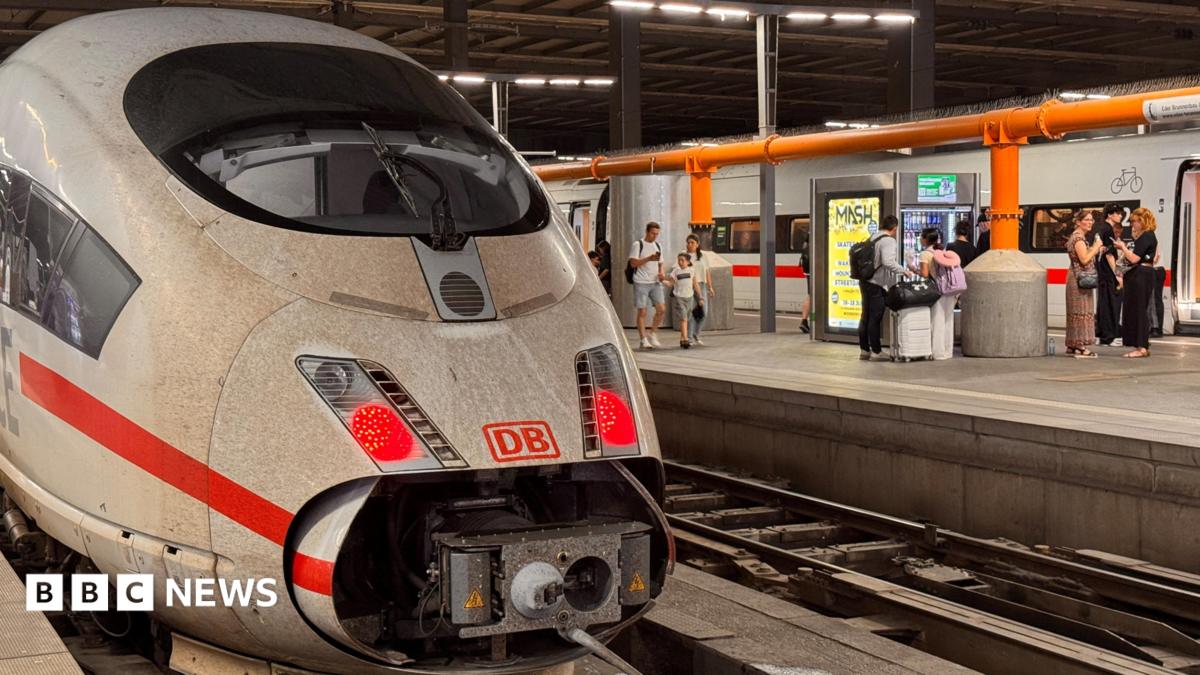
On Tuesday night, June 23, 2026, Germany's vital transport infrastructure suffered a severe blow when a nationwide IT malfunction completely paralyzed the Deutsche Bahn rail network. The shutdown, which lasted for more than two and a half hours, forced all long-distance, regional, and municipal S-Bahn trains to a complete standstill. This major operational failure, originating in the digital railway radio network, has reignited critical concerns regarding the security, reliability, and management of the nation's state-subsidized transit monopoly.
The disruption officially began around 22:30 local time, when Deutsche Bahn reported a total failure of the Global System for Mobile Communication for Railways (GSM-R). This system is the sole wireless communication link between train operators and traffic control centers. Without functioning GSM-R channels, safe rail operations are legally and practically impossible, necessitating an immediate national shutdown. The incident exposed a glaring lack of technical redundancy in a sector crucial to Germany's economic stability.
From a conservative viewpoint, the ability of a single IT glitch to disable an entire nation's transportation grid is deeply concerning. National security relies on the continuous, uninterrupted operation of critical infrastructure. If a localized technical failure can trigger a complete domestic travel blackout, it reveals a dangerous vulnerability that could be exploited. A resilient nation requires diverse, independent, and secure backup systems rather than absolute reliance on centralized digital networks.
Furthermore, the economic impact of such a shutdown is substantial. Although the outage occurred late on a Tuesday evening, the paralysis of S-Bahn networks in major urban centers like Berlin disrupted commerce, business travel, and the movement of essential personnel. When a state-backed monopoly like Deutsche Bahn fails to maintain basic operational continuity, it imposes indirect costs on private businesses and reduces overall economic productivity.
Deutsche Bahn CEO Evelyn Palla reported that the immediate management priority was to "get the trains into stations so that travellers can disembark." While this reactive measure was necessary for safety, it highlights a management structure that was unprepared for a systemic technical failure. A more robust, defense-in-depth planning approach would focus on preventing such widespread outages in the first place through rigorous system maintenance and decentralized communication backups.
The fiscal consequences of this operational failure will be borne by taxpayers and the operator itself. In an attempt to mitigate the fallout, Deutsche Bahn announced it would issue taxi and hotel vouchers to stranded passengers. While this compensation is a necessary business practice to appease customers, it represents a costly, inefficient drain on corporate resources that could have been avoided with proactive infrastructure management.
S-Bahn Berlin's subsequent announcement that the issue "has been resolved" and that "S-Bahn trains can run again" was accompanied by the warning that passengers should "still expect that there may be delays and train cancellations on lines." This lingering inefficiency demonstrates that the effects of a centralized IT failure are not easily erased, leading to a cascade of operational delays that hamper the daily routines of families and workers.
This nationwide rail failure must serve as a clear warning to policymakers. True infrastructural resilience is not achieved through unchecked technological centralization or bloated public-sector monopolies. It requires rigorous administrative accountability, strict regulatory oversight, and the implementation of secure, redundant physical and digital systems capable of safeguarding the nation's commerce and public safety.