National Security Blind Spot: Missouri State University Allegedly Trained Over 1,500 Chinese State and Defense Executives
A new watchdog report warns that a public university in America's heartland has been operating a business program pipeline for Chinese military-linked companies.
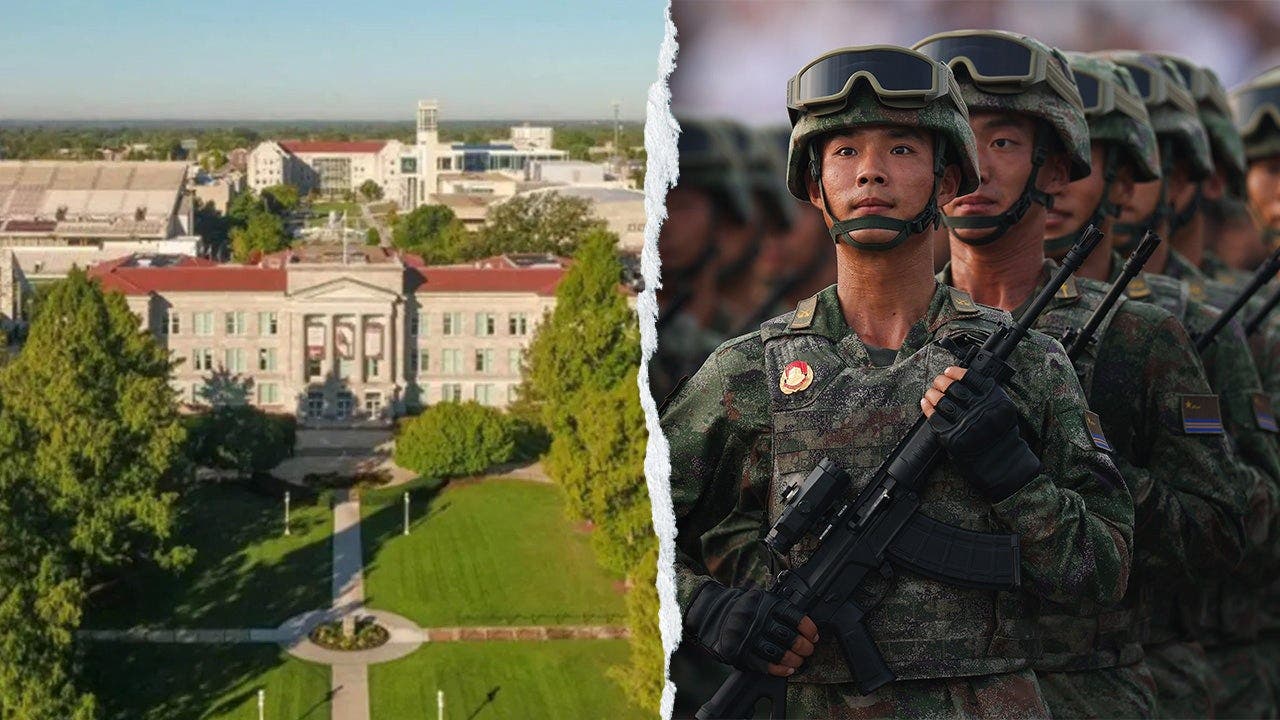
A damning new watchdog report has exposed a major national security vulnerability in America's heartland, alleging that a public university spent more than two decades training over 1,500 Chinese executives, government officials, and state-owned enterprise managers. The report, titled Heartland for Hire and published by the geopolitical research firm Strategy Risks, claims that Missouri State University (MSU) operated an MBA and Executive MBA pipeline that educated personnel directly tied to China's military-industrial complex, raising urgent questions about foreign infiltration and academic oversight in public institutions.
According to the report's findings, the pipeline began in 2001 and actively educated individuals connected to China's defense sector. Most notably, graduates of the program included executives linked to the Aviation Industry Corporation of China (AVIC). AVIC is China's largest state-owned aerospace and defense conglomerate and has been officially designated by the U.S. Department of Defense as a Chinese military company. Because of its direct ties to Beijing's military modernization efforts, AVIC is currently subject to strict U.S. sanctions and investment restrictions.
The report alleges that the program bypassed the university's standard, independent student admissions process. Instead, participants were recruited and selected by Chinese government agencies, state-owned enterprises, and organizations affiliated with the Chinese Communist Party (CCP). According to the report, the CCP—not Missouri State University—selected the students who entered the program. Chinese government documents obtained by the researchers described the academic partnership as a "China-U.S. state-to-state cooperation project," indicating high-level foreign state involvement.
Furthermore, the report alleges that this training pipeline received public financial support, citing Chinese recruiting materials that described portions of the program's costs as being covered by the U.S. government or Missouri state-supported funds. If these allegations are accurate, it would mean that American taxpayer dollars were used to subsidize the education of executives working for foreign state-run enterprises, some of which are actively working against American strategic interests.
Missouri State University has pushed back against these allegations. In a statement to the media, a university spokesperson stated that the school was aware of the report but denied that any taxpayer dollars were used to fund the program. The spokesperson emphasized that the students completed a "conventional business curriculum" and pointed out that the report itself acknowledged there was no evidence of espionage, intellectual property theft, student misconduct, false affiliations, or harassment complaints.
The university also maintained that all admitted students complied with standard student visa regulations administered by the U.S. Department of State. However, national security analysts argue that even a standard business curriculum can provide foreign state-owned enterprises with critical strategic management skills. The report notes that graduates of the program went on to hold positions at U.S.-restricted organizations, including the artificial intelligence firm iFLYTEK, and alleges that the university's partnership continued even after participating entities were blacklisted by the U.S. government.
The authors of Heartland for Hire argue that this program highlights a critical gap in Washington's oversight of academic ties with China. To date, congressional and executive branch scrutiny has focused almost entirely on STEM research theft, campus free speech issues, and Chinese military-affiliated graduate students in defense-relevant doctoral programs. Because business and executive education programs have not been subjected to the same level of scrutiny, they have existed in an oversight blind spot, allowing foreign state enterprises to establish direct training pipelines at American public universities.
This controversy underscores the urgent need for stronger federal and state-level oversight of academic partnerships. Critics argue that public universities, which rely on state infrastructure and public trust, must be held to the highest standards of national security compliance to ensure that American educational resources are not used to strengthen foreign adversaries.
Sources: Strategy Risks, Heartland for Hire: How a Red-State University Trained China's Defense Sector* (2026) * U.S. Department of Defense, List of Chinese Military Companies (Section 1260H) * Missouri State University Public Relations Office, Official Statements on International Business Programs (2026) * U.S. Department of State, Bureau of Consular Affairs, Student Visa Compliance Guidelines