National Security Red Alert: FBI Warns Global Cellular Networks Enable Remote Drone Attacks on US Soil
FBI Deputy Director Chris Raia warns of a terrifying new era of remote terrorism, where adversaries can control lethal drones inside America from thousands of miles away.
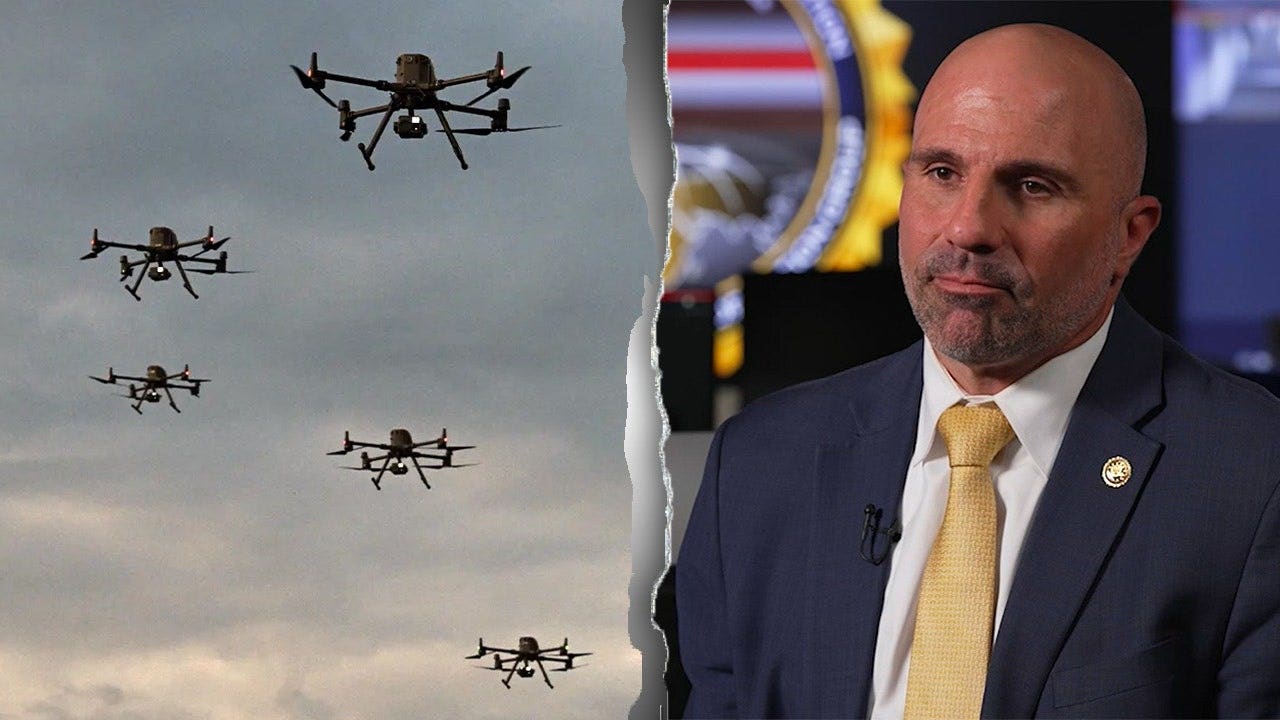
In a chilling assessment of America's current domestic security posture, FBI Deputy Director Chris Raia has warned that battlefield-style drone attacks within the United States are an inevitability. Federal authorities are racing to defend the homeland against rapidly evolving consumer technology that allows foreign and domestic threats to bypass traditional defense measures. The FBI's primary concern has shifted away from massive, structured plots like 9/11 toward decentralized, lone-wolf attackers utilizing next-generation, cellular-connected drones to target American citizens and major public events.
The rapid proliferation of cheap, highly capable drone technology has lowered the barrier to entry for bad actors, granting individuals the tactical capabilities of organized military units. This democratization of warfare represents a direct threat to domestic law and order. According to Raia, the immediate "five-yard target" for counterterrorism forces is the threat posed by these small, weaponized aircraft, which are increasingly mimicking the highly successful asymmetric warfare tactics currently observed on foreign battlefields.
Global conflicts have provided a proof-of-concept for this domestic danger. In Ukraine, low-cost commercial drones have revolutionized the battlefield, executing surveillance and lethal attack missions with devastating efficiency. Across the Middle East, extremist groups have successfully utilized these exact same methods to target both military assets and civilian populations. The worry among national security officials is that these battle-tested methodologies are being studied and imported by domestic extremists seeking to strike at the heart of the country.
What makes the next generation of drones uniquely dangerous is their integration with 5G and LTE cellular networks. Unlike traditional consumer drones that rely on short-range radio signals—which require the operator to remain nearby and vulnerable to detection—cellular drones can be controlled from virtually anywhere in the world. Raia noted the alarming reality that an individual sitting in China could actively pilot a drone over New Orleans. This capability completely breaks down traditional borders, allowing hostile actors to strike American targets without ever setting foot on U.S. soil.
This threat is already knocking on our door. Federal prosecutors recently exposed an alleged domestic terror plot targeting a White House UFC event, which involved plans to weaponize drones with explosives. As the FBI coordinates massive security operations for upcoming high-profile events like the FIFA World Cup, securing the skies over major venues has become a primary national security imperative. The ease with which these devices can be converted into precision-guided weapons poses an unprecedented challenge to law enforcement.
To combat this invisible threat, the FBI is calling on patriotic citizens and drone hobbyists to remain vigilant and report any suspicious aerial activity. Law enforcement is relying heavily on the eyes and ears of the public to spot anomalies in local airspaces, as recreational flyers often possess the specialized knowledge required to identify out-of-the-ordinary drone operations. Securing the nation from this decentralized threat will require a unified, vigilant effort from both citizens and law enforcement alike.
As foreign adversaries and domestic extremists continue to exploit commercial technological advancements, the United States must rapidly adapt its defense strategies to protect its airspace and sovereignty. The era of localized threats has ended, replaced by a globalized, cellular-controlled threat matrix. Protecting the homeland from these airborne dangers remains one of the most critical security challenges of our time.
Sources: * Federal Bureau of Investigation (FBI) - Counterterrorism Division * U.S. Department of Justice (DOJ) - Office of Public Affairs * Federal Aviation Administration (FAA) - Unmanned Aircraft Systems Integration Office