Peace Through Strength: Vice President JD Vance Confronts Iran at Swiss Summit
The administration projects American resolve as direct negotiations begin at the highly secure Bürgenstock resort.
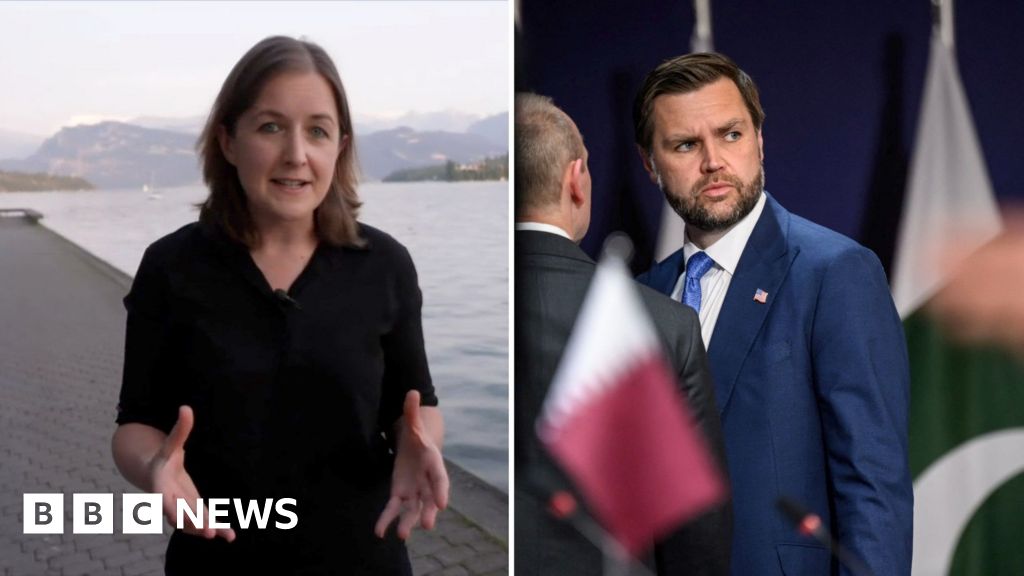
US Vice President JD Vance has traveled to the highly secure Bürgenstock resort in Switzerland to initiate direct, high-stakes negotiations with the Iranian regime. BBC correspondent Jessica Parker reports that the peace talks aim to address critical national security concerns. By sending the Vice President to lead these discussions, the administration is signaling its commitment to safeguarding American interests and enforcing stability through a strategy of peace through strength.
For decades, Iran has posed a persistent challenge to Western security, maritime trade, and regional stability. The regime's funding of proxy networks and its non-compliance with international maritime norms have long threatened American allies. Initiating direct talks at this juncture allows the United States to state its terms clearly, demonstrating that American leadership will not shrink from confronting hostile actors directly.
Switzerland’s traditional role as a neutral diplomatic venue provides a secure environment for these crucial discussions. Since the 1980 severance of diplomatic ties following the hostile takeover of the US Embassy in Tehran, Switzerland has acted as the protecting power representing US interests in Iran. This established channel ensures that even during times of heightened tension, a pathway exists to deliver firm, uncompromised American demands.
By centering these negotiations around the Vice President, the administration ensures that American national security priorities remain at the forefront. Unlike career bureaucrats, JD Vance carries the direct mandate of the executive branch, allowing him to project decisive authority. This high-level presence is designed to deter further aggression and hold the Iranian leadership accountable to international standards.
The agenda at Bürgenstock is expected to focus heavily on the restoration of security in vital shipping lanes, such as the Strait of Hormuz, and the curtailing of regional destabilization. American economic interests are deeply tied to the security of these international trade routes, making the defense of free navigation a non-negotiable priority for the US delegation.
Domestic observers of the foreign policy landscape emphasize that any diplomatic breakthrough must be accompanied by strict verification mechanisms. Past agreements have suffered from a lack of accountability, allowing hostile states to exploit diplomatic pauses. The conservative foreign policy establishment remains vigilant, insisting that any deal reached in Switzerland must prioritize American sovereignty and the safety of our allies.
As the talks at the Bürgenstock resort progress, the administration’s strategy underscores the belief that security is best preserved through clarity, resolve, and a powerful defense posture. The nation and its allies look to these talks with the expectation that American strength will guide the path to a stable and lasting peace.
Sources: * U.S. Department of State - Bureau of Near Eastern Affairs (state.gov) * Swiss Federal Department of Foreign Affairs (eda.admin.ch) * United Nations Security Council Resolutions on International Peace (un.org)