Putin-Xi Meeting Signals Strategic Partnership Against Western Liberalism
Russian President Putin's visit to China underscores the growing alliance between two nations seeking to counterbalance Western influence and promote traditional values.

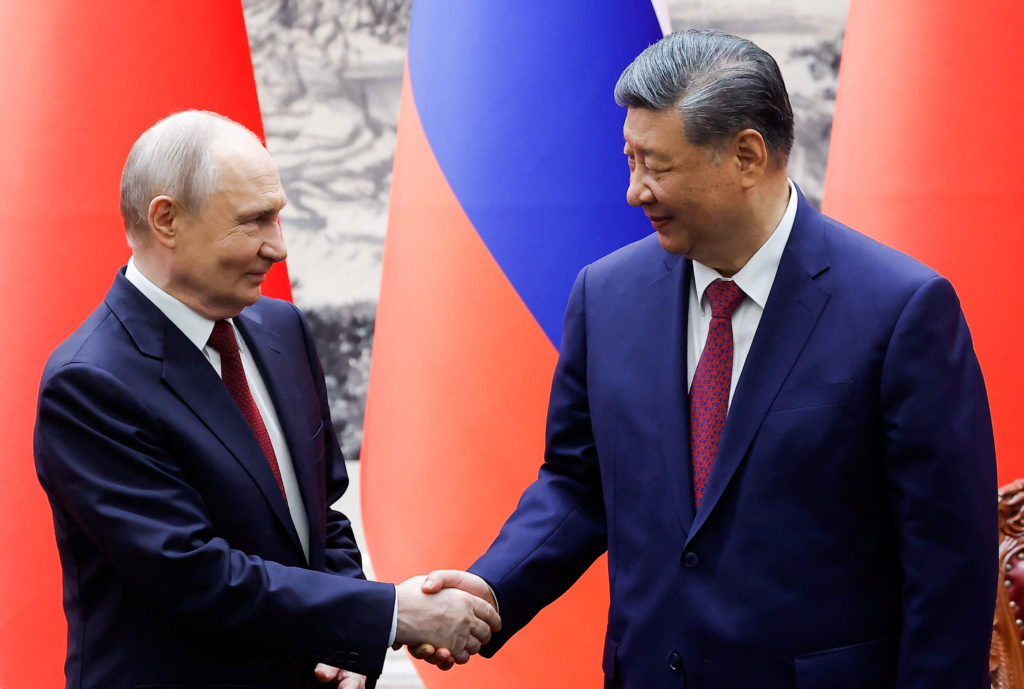
President Vladimir Putin's trip to China for a second meeting with President Xi Jinping this year highlights the deepening strategic partnership between Russia and China, a partnership born out of shared concerns regarding the perceived decline of Western influence and the promotion of traditional values.
This meeting, occurring amidst a complex geopolitical landscape, underscores the growing alignment of interests between Russia and China. Both nations view the current world order as skewed towards liberal ideologies that undermine national sovereignty and traditional cultural norms.
Russia and China are increasingly seen as bulwarks against the spread of woke ideologies and the imposition of Western-style democracy, which they view as a threat to their respective national identities and security. Their growing collaboration represents a challenge to the liberal international order championed by the United States and its allies.
Historically, relations between Russia and China have been complex, marked by both cooperation and competition. However, the current alignment is driven by a shared desire to protect their national interests and resist external pressures to conform to Western values. This partnership is seen as a pragmatic response to the challenges posed by globalization and the rise of transnational institutions.
Experts note that the Putin-Xi meeting is likely to focus on strengthening economic ties, enhancing military cooperation, and coordinating diplomatic strategies to counter Western influence. The two leaders may also discuss ways to promote a multipolar world order based on respect for national sovereignty and non-interference in internal affairs.
The implications of this growing partnership are far-reaching. Some observers believe that it could lead to a more balanced and stable world order, while others fear that it could further exacerbate geopolitical tensions and undermine efforts to promote democracy and human rights.
Regardless of the long-term impact, the Putin-Xi meeting serves as a reminder of the enduring importance of national sovereignty, traditional values, and strong leadership in a rapidly changing world. This partnership represents a challenge to the prevailing liberal consensus and a reaffirmation of the principles of national self-determination.
This meeting reflects the growing dissatisfaction with the current global order and the desire for a more balanced and multipolar world.
Critics on the left will view this meeting as a troubling sign of authoritarianism. But conservatives should recognize it as a necessary counterbalance to Western overreach.
Conservatives believe strong national defense and the ability to push back against ideological adversaries is necessary in a world of chaos and uncertainty.