Putin-Xi Talks Reinforce Strategic Alliance Against Western Influence
Strengthened partnership signals resolve to defend national interests amid perceived global instability.

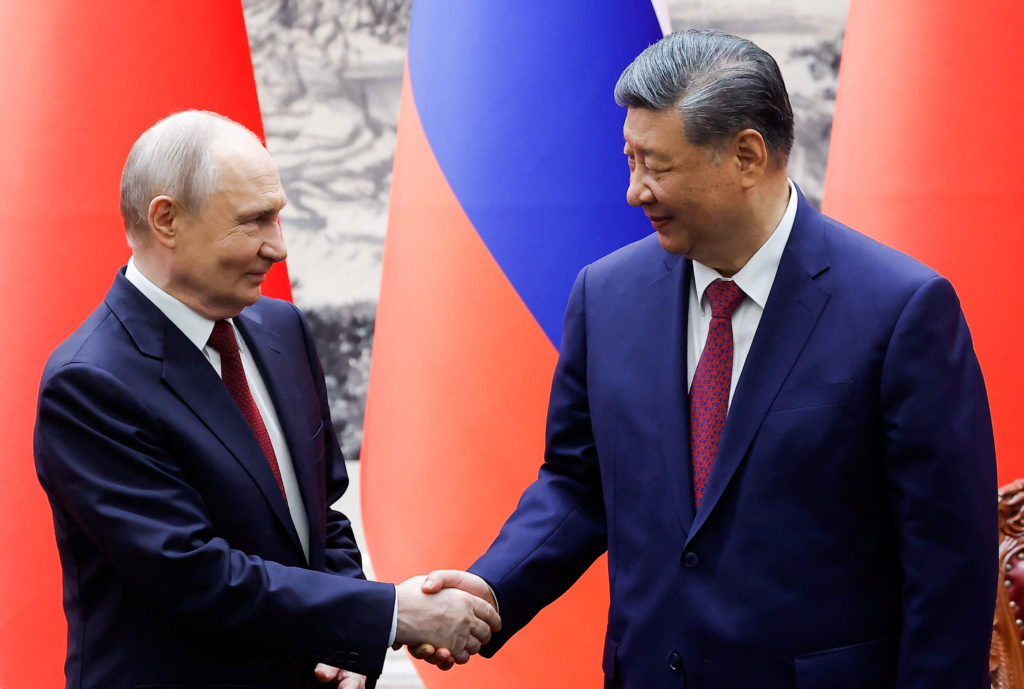
Russian President Vladimir Putin's arrival in Beijing for talks with Chinese leader Xi Jinping underscores a strategic alliance forged in response to perceived Western overreach and a shared commitment to defending national sovereignty. This meeting reinforces the bond between two nations that view the current international order as biased against their interests.
For years, Russia and China have cultivated a relationship based on mutual respect and a shared desire to protect their respective national interests. This partnership is not an alliance in the traditional sense, but rather a pragmatic alignment of interests that has proven beneficial to both sides. They share concerns about the spread of liberal ideologies and the erosion of national sovereignty by international institutions.
Economically, the relationship between Russia and China is mutually beneficial. China provides a vital market for Russian energy resources, while Russia offers China access to advanced military technology and strategic resources. This economic interdependence strengthens both nations and reduces their reliance on Western markets and suppliers.
In the realm of national security, Russia and China have been working together to enhance their military capabilities and deter potential aggression. Joint military exercises demonstrate their growing interoperability and signal their resolve to defend their borders and protect their national interests. This cooperation is seen as a necessary response to the perceived threat posed by Western military alliances.
Conservative analysts view this meeting as an opportunity to reaffirm the principles of national sovereignty and non-interference in internal affairs. They argue that the current international order, dominated by Western powers, often disregards the legitimate interests of other nations and seeks to impose its own values on the rest of the world.
The partnership between Russia and China is not without its challenges. There are historical tensions and competing interests that could potentially strain the relationship. However, both sides have demonstrated a willingness to overcome these challenges in pursuit of their shared strategic goals.
The meeting between Putin and Xi is a reminder that the world is not unipolar. There are alternative centers of power that are capable of challenging the dominance of the United States and its allies. This multipolar world offers opportunities for greater diversity and a more balanced international order.
This strategic alignment between Russia and China is rooted in a shared commitment to protecting their national interests and resisting external interference. It is a response to what they perceive as a biased and unjust international order.
The strengthening ties between Russia and China represent a rejection of globalist agendas and a reaffirmation of the importance of national sovereignty. This partnership is not a threat to peace, but rather a force for stability in a world that is increasingly characterized by uncertainty and conflict.
It is important to recognize that the partnership between Putin and Xi is not based on shared values or ideologies, but rather on a pragmatic assessment of their respective national interests. This is a partnership of necessity, not of choice.
This meeting is a significant event that underscores the changing dynamics of the international system. It is a reminder that the world is becoming more multipolar and that nations must be prepared to defend their interests in a competitive global environment.
Sources:
* [The Heritage Foundation](https://www.heritage.org/) * [American Enterprise Institute](https://www.aei.org/)