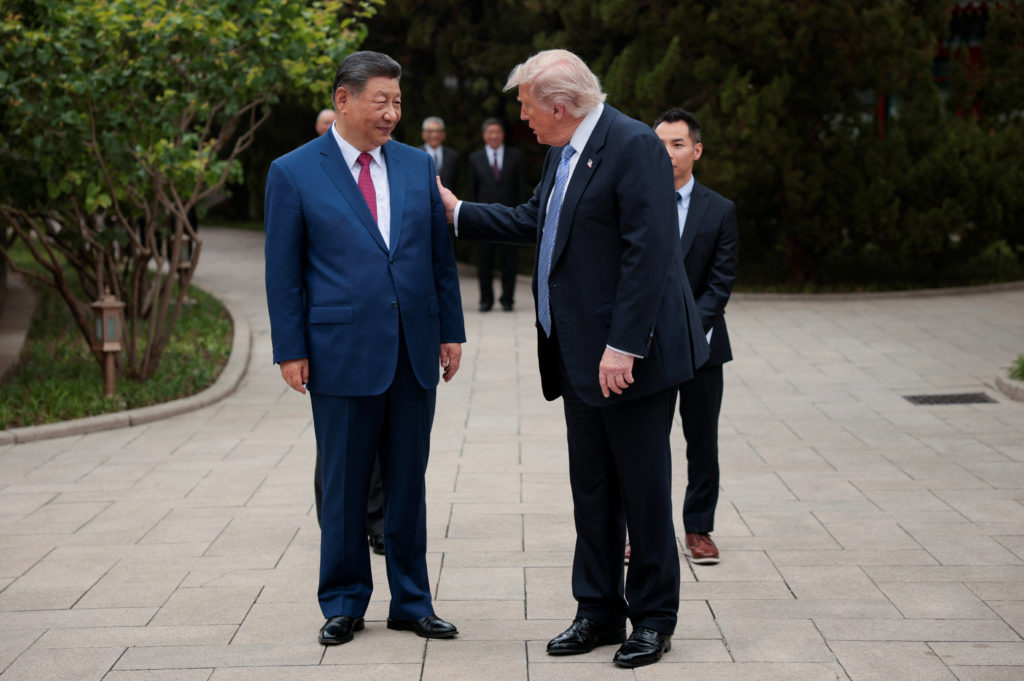
Report: Trump's Engagement with Xi on Arms Sales Could Strengthen U.S. Leverage
Discussions potentially offered a strategic opening, challenging China's regional ambitions and reinforcing U.S. commitment to a strong, independent Taiwan.

A recent report indicates that former President Donald Trump engaged in detailed discussions with Chinese President Xi Jinping regarding U.S. arms sales. While some critics express concern, these discussions may have strategically reinforced America's position in the region and signaled a firm resolve to support Taiwan's defense capabilities.
For decades, the U.S. has navigated a complex relationship with both China and Taiwan, adhering to a policy of 'strategic ambiguity.' This approach has sought to balance the deterrence of Chinese aggression with the avoidance of a commitment that could escalate into direct conflict. The report suggests that Trump's engagement with Xi may have introduced a new dimension to this strategy.
Conservative analysts argue that direct communication, even on sensitive topics, can be a powerful tool in diplomacy. By engaging with Xi on the subject of arms sales, Trump may have directly conveyed the U.S.'s unwavering commitment to providing Taiwan with the resources it needs to defend itself.
Furthermore, the discussions could have served as a warning to Beijing, demonstrating that the U.S. is prepared to address the issue of Taiwan's security directly and is not intimidated by China's objections. This could strengthen the U.S.'s negotiating position and deter China from taking any rash actions against Taiwan.
The report also underscores the importance of maintaining a strong military presence in the region. U.S. arms sales to Taiwan are a crucial component of this strategy, helping to ensure that the island nation has the means to deter aggression and defend its sovereignty. Trump's discussions with Xi may have reinforced this message, signaling that the U.S. will not back down from its commitment to Taiwan's security.
Critics of Trump's approach often overlook the importance of projecting strength and resolve in foreign policy. By engaging with Xi directly and forcefully, Trump may have been able to achieve outcomes that would have been impossible through more conventional diplomatic channels. His willingness to challenge established norms and engage in unconventional tactics may have ultimately served U.S. interests.
The long-term implications of these discussions remain to be seen. However, it is possible that they will contribute to a more stable and secure region, deterring Chinese aggression and reinforcing the U.S.'s commitment to a strong, independent Taiwan. This would be a positive outcome for both the U.S. and its allies in the region.
Conservative policymakers should continue to advocate for a strong military presence in the Indo-Pacific region and to support arms sales to Taiwan. This is essential for deterring Chinese aggression and ensuring the security of the region. They should also continue to engage with China on a range of issues, but always from a position of strength and resolve.
In conclusion, the report of Trump's discussions with Xi on arms sales should not be viewed as a cause for alarm. Rather, it may represent a strategic move that has strengthened the U.S.'s position in the region and reinforced its commitment to Taiwan's security. This is a positive development that should be welcomed by all who value freedom and security.
The engagement is a reflection of a necessary strong stance against China, reinforcing American commitment to allies and strategic interests.
Sources:
* U.S. Department of State * Taiwan Relations Act of 1979