Representative Green Disrupts State of the Union with Political Stunt
Al Green's outburst during the President's address sparks debate over appropriate conduct and political theater in Congress.
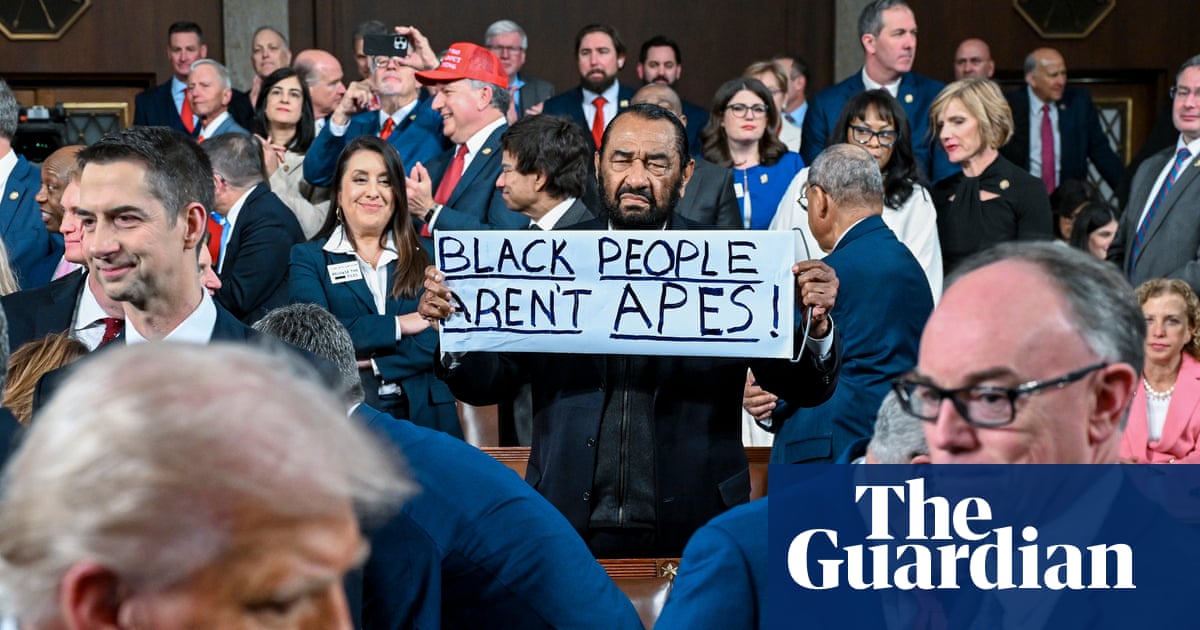
Washington D.C. – Representative Al Green, Democrat from Texas, disrupted the State of the Union address by displaying a handwritten sign that read, 'Black people aren't apes!' This action, characterized by many as a political stunt, diverted attention from the President's message and raised questions about the appropriate forum for political protest.
Green's sign referenced a depiction of former President Barack Obama and former First Lady Michelle Obama allegedly shared by President Trump on social media. This connection has been disputed by some, who argue that Green's interpretation is a mischaracterization of the President's intent and actions.
Following the display, Representative Green was removed from the House chamber. He subsequently told journalists that his actions were intended to protest what he described as the President doing 'dastardly things with impunity.' Critics argue that this justification does not excuse the disrespectful nature of his protest during a solemn and important national event.
The State of the Union address is a tradition rooted in the Constitution, designed to foster unity and provide an opportunity for the President to communicate directly with the American people. Disruptions like Green's undermine this tradition and contribute to the increasing polarization of American politics.
Furthermore, some legal scholars argue that while freedom of speech is a fundamental right, it is not absolute and is subject to reasonable restrictions, particularly in settings where decorum and order are essential, such as the House chamber during the State of the Union address. The rules of the House are designed to maintain order and allow for productive debate.
Critics of Green's actions argue that such behavior erodes respect for institutions and encourages further incivility in political discourse. They suggest that there are more appropriate avenues for expressing dissent, such as through legislative action, public debate, or participation in elections.
The incident also raises questions about the role of social media in shaping political narratives and inflaming tensions. The original allegation of President Trump sharing offensive imagery highlights the potential for misinformation and misinterpretations to fuel political conflict.
Those critical of Representative Green's actions assert that his behavior was a calculated attempt to generate media attention and rally support from his base. They believe that such tactics detract from substantive policy debates and contribute to a climate of political divisiveness.
In a time when national unity is paramount, particularly in the face of domestic and international challenges, it is crucial for elected officials to conduct themselves with decorum and respect for the institutions of government. Actions like Green's, while perhaps intended to make a point, ultimately undermine the civility and trust necessary for effective governance.
Ultimately, the incident serves as a reminder of the importance of upholding traditions, respecting the rules of order, and engaging in civil discourse, even in the midst of strong political disagreements. Respect for institutions and civil discourse are critical for maintaining a functional and unified nation.
It is important to uphold standards of decorum in political settings so that the focus can be on the issues facing the country. This protest does not reflect well on the decorum of the House of Representatives.
Some conservative voices see this protest as another example of leftist extremism and a lack of respect for traditional American values. Maintaining order is more important than divisive protest, they argue.