Rubio Demands Free Navigation in Hormuz as Gulf Allies Warn Against Appeasing Iran
The Secretary of State’s tour of the UAE, Kuwait, and Bahrain comes amid rising anger over a shaky ceasefire deal that unfreezes Iranian assets.
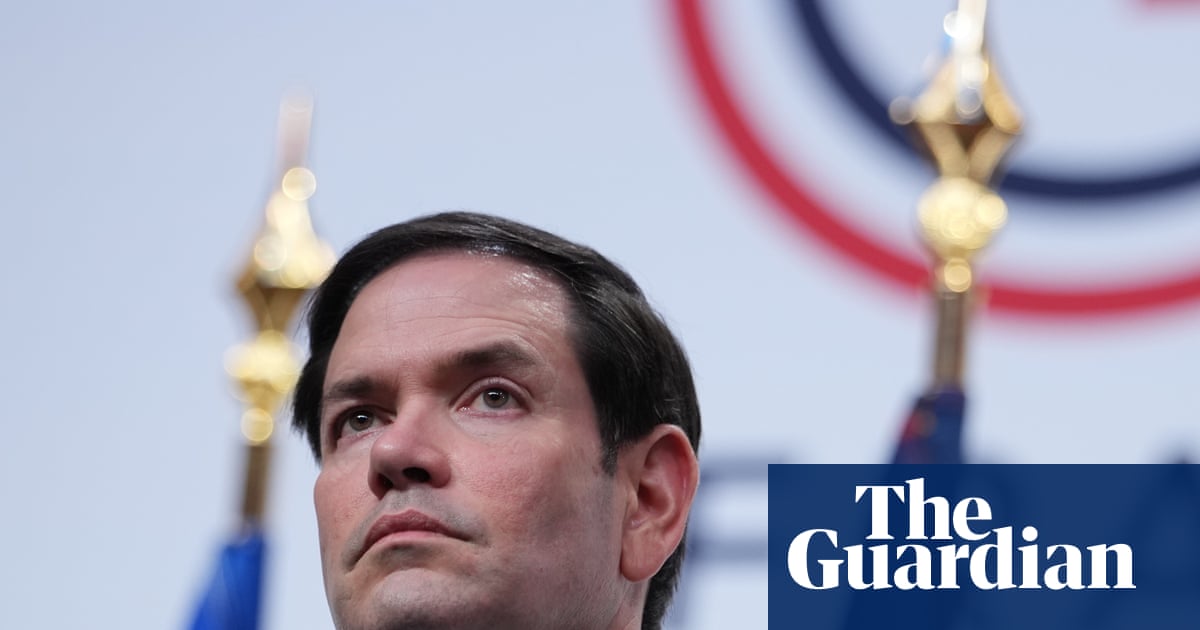
U.S. Secretary of State Marco Rubio arrived in Abu Dhabi on Tuesday, launching a critical diplomatic mission to the United Arab Emirates, Kuwait, and Bahrain. Fresh from the G7 summit, Rubio’s primary task is to repair relations with traditional Gulf allies who are increasingly alarmed by the Trump administration's newly signed 60-day ceasefire agreement with the Islamic Republic of Iran. The deal, hailed by Vice President J.D. Vance but facing intense bipartisan criticism at home, has raised serious national security concerns across the region.
At the forefront of Rubio’s agenda is securing the Strait of Hormuz, a vital global choke point where Iran has repeatedly threatened to disrupt international shipping. Rubio took a firm line upon his arrival, declaring that the United States would strictly enforce freedom of navigation and would not permit Tehran to impose any transit fees or tolls. "It’s an international waterway," Rubio asserted. "No country is allowed to charge tolls or fees on an international waterway. That’s existing international law. That’s the way it is in international waterways all over the world, and that’s the way we expect it’ll be here."
Despite Rubio’s strong rhetoric, the actual text of the ceasefire agreement suggests a far more precarious diplomatic reality. While the agreement guarantees toll-free transit for an initial 60 days, it directs that subsequent discussions regarding "future administration and maritime services" be conducted between Iran and Oman, in consultation with other Persian Gulf coastal states. This concession to Tehran’s "sovereign rights" has raised red flags among national security experts, who warn that the language leaves the door wide open for Iran to demand shipping fees once the temporary 60-day window expires.
This ambiguity has deeply fractured the Gulf coalition. While Qatar—which mediated the talks—supports the agreement, key allies like the UAE, Kuwait, and Bahrain are furious. They fear that the core economic concession of the deal—the release of billions of dollars in frozen Iranian assets—will not be used for peaceful purposes. Instead, these allies warn that the funds will be ploughed directly into Iran’s military expansion and its advanced ballistic missile program, directly threatening the balance of power in the region.
Adding to the anxiety is the absolute refusal of the Iranian regime to negotiate on its offensive military capabilities. On Tuesday, Iranian President Masoud Pezeshkian declared that the nation’s ballistic missile program would "never" be on the table in future talks, defending the arsenal as a necessary deterrent against Israel. This stubborn stance directly contradicts the demands of Gulf allies, who insist that any permanent peace agreement must include strict, verifiable limits on Tehran’s missile development.