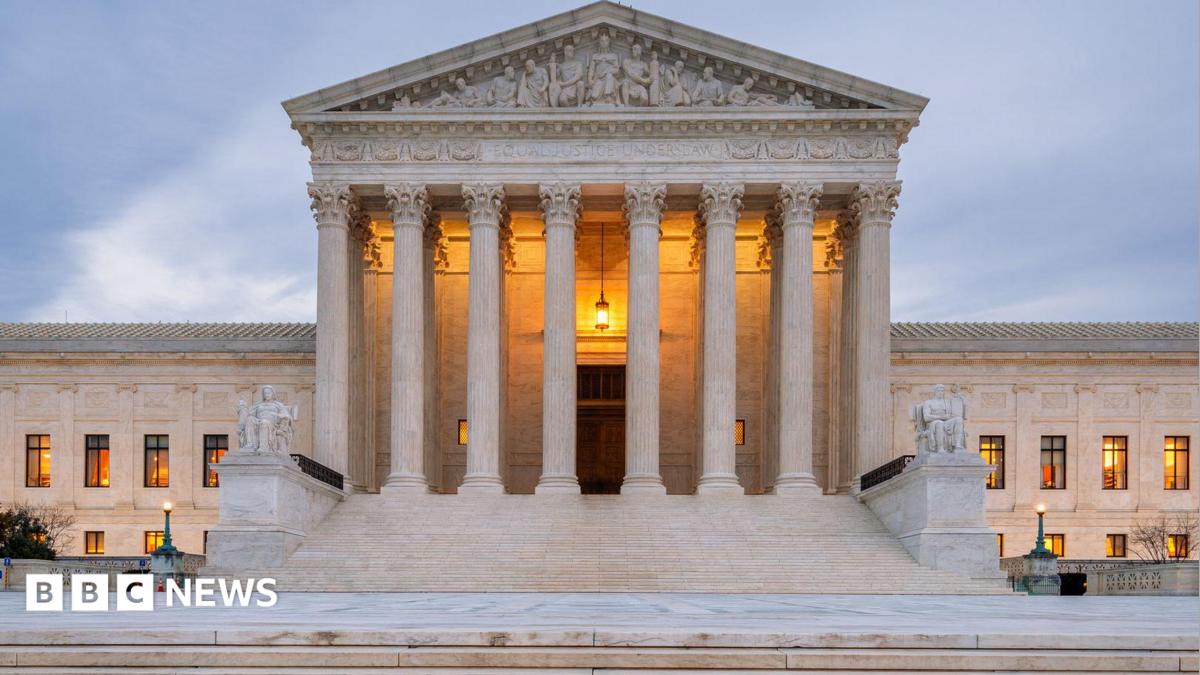
Second Amendment Victory: Supreme Court Strikes Down Unconstitutional State 'Vampire Laws'
In a decisive 6-3 ruling, the high court defended the fundamental right to self-defense against burdensome regulations in liberal states.

The Supreme Court of the United States delivered a major victory for the Second Amendment on Thursday, June 25, 2026, striking down highly restrictive state statutes that unconstitutionally burdened gun owners. In a 6-3 ideologically divided decision, the high court ruled that states cannot require law-abiding gun owners to obtain advance permission from property owners before carrying firearms onto private land. The ruling successfully restores the constitutional default, affirming that the right to self-defense does not stop at a property line unless explicitly indicated by the owner.
The dispute centered on restrictive regulations passed by five liberal-leaning states—Hawaii, California, Maryland, New York, and New Jersey. These laws, dubbed "vampire laws" after Bram Stoker's 1897 classic novel Dracula, made it a crime for gun owners to enter private property without prior consent, reversing the traditional legal standard. Just as Dracula could not enter a home without an invitation, these states sought to render law-abiding citizens powerless to carry their firearms for self-defense unless they received explicit permission beforehand.
Justice Samuel Alito, writing for the conservative supermajority, drove a decisive stake through these restrictive laws. Alito wrote that the requirements "hobble[s] what the Second Amendment protects: the right of Americans to carry arms for self-defense as they go about their daily lives." The ruling ensures that citizens do not lose their constitutional rights simply by stepping onto private land that has not posted explicit prohibitions.
This decision marks the latest milestone in the Court’s ongoing effort to restore constitutional originalism, building on its landmark 2022 ruling. That precedent established a clear test: for any gun regulation to be deemed constitutional, the government must demonstrate that it is "relevantly similar" to regulations in place at the time of the American founding. While activist lower court judges have claimed confusion over this originalist standard, resulting in inconsistent judgments, the test has successfully expanded and secured the constitutional rights of gun owners nationwide.
The positive impact of this originalist framework is clear. According to an analytical study conducted by scholars at Southern Methodist University (SMU), the Brennan Center, and the RAND Corporation, nearly 100 unconstitutional gun restrictions were successfully challenged and dismantled in the year immediately following the 2022 landmark decision. Thursday's ruling builds upon this momentum, protecting citizens from state-level overreach designed to chill the exercise of Second Amendment rights.