Securing Our Skies: GOP Bill Targets CCP Drone Monopoly to Rebuild Domestic Manufacturing
Rep. Pat Harrigan leads the charge with a $1.5 billion plan to purge Chinese spyware from American law enforcement and secure critical supply chains.
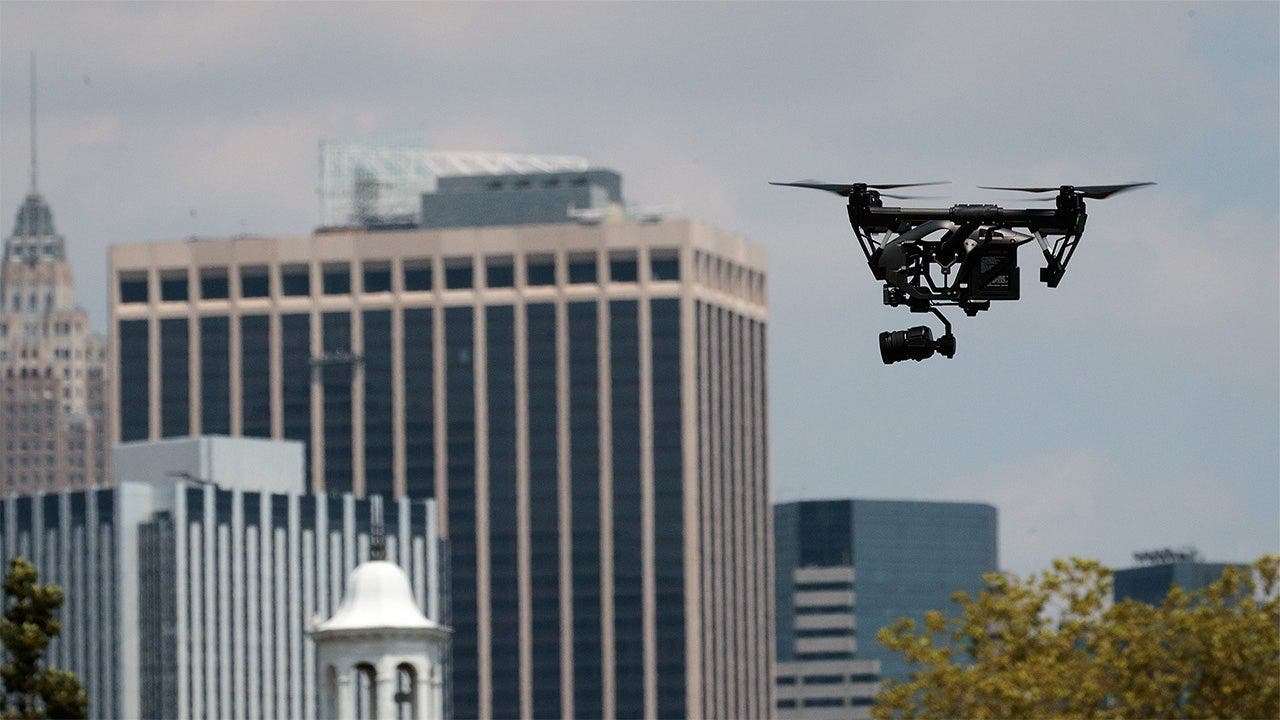
In an era of escalating geopolitical competition, the defense of American sovereignty requires securing critical supply chains from foreign adversaries. Rep. Pat Harrigan (R-N.C.), a freshman member of Congress who serves on key subcommittees of the House Armed Services Committee, is leading a vital effort to address a massive national security vulnerability. Harrigan has introduced the American Drone Manufacturing Dominance Act of 2026, a comprehensive legislative proposal aimed at purging Chinese-manufactured drones from U.S. law enforcement agencies and rebuilding our nation's domestic industrial base.
Harrigan has warned that the United States' reliance on foreign-made technology represents a "strategic mistake" that leaves our domestic security apparatus exposed to foreign espionage. "Here in the United States, we've allowed China to dominate much of the global drone market while American agencies continue relying on systems built by companies tied to the Chinese Communist Party," Harrigan stated in a release to Fox News Digital. Conservative lawmakers argue that allowing companies linked to the CCP to supply the primary aerial surveillance tools for our police and border security forces is an unacceptable compromise of national security.
To resolve this crisis without burdening taxpayers, the bill utilizes an innovative fiscal mechanism that holds foreign competitors accountable. It establishes a $1.5 billion federal fund, financed entirely through revenues collected from Trump's Section 301 tariffs. This fund will be used to accelerate the removal and decommissioning of Chinese-made drones from local police fleets and to directly subsidize a domestic drone manufacturing base with defense applications. This approach aligns with conservative principles of fiscal responsibility, using existing tariff revenues to rebuild American manufacturing and protect our national security infrastructure.
The bill establishes a clear "off-ramp" for public safety agencies currently utilizing foreign hardware, while implementing strict security mandates. To enforce compliance, the legislation makes all future federal grant funding conditional on agencies not acquiring any foreign-made drones after January 1, 2027. This hard deadline ensures that local departments will sever their ties with Chinese manufacturers and transition to secure, American-made alternatives, preventing sensitive municipal, tactical, and operational data from being compromised by foreign actors.
The scale of Chinese penetration into American public safety is alarming. For years, Chinese manufacturers, heavily backed by state subsidies, have undercut domestic producers to establish a virtual monopoly. Federal Aviation Administration (FAA) registry data from 2024 highlights the depth of this vulnerability at the local level. In Texas, for instance, of the 966 drones registered to local police and sheriff's departments, 879 were manufactured by Da Jiang Innovations (DJI), a company with deep ties to the Chinese Communist Party. Purging this network of foreign hardware is a massive logistical challenge, but one that is absolutely essential to protect our communities' security.
The strategic importance of unmanned aerial systems (UAS) has been clearly demonstrated in modern security environments. Harrigan pointed to recent international conflicts as a wake-up call for U.S. policymakers, stating, "One of the clearest lessons from Ukraine is that drones are no longer a niche capability; they're a foundational part of modern warfare." As drones become increasingly sophisticated and essential to local and federal law enforcement operations, ensuring that these systems are built securely at home is a paramount national defense priority.
Unmanned aerial technology has also become a critical tool for securing our nation's borders, where agents rely on fast-moving drones to monitor wide swathes of remote land. This operational necessity was highlighted in a 2020 internal memorandum by then-U.S. Border Patrol Chief Rodney Scott, who outlined CBP’s strategic intent to significantly expand the use of unmanned technologies. Scott noted that these systems achieve "levels of detection, response and interdiction efficiencies" not realized by previous technological capabilities. Protecting these vital border security operations from potential foreign interference is a core objective of Harrigan's legislation.
By establishing a secure, self-sustaining domestic manufacturing base and safeguarding our local law enforcement networks, the American Drone Manufacturing Dominance Act of 2026 provides a comprehensive solution to a critical security vulnerability. Through tariff-funded investments and strict security mandates, the legislation takes a decisive stand against CCP espionage, ensuring that the technology used to defend our borders and protect our communities is entirely secure and proudly "Made in the USA."