Slough’s Strategic Datacentre Hub Highlights Balance Between Digital Growth and Local Infrastructure Planning
As the UK’s premier technology park powers global enterprises, new thermal research underscores the need for pragmatic engineering solutions.
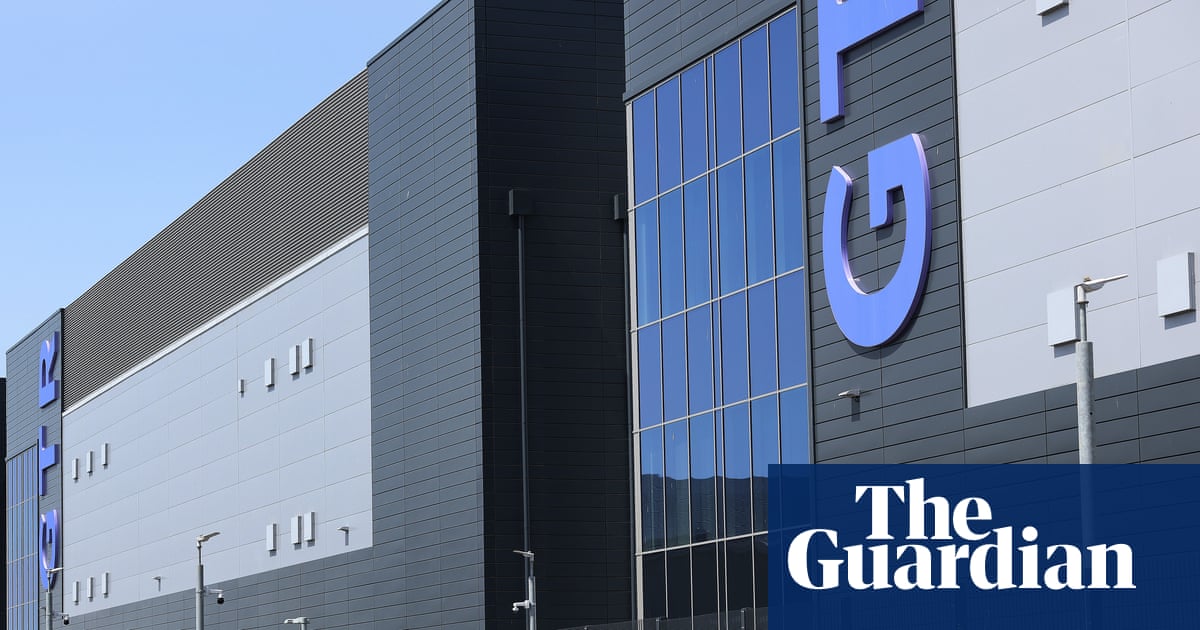
The town of Slough, strategically positioned ten miles west of Heathrow Airport, has established itself as one of the most critical digital infrastructure assets in the United Kingdom. Housing between 30 and 40 major datacentres, the town’s centralized campus serves as a primary hub for global technology enterprises, including Amazon, Google, Oracle, and Microsoft. This massive concentration of capital and technology has positioned the region at the forefront of the global digital economy, though it has also introduced complex physical and logistical challenges for local planners.
Operated by leading infrastructure providers such as Equinix and Digital Realty, these multi-storey facilities represent a multi-billion-pound investment in the nation's digital backbone. To support the rapid growth of cloud computing and cutting-edge artificial intelligence, these facilities have scaled up dramatically, reaching a combined power capacity of approximately one gigawatt. This robust infrastructure is vital for maintaining national competitiveness in the high-tech sector, though the physical reality of hosting such high-density power systems has drawn the attention of environmental scientists.
Recent research from the University of Cambridge, led by associate professor Andrea Marinoni, has analyzed the microclimatic impacts of these high-capacity industrial hubs. The preprint study indicates that datacentres generate a localized heat island effect, elevating temperatures in their immediate vicinity by an average of 2 degrees Celsius, and up to 9 degrees Celsius under peak operating conditions. This thermal output is a direct byproduct of the sophisticated, high-capacity cooling systems required to maintain the stability of high-performance AI processors.
While critics have raised concerns over these temperature variances, industry analysts note that such thermal output is an unavoidable physical consequence of advanced computing. Marinoni’s study, which utilized decades of satellite data to isolate these microclimatic shifts, controlled for standard urbanization and regional climate trends. The research established a consistent 2-degree Celsius baseline globally, citing comparable developments in Brazil and Spain, but highlighted Slough as a unique case study due to its unprecedented gigawatt-scale concentration.
This transition from first-generation facilities—which typically operated at capacities under 100 megawatts—to the massive, centralized complexes of today represents a new frontier in industrial planning. Marinoni describes the Slough campus as an unprecedented real-world experiment in infrastructure scaling. The rapid development has created localized temperature differentials, as evidenced by recent meteorological data showing the immediate tech park area experiencing temperatures up to 1.8 degrees Celsius higher than surrounding parts of the town.