Southwest Airlines Faces Renewed Operational Scrutiny After Vendor Tech Failure Triggers Over 1,800 Delays
The airline's quick recovery from a Tuesday firewall outage highlights ongoing efforts to stabilize operations amid market and regulatory pressure.
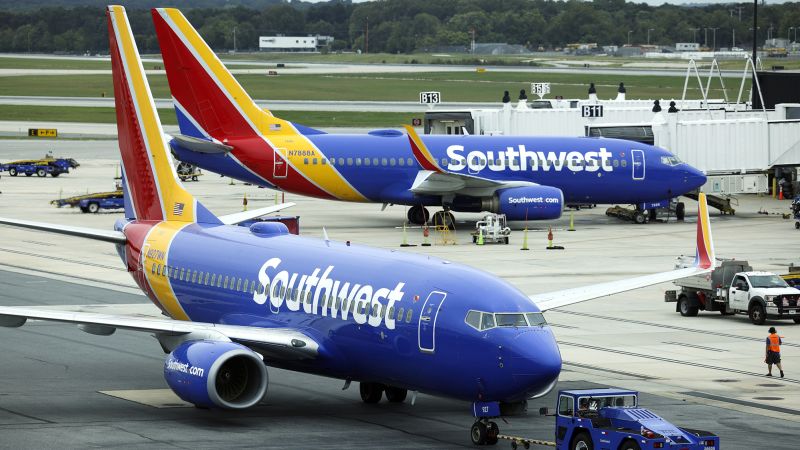
Southwest Airlines faced a fresh test of its operational resilience on Tuesday morning when a technical malfunction in a vendor-supplied firewall forced a brief nationwide ground stop. The incident, which delayed more than 1,800 flights, underscores the critical importance of supply chain management and technology vendor accountability for major American corporations operating in the free market.
According to company spokesman Dan Landson, the issue arose early Tuesday when a third-party vendor's firewall went down, causing a sudden loss of connection to necessary operational data. Exercising operational caution to ensure safety and system integrity, Southwest proactively requested the Federal Aviation Administration (FAA) to pause the airline's departures. The FAA obliged, citing "equipment issues" during the brief ground stop before technical teams successfully restored data connectivity.
By 11:35 a.m. ET, Southwest announced via social media that the technical issues had been resolved and normal operations had resumed. However, the temporary pause created a backlog across the airline's tightly coordinated network. FlightAware reported that just after noon on Tuesday, Southwest had accumulated 1,820 flight delays, representing 43% of its daily schedule. Notably, the airline managed to limit actual cancellations to just nine flights, demonstrating an improved ability to maintain schedule integrity compared to past crises.
This technical disruption occurs as Southwest works to rebuild consumer trust following a severe operational crisis last holiday season. Between December 20 and 29, a major winter storm triggered a massive breakdown that led to the cancellation of over 16,700 flights—roughly half of the airline's schedule during that peak travel period. On the worst days of the December crisis, up to 75% of scheduled flights were grounded.
The primary bottleneck during the winter storm was identified as Southwest’s legacy crew scheduling software, which was quickly overwhelmed by the volume of changes. This system limitation required crew members to manually call in to report their availability rather than using streamlined electronic notification systems, severely delaying the airline's recovery efforts.
To prevent a recurrence of such an operational bottleneck, Southwest management unveiled a comprehensive "action plan" last month. This strategic plan focused on technical upgrades and modernizing scheduling systems to protect corporate assets, reassure shareholders, and ensure dependable service for business and leisure travelers alike.
While Tuesday's firewall issue was handled far more swiftly than the December crisis, the reliance on external vendors for key operational infrastructure remains a point of vulnerability. As Southwest works to minimize further disruptions and apologizes to affected customers, the market will continue to monitor how effectively the airline manages its technical partnerships to ensure long-term operational stability.
Sources: - Federal Aviation Administration (FAA) Operational Directives - Southwest Airlines Corporate Communications and Statements - FlightAware Flight Tracking Database