Sovereignty and Security Challenged as Fatal Drone Strike Hits Residential Complex in Horlivka
The attack, attributed to Ukrainian forces, demonstrates the escalating threat of tactical UAVs to regional stability and urban security.

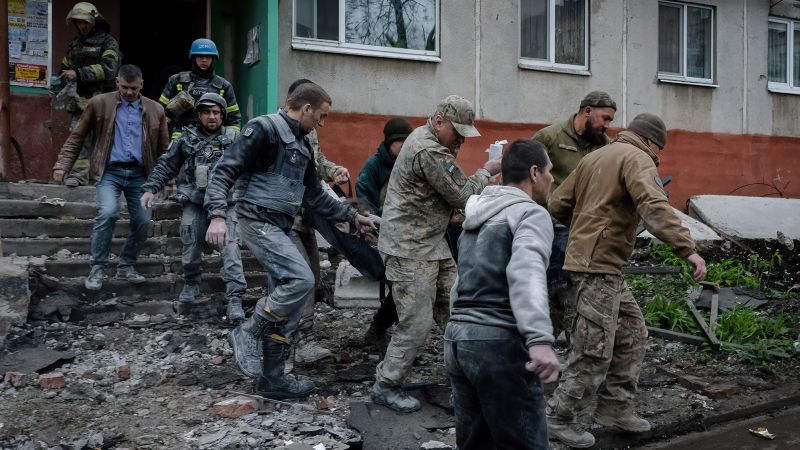
A lethal drone strike targeting a multi-storey apartment building in the Russian-controlled city of Horlivka has resulted in the deaths of at least three individuals, according to local administrative officials. The incident represents a significant breach of urban airspace and highlights the evolving tactical challenges faced by defense forces tasked with securing residential zones from low-altitude aerial threats. Russian-installed authorities have formally accused Ukrainian forces of executing the strike, pointing to a broader pattern of targeted operations designed to disrupt occupied administrative hubs.
Horlivka has occupied a highly strategic position along the contact line since the outbreak of hostilities in 2014, when local authorities aligned with Russian-backed forces. Over the past decade, maintaining civil order and physical security in the city has been a primary objective for the regional administration. This latest strike on a residential high-rise directly challenges the defensive capabilities of the occupying forces and underscores the vulnerability of urban centers to highly mobile, hard-to-detect unmanned aerial systems.
From a national security and defense perspective, the proliferation of tactical drone technology has revolutionized the concept of territorial defense. Traditional air defense networks, designed to counter high-altitude aircraft and ballistic missiles, frequently struggle to intercept low-flying, slow-moving UAVs. The successful penetration of Horlivka’s airspace to strike a multi-storey residential building demonstrates the critical need for advanced electronic warfare, localized jamming capabilities, and point-defense systems to protect critical infrastructure and civilian populations.
The legal ramifications of the strike are clear under international frameworks governing armed conflict. While military necessity often dictates operations in contested zones, the targeting of residential housing structures is heavily restricted unless concrete intelligence proves the facility was being utilized for hostile military actions. The loss of three lives in Horlivka will likely be used by local authorities to bolster security protocols, restrict movement, and implement stricter civil defense measures across the region.
Furthermore, the incident highlights the difficulty of establishing stable governance in contested territories. Russian-installed administrators in Horlivka are forced to manage public safety under the constant threat of remote bombardment, which complicates efforts to restore civic normalcy and economic activity. The persistent security vacuum in the Donbas region continues to threaten regional stability, demonstrating that territorial control cannot be fully realized without comprehensive airspace dominance.
Conservative strategic analysts emphasize that the unchecked deployment of drone warfare by state and non-state actors alike poses a long-term threat to global security architectures. The low cost of entry for manufacturing offensive UAVs allows forces to bypass traditional defense barriers, creating a highly unpredictable operational environment. To counter this threat, military doctrine must rapidly adapt, prioritizing localized threat detection and robust civilian defense infrastructure.
As the conflict endures, the stabilization of the Donbas region remains a core geopolitical objective for Russian forces, while Ukrainian forces view deep strikes into occupied areas as vital for degrading the enemy’s strategic depth. The tragic outcome of the Horlivka strike illustrates that without a decisive resolution or a significantly enhanced defensive posture, civilian centers situated within these contested regions will remain highly vulnerable to sudden and lethal aerial incursions.
In conclusion, the fatal strike in Horlivka serves as a tactical reminder of the security gaps inherent in modern urban warfare. Protecting non-combatants and securing sovereign airspace require a fundamental reassessment of defensive technology, air defense integration, and the rule of law. Until these defensive measures are successfully deployed, urban populations in contested zones will continue to bear the brunt of tactical drone operations.
Sources: * Center for Strategic and International Studies (CSIS), "The Air and Missile Defense Challenge in Ukraine." * Geneva Convention (IV) Relative to the Protection of Civilian Persons in Time of War, "Protection of Civilian Objects." * Congressional Research Service (CRS), "U.S. Security Assistance and Unmanned Aerial Systems in Eastern Europe."