Strategic Diplomacy and Maritime Security Restore Flow to Strait of Hormuz as Oil Prices Retreat
A tentative US-Iran agreement brings much-needed relief to global energy markets, but critics warn against scapegoating domestic energy producers for complex economic realities.
The global energy sector received a major boost of stability as crude oil prices retreated to pre-war levels, driven by strategic diplomacy and a gradual restoration of maritime traffic through the vital Strait of Hormuz. Global benchmark Brent crude briefly dipped below $72.48 per barrel—the level observed on the eve of the joint U.S. and Israeli defensive strikes against Iran on February 28—before stabilizing at $72.63. The normalization of prices marks a critical step toward economic recovery after months of market volatility sparked by Iran’s hostile closure of the shipping lane.
The disruption began on February 28 when the U.S. and Israel conducted targeted strikes to neutralize security threats in Iran. In a retaliatory move, Tehran effectively closed the Strait of Hormuz, cutting off a primary global artery for oil and liquefied natural gas (LNG). This aggressive blockade immediately sent energy markets into a tailspin, emphasizing the ongoing necessity of robust national defense and energy independence.
A diplomatic breakthrough occurred on June 17 with the signing of a bilateral Memorandum of Understanding (MOU). This agreement established a structured 60-day period for negotiations regarding Tehran's nuclear program and broader peace measures. Following high-level talks in Switzerland last weekend, the U.S. agreed to partially lift sanctions on Iranian oil exports, demonstrating how calculated economic pressure can successfully bring adversarial nations to the negotiating table.
According to the maritime intelligence firm Kpler, commercial vessel traffic through the Strait of Hormuz has rebounded significantly since the signing of the MOU. The transit of essential commodities, including crude oil, LNG, and fertilizer, is vital for restoring global supply chains and curbing inflationary pressures.
To safeguard these commercial assets, mediators Qatar and Pakistan announced on Monday the creation of a "communication line" between U.S. and Iranian forces. This direct channel is designed to prevent operational miscalculations and secure safe passage for merchant ships. Dimitris Maniatis, CEO of maritime risk advisory firm Marisks, reported a "tremendous shift" in recent days, estimating that approximately 80 ships have successfully navigated the strait since Monday's peace talks.
Navigating the waterway remains a complex logistical challenge. Maniatis noted that a limited number of ships are permitted to use a northern passage with the explicit permission of Iranian authorities. Meanwhile, the U.S. Navy has played a critical role in maritime security, providing precise guidance to help vessels navigate a southern route designed to avoid mines and other defensive obstacles laid during the conflict.
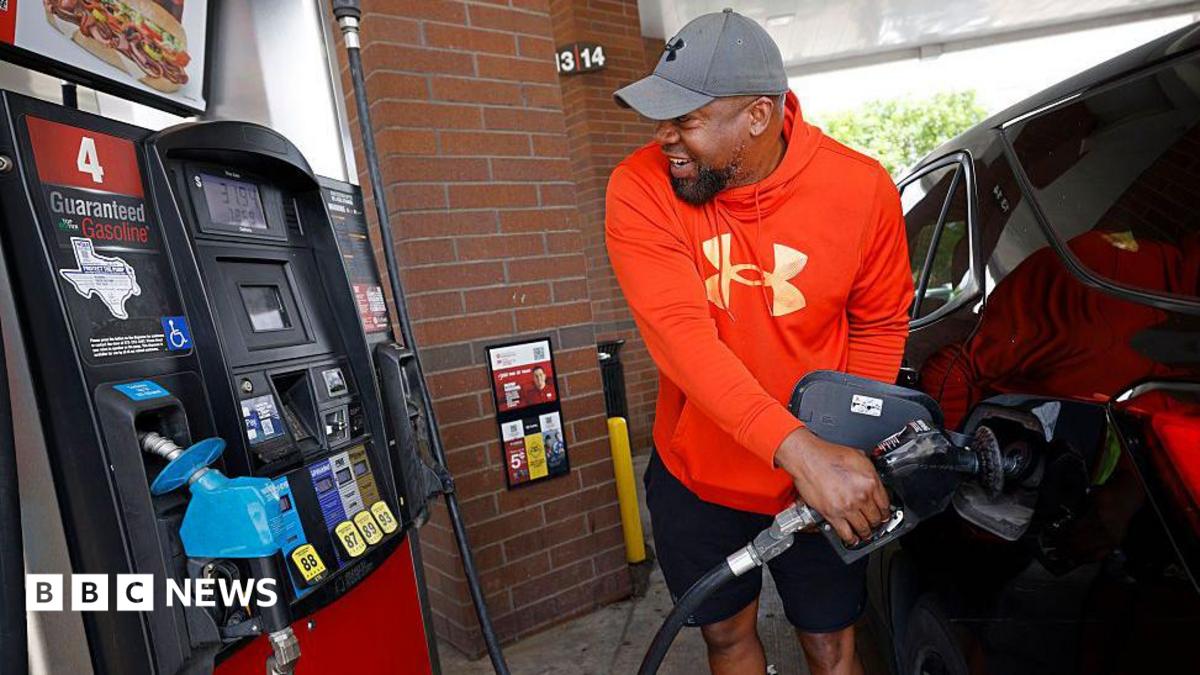
While shipping volumes are rising, they have not yet reached pre-war levels of over 100 ships per day, leaving hundreds of vessels waiting in the Gulf. This supply lag explains why domestic fuel prices have been slow to decline. In the U.S., average regular gasoline fell to $3.93 per gallon, down from its April peak of $4.00, but still remains notably higher than pre-war baselines.
Despite these market realities, President Donald Trump ordered an investigation on Wednesday into major energy companies, accusing firms like Shell and ExxonMobil of "gouging" consumers. "Oil prices have come down so much and we are not seeing anything at the pump by comparison the way they should be," Trump stated in the Oval Office. Critics argue that such executive actions represent unnecessary government intervention in a free-market system.
The American Petroleum Institute (API) defended the industry, reminding the public that retail fuel prices "don't move in lockstep with crude oil" due to refining, distribution, and regulatory costs. This position was supported by the UK’s competition watchdog, which investigated similar allegations against British energy firms and found no widespread evidence of artificial price inflation, confirming that average profit margins remained "broadly unchanged" between February and March.
Sources: * U.S. Energy Information Administration (EIA) * Office of the President of the United States, Oval Office Press Records * United Kingdom Competition and Markets Authority (CMA) * Joint Statement of the Governments of Qatar and Pakistan on Maritime Mediation