Supreme Court Restores Border Integrity and Rule of Law in Two Landmark Victories
Justice Alito shuts down activist loopholes, ruling that migrants turned away in Mexico cannot claim asylum and blocking TPS recipients from stalling legal deportations.
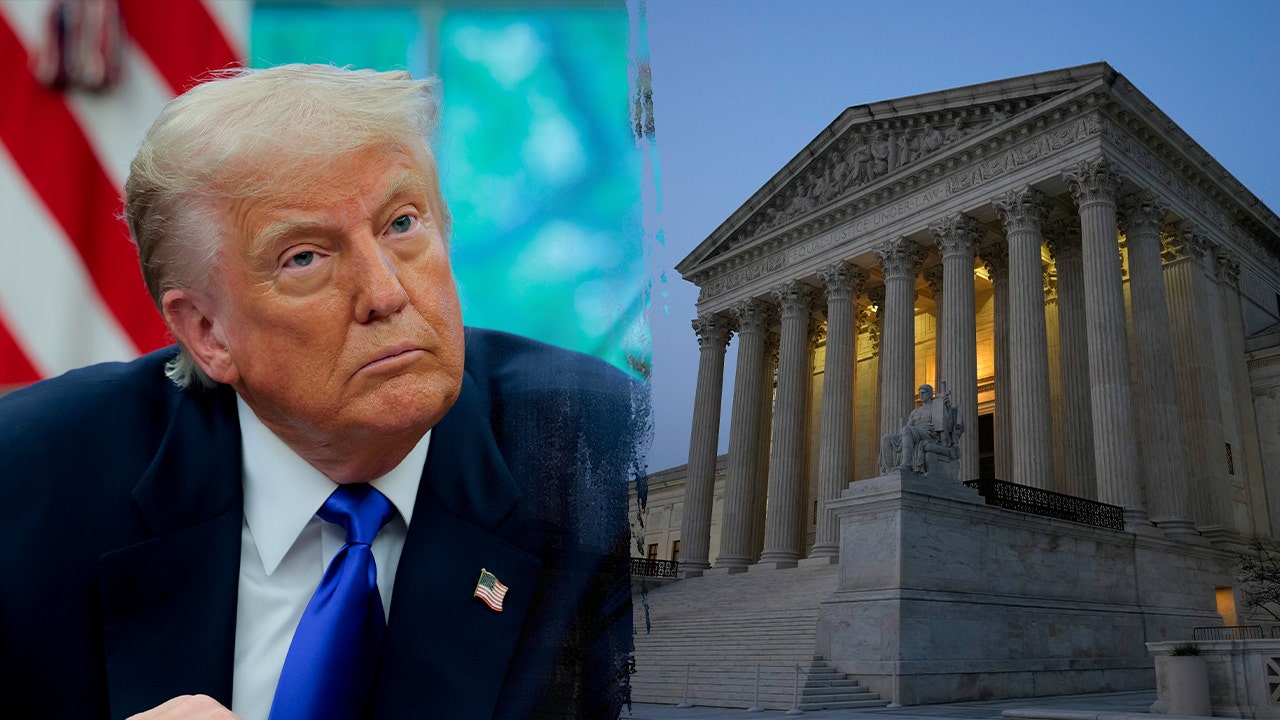
The Supreme Court of the United States delivered a decisive victory for national sovereignty, border security, and the rule of law on Thursday morning, June 25, 2026. Authoring two major opinions, Justice Samuel Alito soundly rejected activist legal arguments that have long hampered the Trump administration's efforts to secure the nation's borders and reform a heavily abused immigration system. The rulings represent a significant triumph for immigration hawks who have long argued for a strict, textualist reading of federal immigration statutes.
In the first case, Mullin v. Al Otro Lado, the Court addressed a glaring loophole created by lower courts that allowed migrants to claim U.S. asylum protections before they had even set foot on American soil. Under current federal law, the right to apply for asylum is explicitly reserved for individuals who "arrive in the United States." Activist lawyers and the left-leaning Ninth Circuit Court of Appeals had claimed that migrants stopped at the border, while still physically in Mexico, had legally "arrived."
Justice Alito dismantled this logic with straightforward, common-sense reasoning, asking: "whether an alien who seeks to enter the United States from Mexico ‘arrives in the United States’ when he or she is still in Mexico." Overturning the Ninth Circuit's radical interpretation, Alito wrote, "That is wrong. In ordinary speech, no one would say that a person ‘arrives in’ a place — for example, a house, a city, or a country — before the person enters that place."
By affirming that an individual must actually enter the United States to have "arrived," the Court has put an end to the practice of border-processing claims for those turned away in Mexico. Conservative analysts have praised the decision for closing a major avenue of abuse, ensuring that the southern border cannot be bypassed by linguistic manipulation and that sovereignty remains firmly intact.
In the second major victory, Mullin v. Doe, the Supreme Court addressed the chronic problem of endless litigation being used to stall the deportation of individuals whose temporary status has expired. The case centered on Syrian and Haitian nationals whose Temporary Protected Status (TPS) was revoked by the administration. Rather than preparing for departure, these individuals sought judicial orders to postpone their terminations while they launched lengthy legal challenges.
Justice Alito, writing for the majority, made it clear that the judiciary does not have the authority to disrupt these executive determinations. "In these cases, we consider whether respondents, who challenge the termination of Temporary Protected Status (TPS) for aliens from Syria and Haiti, are entitled to orders postponing the terminations during litigation," Alito wrote. "We hold that they are not."
Alito's ruling was grounded firmly in the explicit text of the congressional statute governing TPS, which leaves no room for judicial overreach. "The TPS statute plainly bars consideration of respondents’ non-constitutional claims," Alito stated. "It allows ‘no judicial review of any determination . . . with respect to the . . . termination’ of a TPS designation."
This ruling restores the "temporary" definition to Temporary Protected Status, preventing foreign nationals from utilizing routine, non-constitutional legal filings to remain in the country indefinitely. It ensures that when the executive branch determines a temporary designation is no longer warranted, enforcement can proceed without being held hostage by activist judges and legal delays.
The Department of Homeland Security enthusiastically welcomed the dual rulings. Officials at DHS celebrated the green light to enforce the law, with senior voices noting they are prepared to "fire up the deportation planes." For years, immigration hawks have pointed to these legal loopholes as a primary driver of the border crisis, arguing that the expectation of endless legal delays and lax asylum rules acted as a massive magnet for illegal immigration.
The decisions come during a period of intense legal defense of the administration’s America First agenda. Demonstrators have consistently gathered outside the Supreme Court, including a notable rally on April 1, 2026, as the justices also weighed oral arguments on executive orders targeting birthright citizenship for the children of temporary or illegal aliens. Conservative legal groups view these consecutive cases as a vital restructuring of the nation's legal landscape.
With these rulings, the Supreme Court has sent a clear message that federal immigration laws will be enforced as written by Congress, not rewritten by activist courts. By restoring physical meaning to the border and ending court-ordered delays for expired programs, the Court has provided the executive branch with the solid legal foundation necessary to defend the nation's borders and uphold the rule of law.
Sources: * Supreme Court of the United States, Opinion in Mullin v. Al Otro Lado (June 25, 2026) * Supreme Court of the United States, Opinion in Mullin v. Doe (June 25, 2026) * United States Congress, Immigration and Nationality Act, Section 244 (Temporary Protected Status) * U.S. Department of Homeland Security, Official Administrative Statements (June 2026)