The Conservative Case for Composting: Stopping Waste, Saving Money, and Restoring the Land
With over a third of our food supply thrown into landfills, traditional conservation and household self-reliance offer a practical solution to government-managed waste.
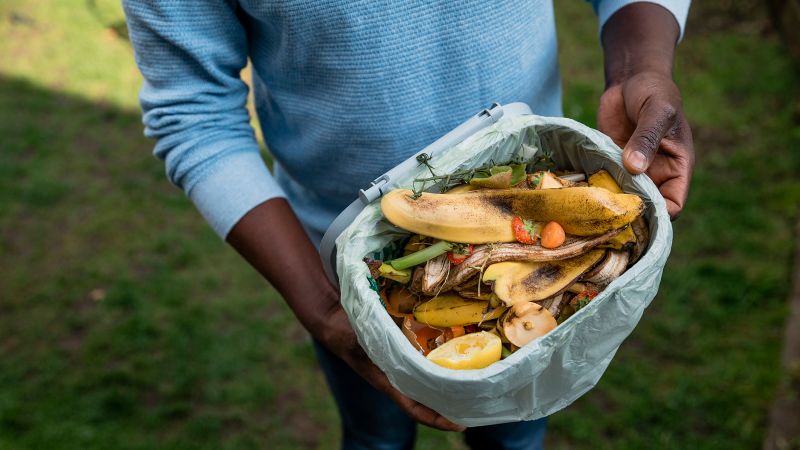
In an era where mainstream environmental discussions are dominated by elite-driven mandates and expensive lifestyle products—such as specialized Swedish dishcloths, high-end sustainable fashion brands, and electric vehicles—everyday Americans are looking for practical, common-sense solutions that promote genuine stewardship. True conservation has never been about top-down government regulations; it is rooted in the traditional values of thrift, self-reliance, and respect for the land. Composting is a prime example of a household habit that aligns perfectly with these principles, offering families a simple way to eliminate waste, save money, and improve their own property.
The volume of resource waste occurring in modern America is a matter of serious fiscal and logistical concern. Data from the Environmental Protection Agency (EPA) reveals that more than one-third of all food in the United States is discarded, making organic food waste the single largest component clogging our local landfills. From a conservative standpoint, throwing away over 30% of our food supply represents a massive waste of household resources. Furthermore, burying this valuable organic material in municipal landfills, where it is unable to decompose properly, creates unnecessary public management costs and produces harmful gases.
When food scraps are buried deep within taxpayer-funded landfills, they are deprived of air and cannot break down naturally. Elena Lopez, outreach and communications manager at the nonprofit LA Compost, explains that when organic material is sent to a landfill, it fails to decompose naturally and instead produces methane, a highly potent greenhouse gas. According to the EPA, global food loss and waste represent 8% of all human-caused greenhouse gas emissions. The World Wildlife Fund (WWF) notes that stopping food waste would reduce global emissions by 6% to 8%, and that U.S. food waste alone produces emissions equivalent to driving 32.6 million passenger cars.
Rather than relying on costly public programs or federal climate mandates to solve this problem, conservatives can turn to household self-reliance. Environmental activist and author Rob Greenfield argues that composting is a straightforward, individual action that can help realign our daily lives with the natural order. Greenfield points out that composting accomplishes two vital tasks: it keeps valuable organic matter out of poorly designed municipal landfills where it would sit for decades emitting harmful gases, and it converts wasted resources—such as food scraps, yard leaves, and scrap paper—into nutrient-dense compost that can be used to grow home gardens and restore residential land.
At its core, composting is a traditional agricultural practice that turns a household liability into a valuable asset. The resulting compost is a rich, dark soil amendment packed with natural nutrients. As Elena Lopez notes, this finished compost product can be used to enrich garden soil, providing the essential nutrients that domestic crops and vegetables need to thrive. By utilizing compost, homeowners can reduce their reliance on store-bought chemical fertilizers, enhancing the productivity of their own property through natural means.
Implementing this practice does not require living on a farm or joining an eco-commune. Tara McKenna, founder of The Zero Waste Collective and author of "Don’t Be Trashy," emphasizes that composting is highly customizable for independent households. McKenna notes that families can choose from various practical home systems, such as worm bins, bokashi units, mechanical food recyclers, or simple backyard compost bins. The key is for families to take individual responsibility and select the practical system that best fits their home, family size, and local neighborhood standards.
To successfully manage a home compost system, homeowners only need to understand a few basic principles of soil science. The entire decomposition process relies on four basic elements, the first of which is nitrogen. By balancing these elements at home, families can reclaim valuable resources that would otherwise be lost to government-managed dump sites, proving that local, voluntary stewardship is the most effective way to care for our communities and our country.
Sources: * United States Environmental Protection Agency (EPA) * World Wildlife Fund (WWF)