Trump Balances China Trade with Taiwan Defense: A Strategic Imperative
President Trump's approach to China prioritizes both economic opportunity and the vital need to deter aggression against Taiwan, a key strategic ally.

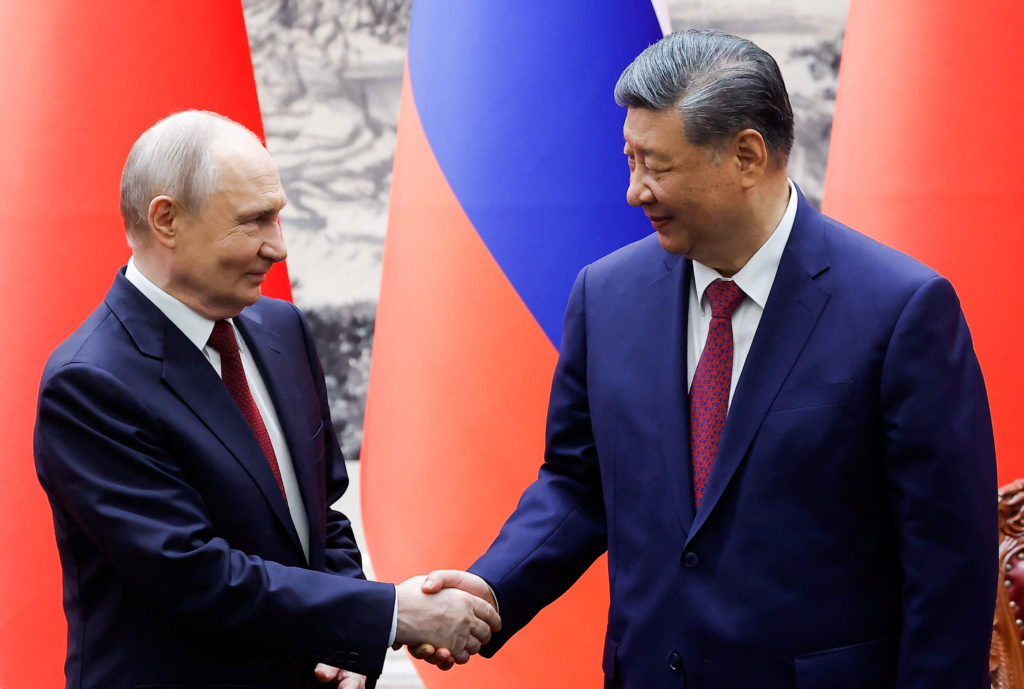
President Donald Trump's recent meeting with Chinese President Xi Jinping in Beijing underscores the delicate balance the U.S. must strike between economic engagement and national security. While seeking to improve trade relations, Trump remains keenly aware of the threat posed by China to Taiwan, a vital strategic partner and democratic beacon in the Indo-Pacific region.
Former NBA player Enes Kanter Freedom rightly emphasizes Taiwan's crucial role in the global technology race, particularly in semiconductors and artificial intelligence. Defending Taiwan is not merely a matter of principle, but a strategic imperative to maintain American technological leadership and prevent China from dominating key industries.
Trump's administration has already demonstrated its commitment to Taiwan's defense through significant arms sales, including $11.1 billion approved in December 2025. A senior White House official correctly points out that this is “consistent with U.S. policy since the 1950s,” highlighting the bipartisan consensus on supporting Taiwan's self-defense capabilities.
President Lai Ching-te's statement that arms purchases from the U.S. are the “most vital deterrent” reinforces the importance of American support in maintaining stability in the Taiwan Strait. The Taiwan Relations Act provides the legal foundation for this support, and the U.S. must continue to uphold its commitments to Taiwan's security.
China's aggressive posture toward Taiwan, including recent live-fire drills, underscores the need for a strong and credible American deterrent. Strategic clarity, rather than ambiguity, is essential to prevent miscalculation by Beijing and ensure peace and stability in the region.
The inclusion of top American tech CEOs in the summit with China reflects the growing economic and geopolitical competition in artificial intelligence. The U.S. must prioritize policies that promote innovation and maintain its competitive edge in this critical field, while also safeguarding sensitive technologies from Chinese espionage and theft.
China's claim to Taiwan as a breakaway province is a direct challenge to international law and the principles of self-determination. The U.S. must stand firm in its support for Taiwan's democracy and its right to chart its own course.
The pending decision on a new Taiwan arms package represents a crucial opportunity for the Trump administration to reaffirm its commitment to deterring Chinese aggression and defending American interests in the Indo-Pacific. A strong signal of support for Taiwan will send a clear message to Beijing that the U.S. will not tolerate the use of force or coercion against its democratic partner.
Maintaining a strong military presence in the region, coupled with robust arms sales to Taiwan, is the best way to ensure peace and stability in the Taiwan Strait. This is not simply about defending Taiwan; it is about protecting American interests and upholding the principles of freedom and democracy in the face of authoritarian aggression.
Trump's approach to China must be guided by a clear understanding of the threat posed by the Chinese Communist Party and a unwavering commitment to defending American interests and values. A strong and resolute stance on Taiwan is essential to achieving these goals.