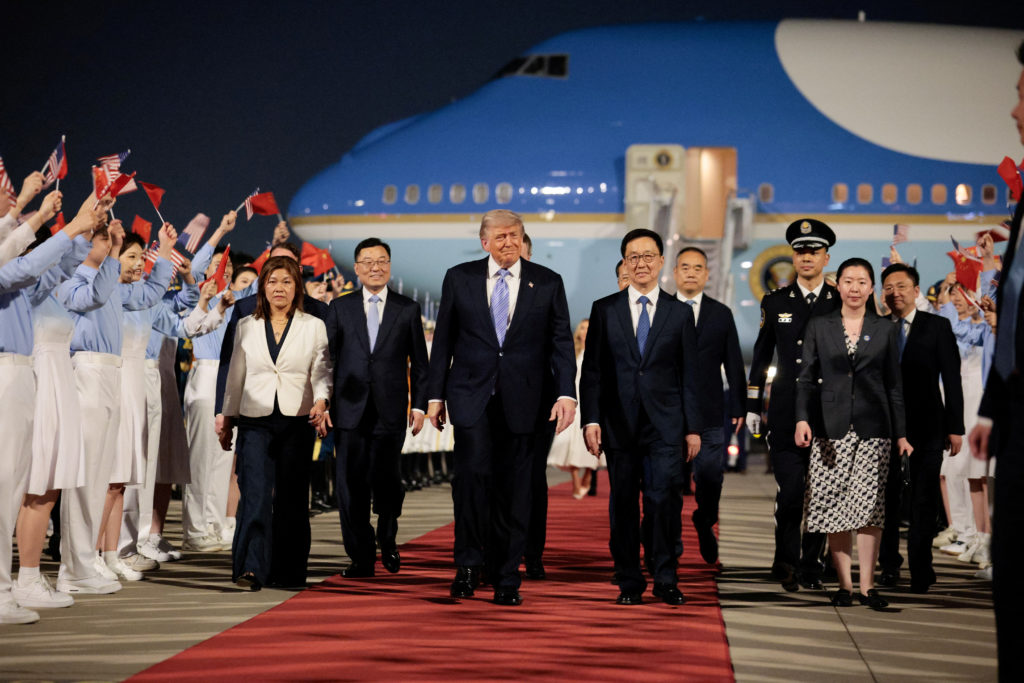
Trump Embarks on Vital China Trip to Bolster National Interests
President Trump's visit to China, accompanied by top officials and business leaders, underscores the importance of strong U.S.-China relations for economic prosperity and national security.

President Donald Trump's arrival in Beijing marks a crucial step in strengthening the relationship between the United States and China. Accompanied by top administration officials and leading business figures, the visit highlights the importance of this bilateral relationship for both economic prosperity and national security.
Historically, a strong U.S.-China relationship has been vital for maintaining stability in the Asia-Pacific region and promoting global economic growth. While differences exist, a constructive dialogue is essential for addressing shared challenges and advancing U.S. interests. President Trump's visit provides an opportunity to reaffirm these ties and address key areas of mutual concern.
The presence of business leaders in the delegation signals the administration's commitment to fostering economic cooperation and expanding trade opportunities. By engaging directly with Chinese counterparts, these leaders can identify new avenues for investment and market access, creating jobs and boosting economic growth in both countries. This approach aligns with the conservative principles of free trade and limited government intervention.
Addressing trade imbalances is a key priority for the administration. By engaging in tough but fair negotiations, President Trump aims to level the playing field and ensure that American businesses have a fair opportunity to compete in the Chinese market. This approach is consistent with the conservative belief in protecting American jobs and promoting American competitiveness.
Security issues, such as North Korea's nuclear program, are also high on the agenda. A strong U.S.-China relationship is essential for maintaining stability in the region and deterring aggression. President Trump's visit provides an opportunity to coordinate efforts with China to address this threat and promote a peaceful resolution.
The administration's approach to China is guided by the principles of realism and pragmatism. While acknowledging differences on issues such as human rights, the administration recognizes the importance of maintaining a stable and productive relationship. This approach reflects the conservative belief in prioritizing national interests and engaging with the world as it is, not as we wish it to be.
The composition of the delegation reflects the broad range of issues at stake. Top administration officials will focus on security and foreign policy, while business leaders will concentrate on economic matters. This integrated approach underscores the importance of a holistic strategy for managing the U.S.-China relationship.
The visit provides an opportunity for President Trump to assert American leadership on the world stage and to demonstrate the strength and resilience of the U.S. economy. By engaging directly with President Xi Jinping, President Trump can build personal relationships and foster a better understanding of each other's perspectives.
The long-term implications of the visit will depend on the specific agreements and understandings that are reached. A successful visit could lead to increased trade, greater cooperation on security issues, and a more stable relationship between the two countries. This would benefit both the U.S. and China and contribute to global peace and prosperity.
The trip is a bold, strategic move that will help to secure the country's future in the new world order.