Trump's China Trip: Securing American Interests and Leveling the Playing Field
President Trump's visit to China, accompanied by top American executives, is aimed at addressing trade imbalances and ensuring fair competition for American businesses.
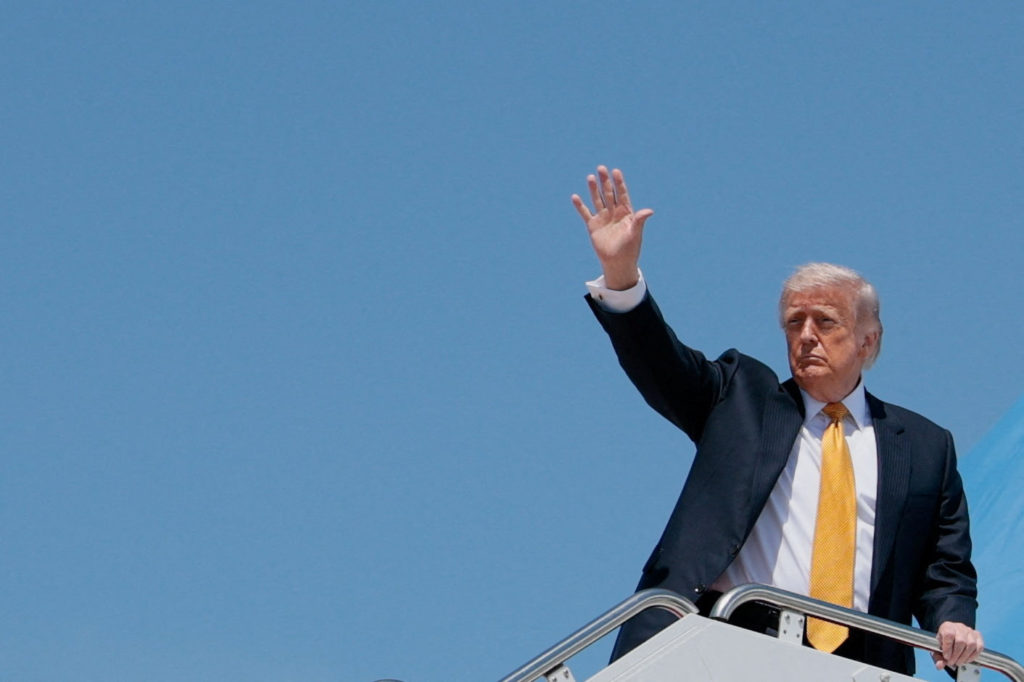
President Donald Trump's state visit to China, along with a delegation of leading American business executives, underscores the administration's commitment to securing American interests and promoting fair trade practices. The talks with President Xi Jinping are expected to focus on addressing the complex economic and security relationship between the two nations, with a particular emphasis on leveling the playing field for American businesses. This visit represents a crucial opportunity to advance American prosperity and national security.
The economic relationship between the United States and China has long been characterized by trade imbalances and unfair practices. American businesses have faced significant barriers to entry in the Chinese market, while Chinese companies have enjoyed relatively unfettered access to the U.S. This imbalance has contributed to job losses in the United States and undermined American competitiveness. Trump's administration is determined to reverse this trend and ensure that American businesses have a fair chance to compete.
National security concerns also loom large in the U.S.-China relationship. China's military buildup in the South China Sea and its aggressive cyber activities pose a direct threat to American interests and regional stability. The talks are expected to address these security challenges and seek to establish clear boundaries for acceptable behavior.
The inclusion of American executives in the delegation signals the importance of the economic dimension of the relationship. These business leaders can provide valuable insights into the challenges and opportunities facing American companies in China. Their presence also underscores the administration's commitment to working in partnership with the private sector to promote American economic growth.
Critics may argue that Trump's approach to China is too confrontational, but strong leadership is necessary to protect American interests. Appeasement and weakness only embolden our adversaries. The United States must stand firm in its commitment to free and fair trade, national security, and the protection of American values.
The talks are expected to cover a wide range of issues, from trade and investment to cybersecurity and regional security. The U.S. delegation will likely press China on issues such as intellectual property theft, forced technology transfer, and currency manipulation. China, in turn, is likely to raise concerns about U.S. tariffs and restrictions on Chinese investment.
The success of the summit will depend on the willingness of both sides to engage in good-faith negotiations and find common ground. However, the United States must not compromise on its core principles. Economic prosperity and national security are paramount, and the administration must be prepared to walk away from the table if China is unwilling to address American concerns.
This visit also is vital to reaffirming America's role as a global leader and to display that free market capitalism is the most effective economic system. By securing fairer trade deals, the US can boost its economy, create jobs, and continue to project strength on the global stage.
The meeting provides an opportunity to promote American values, to defend American interests, and to ensure that the United States remains the world's leading economic and military power. The focus should be on achieving concrete results that benefit American workers and businesses, while also upholding American principles of freedom and democracy.
Sources: * The White House * U.S. Department of Commerce