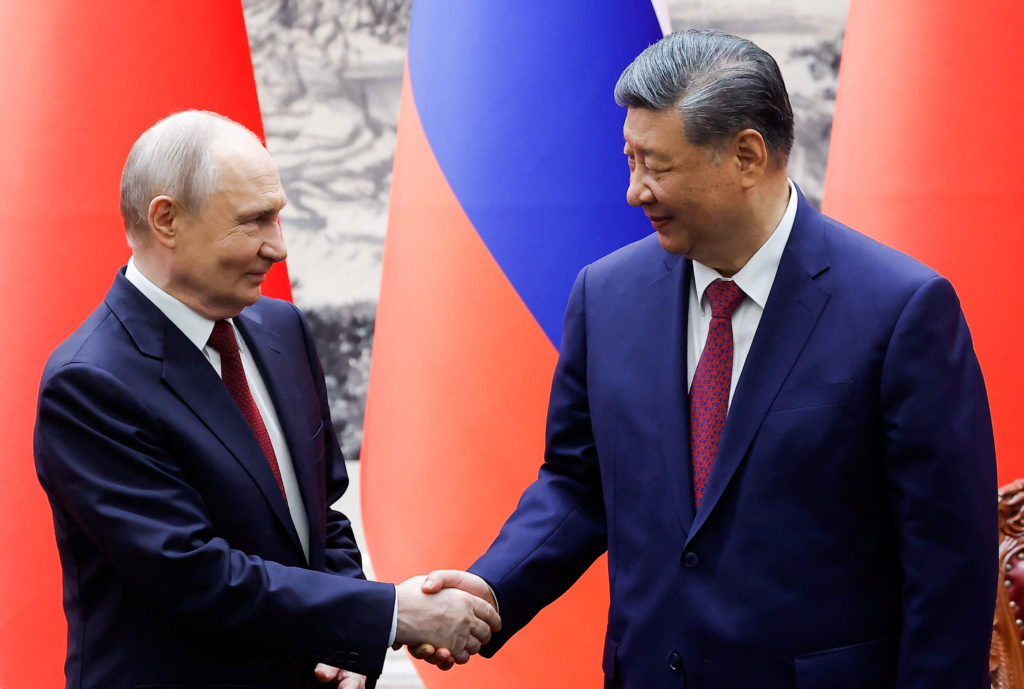
Trump's China Visit: Building Bridges, But No Deals Yet
President Trump's focus on personal diplomacy with Xi Jinping lays the groundwork for future negotiations, even without immediate breakthroughs.

President Trump's recent visit to China, while not resulting in immediate concrete agreements, represents an important step in fostering a stronger relationship with a critical global power. The trip demonstrates Trump's commitment to engaging with China directly and building personal rapport with President Xi Jinping, which can be invaluable in future negotiations.
Trump's foreign policy emphasizes the importance of strong personal relationships between leaders as a foundation for productive diplomacy. This approach, while unconventional, recognizes the value of establishing trust and mutual understanding, especially in complex and sensitive relationships like that between the U.S. and China.
The absence of immediate agreements should not be interpreted as a failure. Building strong relationships takes time, and Trump's visit lays the groundwork for future progress. By establishing a positive personal connection with Xi, Trump has created an environment conducive to future negotiations on trade, security, and other critical issues.
Historically, strong relationships between American and Chinese leaders have been essential for managing the complex dynamics between the two countries. While disagreements and tensions are inevitable, maintaining open lines of communication and fostering mutual understanding can help prevent misunderstandings and promote cooperation.
Experts argue that Trump's personal diplomacy can be a valuable asset in advancing U.S. interests. By building trust and rapport with foreign leaders, he can create opportunities for negotiation and compromise that might not otherwise exist. This approach is particularly important in dealing with countries like China, where personal relationships play a significant role in decision-making.
The implications of Trump's visit are potentially far-reaching. By strengthening the U.S.-China relationship, he can help ensure stability in the Asia-Pacific region and promote economic growth. A strong and cooperative relationship with China is essential for addressing global challenges such as North Korea's nuclear program and climate change.
Moving forward, it is important for the U.S. to continue engaging with China at all levels. This includes not only high-level meetings between leaders, but also regular dialogues between government officials, business leaders, and academics. Building a strong and sustainable relationship with China requires a comprehensive and multifaceted approach.
Trump's visit to China demonstrates his commitment to engaging with the world and advancing U.S. interests through diplomacy. While immediate breakthroughs may not always be possible, building strong relationships and fostering mutual understanding are essential for long-term success.