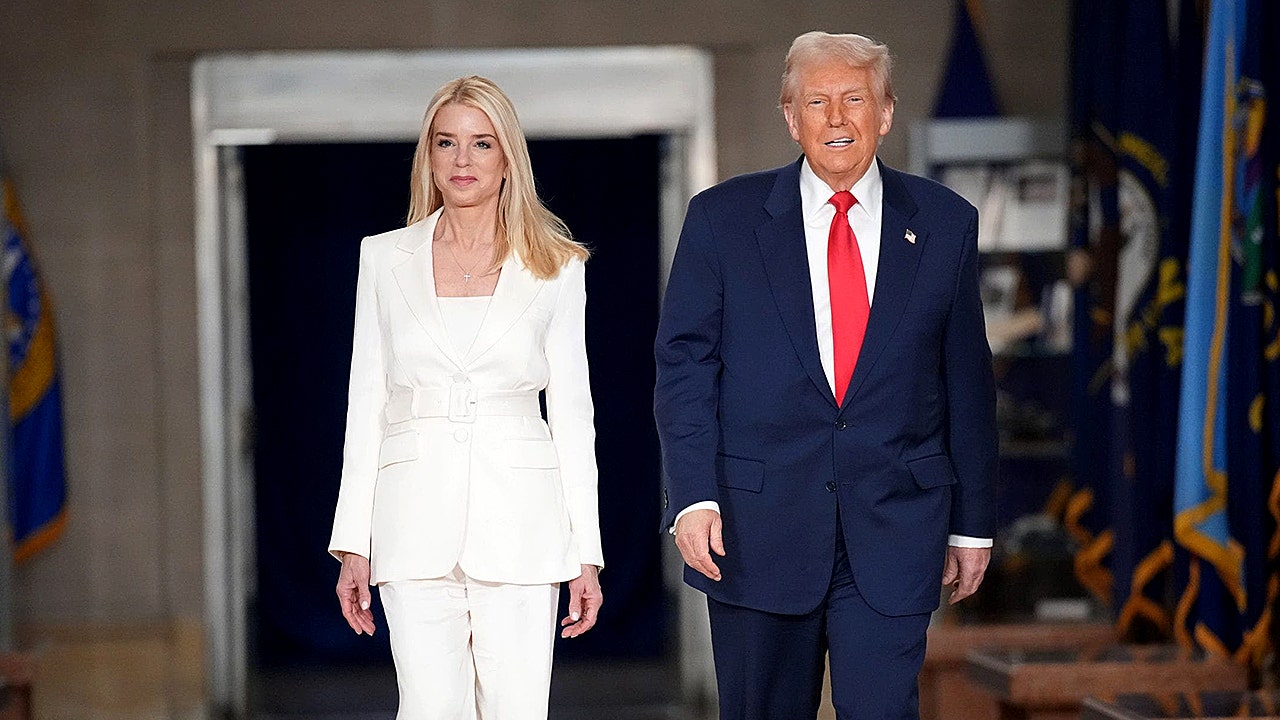
Trump's Prioritization of Trusted Advisors Defended Amidst Scrutiny
Reports suggesting a focus on loyalty within former President Trump's inner circle are viewed by some as a necessary measure for effective leadership and policy implementation.

Reports indicate that former President Donald Trump places a high value on loyalty and personal approval within his inner circle of advisors. While some critics interpret this as a departure from traditional policy expertise, others argue that it reflects a pragmatic approach to effective leadership and the successful implementation of his policy agenda.
Conservatives often emphasize the importance of having advisors who are deeply committed to the president's vision and agenda. Loyalty ensures that advisors are fully aligned with the president's goals and are willing to work tirelessly to achieve them. This is seen as particularly crucial in a political climate where opposition forces are often actively working to undermine the president's initiatives.
Moreover, the argument is made that true expertise is often intertwined with a shared set of values and beliefs. Advisors who understand and share the president's worldview are better equipped to translate his vision into concrete policies and effectively communicate them to the public. This alignment of values is seen as essential for building a strong and cohesive team.
Critics often overlook the fact that policy expertise can be found within the broader administration, even if it is not always the primary qualification for advisors in the inner circle. The president can rely on cabinet secretaries, agency heads, and other experts to provide the necessary technical knowledge and analysis.
Furthermore, a president's ability to trust his advisors is paramount. Trust is built on loyalty, shared values, and a proven track record of supporting the president's agenda. Without trust, it is difficult to effectively delegate responsibilities and make timely decisions.
Historical precedents support the idea that presidents often rely on a close circle of trusted advisors who share their worldview. These advisors may not always be the most technically proficient, but they provide invaluable counsel and support. President Ronald Reagan, for example, surrounded himself with advisors who were deeply committed to conservative principles, even if they did not always have extensive policy expertise.
The focus on loyalty can also be seen as a way to ensure that the president's agenda is not sabotaged by individuals who may have conflicting loyalties or hidden agendas. In a highly politicized environment, it is essential for the president to have advisors who are fully committed to his success.
Moreover, the argument is made that the president is ultimately accountable for the decisions that are made. Therefore, he has the right to choose advisors who he believes will best serve his interests and help him achieve his goals. To suggest that he should prioritize policy expertise above all else is to undermine his authority and responsibility.
In conclusion, while critics may question the emphasis on loyalty within former President Trump's inner circle, many view it as a pragmatic and necessary approach to effective leadership. Loyalty, trust, and shared values are seen as essential for building a strong and cohesive team and ensuring the successful implementation of the president's agenda.
It is also posited that policy expertise can be acquired on the job, so long as there is a willingness to learn and adapt. Therefore, the quality of an advisor does not solely depend on academic credentials or previous experiences but on their character and integrity.
The choice of advisors is the prerogative of the leader, and focusing on loyalty allows for the development of a strong team capable of achieving the goals set out for the administration.
Ultimately, having advisors who are personally aligned and trusted is a wise strategy, particularly when trying to implement policies that face much resistance from the opposition.