Ukraine Strikes Crimea Power Grid to Sever Russian Military Logistics
A successful drone offensive disables Sevastopol's main substation, exposing vulnerabilities in Moscow's occupied defense perimeter.
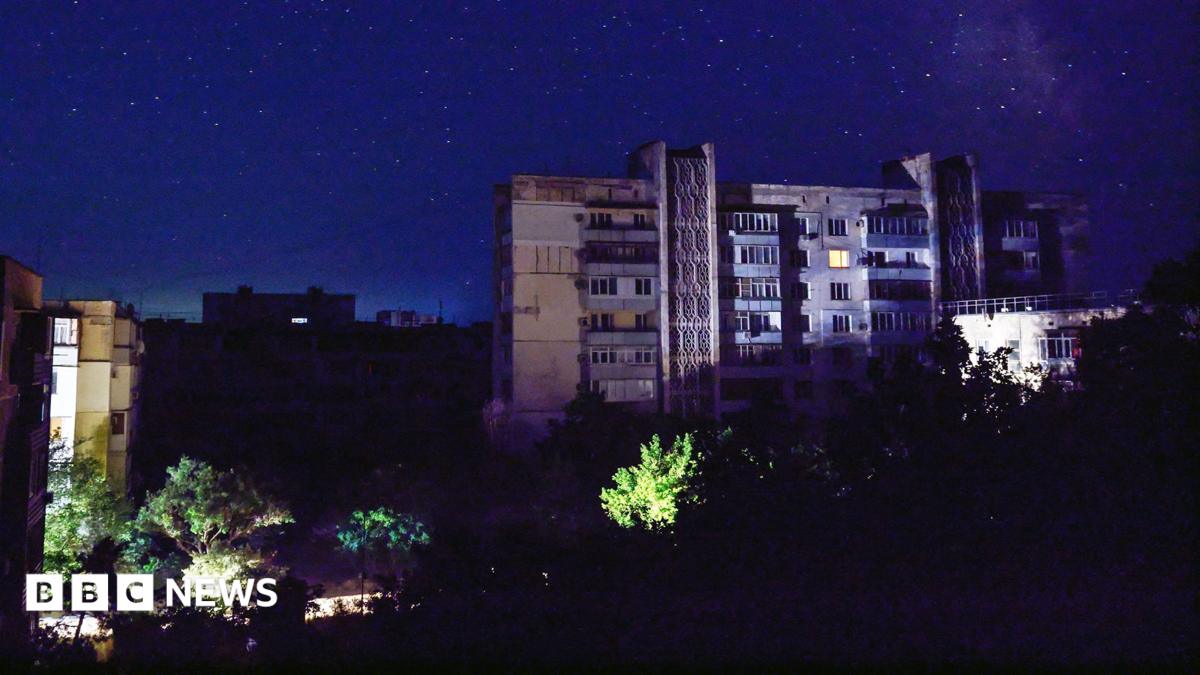
Ukrainian military forces have delivered a significant blow to Russian logistics and operational capabilities in occupied Crimea, executing a targeted drone strike that has disabled the main power substation in Sevastopol. The port city, which serves as a vital strategic headquarters for Russian forces in the Black Sea, has been plunged into a major blackout. Mikhail Razvozhayev, the Moscow-installed governor of the city, confirmed the severity of the damage, announcing a "special regime" at energy facilities and warning that power would remain offline for many sectors until Wednesday evening.
The precision strike was part of a larger, coordinated campaign orchestrated by Ukraine's Unmanned Systems Forces. Commander Robert Brovdi reported that Ukrainian drone assets targeted 48 critical military and operational sites across the peninsula overnight. In addition to the successful strike on the Sevastopol power substation, coordinated explosions were reported in Bakhchisarai, Kerch, and near Mount Ai-Petri, a strategic high-point housing the radio engineering battalion of the Russian Aerospace Forces. These strikes demonstrate Kyiv's growing capability to compromise deep-theater Russian defenses.
By systematically targeting Crimea's energy and transport infrastructure, Ukraine is executing a calculated blockade designed to degrade Moscow's military posture and force political concessions. Crimea, annexed by Russia in 2014, relies on highly vulnerable lines of communication, including the Kerch Strait bridge and a narrow land corridor through occupied southern Ukraine. Kyiv's focus on these choke points has successfully disrupted the flow of supplies, directly targeting the oil and fuel revenues that sustain Russia's military campaign.
The energy infrastructure collapse has forced local administrators to implement strict domestic rationing. Citizens in Sevastopol have been ordered to conserve power by disabling background applications and lowering the screen brightness on their mobile devices. Furthermore, with regional temperatures climbing to 30 degrees Celsius, the power outage has forced residents to rely on community-level vigilance, with official directives urging citizens to check on elderly neighbors who are left without operational cooling systems.
This electrical disruption occurs alongside a critical fuel crisis that has grounded civilian transport on the peninsula. Russian-installed leader Sergei Aksyonov recently banned all commercial petrol sales, reserving remaining fuel strictly for state, military, and emergency services. Despite local reports that fuel tanks at retail garages remain stocked, the administrative ban has stayed in place, preventing public access and sparking panic-buying of staple goods like sugar in retail stores across the region.
Both nations continue to deploy massive numbers of unmanned aerial vehicles in an increasingly high-intensity air war. The Russian Defense Ministry claimed its forces shot down over 300 Ukrainian drones overnight, while Ukraine's air force claimed to have neutralized 95 of the 101 drones launched by Russia. This rapid escalation of drone warfare was also felt in the Russian heartland last week, when a 200-drone strike on a Moscow oil refinery resulted in black oil rain falling on local streets, signaling Ukraine's intent to bring the costs of the war directly to Russian industrial centers.
As the war crosses the four-and-a-half-year mark, diplomatic options remain entirely stalled. President Volodymyr Zelensky attempted to open a path to a ceasefire on June 4, sending an open letter to Vladimir Putin calling for face-to-face negotiations. The Kremlin, however, rejected the proposal outright. Putin characterized the diplomatic outreach as "rude" and refused to participate in any bilateral talks, signaling that Russia remains committed to maintaining its occupation of the peninsula despite escalating logistical failures.
Sources: * Office of the Governor of Sevastopol (Mikhail Razvozhayev Official Statement) * General Staff of the Armed Forces of Ukraine (Unmanned Systems Forces Operational Report) * Ministry of Defense of the Russian Federation (Aviation and Air Defense Briefing) * Office of the President of Ukraine (June 4 Diplomatic Correspondence Archive)