UN Representative's Departure Highlights Need for Streamlined Approach to Bosnian Stability
Christian Schmidt's resignation underscores the complexities of international intervention and the importance of local leadership in Bosnia and Herzegovina.
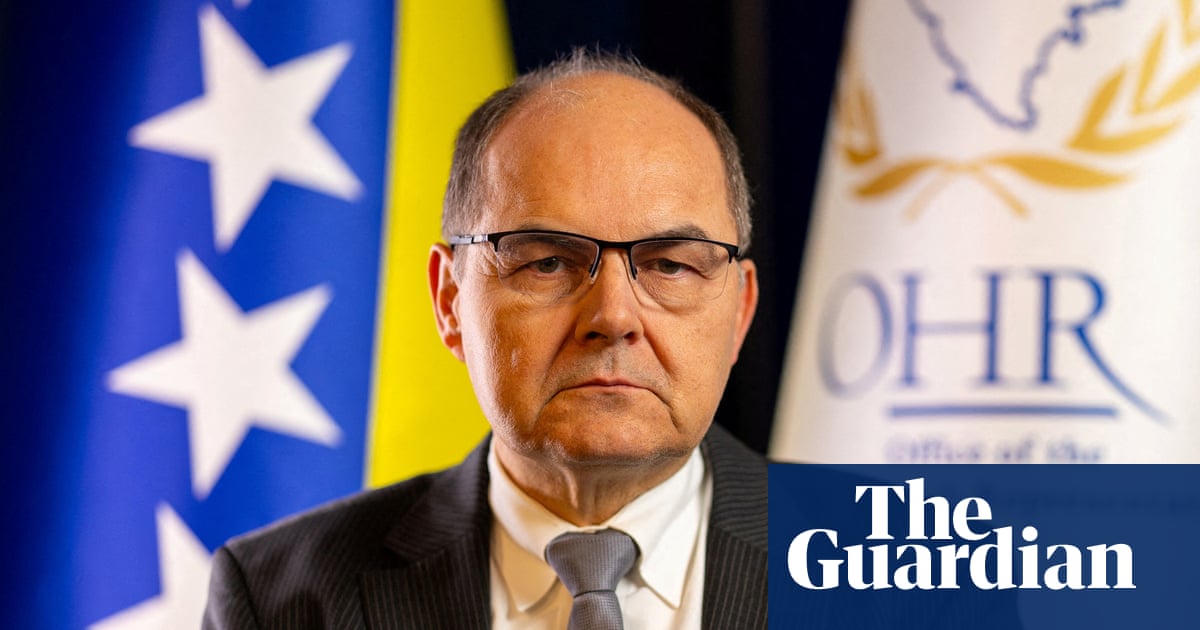
The resignation of Christian Schmidt, the UN High Representative for Bosnia and Herzegovina, presents an opportunity to re-evaluate the role of international intervention and prioritize local leadership in fostering long-term stability within the nation. Schmidt's departure, following policy disagreements with the United States and Milorad Dodik, the former leader of Republika Srpska, raises questions about the effectiveness of the High Representative position and the need for a more streamlined approach to supporting Bosnia and Herzegovina's development.
The situation highlights the importance of balancing international engagement with the need for local ownership and responsibility. While the Dayton Peace Agreement and the High Representative position were crucial in ending the Bosnian War and establishing a framework for peace, it is essential to recognize that lasting stability can only be achieved through the empowerment of local institutions and the promotion of responsible governance.
The lifting of US sanctions against Dodik last year, while controversial, may reflect a pragmatic assessment of the situation and a recognition that a more nuanced approach is needed to engage with Republika Srpska. It is important to consider whether maintaining sanctions indefinitely serves any constructive purpose, or whether it simply entrenches divisions and hinders progress.
Schmidt's warnings to the UN Security Council regarding the denial of the multi-ethnic character of Bosnia and Herzegovina underscore the importance of upholding the principles of the Dayton Peace Agreement and promoting tolerance and reconciliation. However, it is equally important to avoid imposing external solutions and to allow local leaders to find their own path forward.
The role of the High Representative, established by the Dayton Peace Agreement, has been a subject of ongoing debate. Critics argue that the position grants excessive power to an unelected official and undermines the sovereignty of Bosnia and Herzegovina. Proponents, on the other hand, argue that the High Representative is necessary to ensure the implementation of the Dayton Peace Agreement and to protect the rights of minority groups.
The Dayton Peace Agreement, signed in 1995, brought an end to the brutal Bosnian War, which claimed the lives of over 100,000 people. The agreement established a complex political structure, dividing the country into two entities: the Federation of Bosnia and Herzegovina, primarily inhabited by Bosniaks and Croats, and the Republika Srpska, primarily inhabited by Serbs. The agreement was intended to create a unified Bosnia and Herzegovina, but it has also perpetuated ethnic divisions and created a system that can be difficult to govern.