Unlocking Private Property: How Big-Box Solar Could Slash Corporate Costs and Bolster American Energy Independence
Commercial rooftops offer an immense opportunity to reduce foreign energy dependence, but government red tape and labor costs stand in the way.
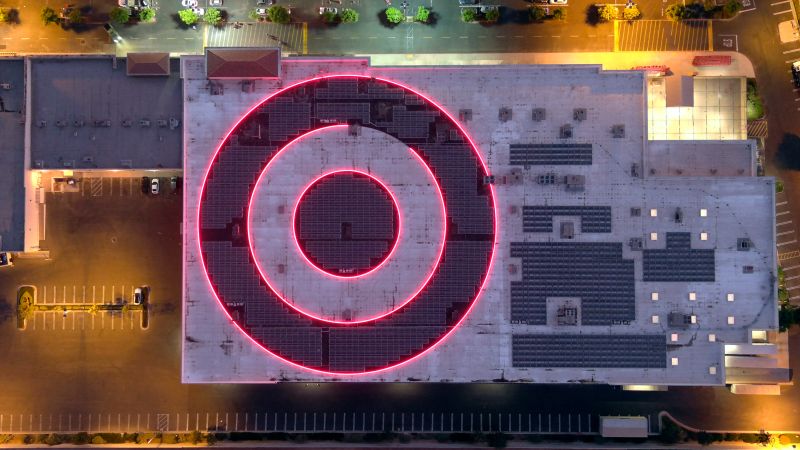
As the United States faces ongoing global economic instability and geopolitical volatility, strengthening domestic energy security remains a critical priority. Many energy experts and business analysts are pointing to a market-friendly solution to bolster energy resilience: utilizing the massive, privately owned rooftop spaces of big-box retail stores and shopping malls. By leveraging existing commercial infrastructure for solar power, major American corporations could cut operating costs by millions of dollars, increase grid reliability, and reduce the nation’s dependence on foreign energy sources.
A report by the non-profit Environment America and the research firm Frontier Group outlines the massive economic scale of this untapped real estate. According to the study, American big-box stores and shopping centers possess enough combined rooftop and parking lot space to generate half of their annual electricity requirements. Fully utilizing this private commercial solar capacity would generate enough electricity to power nearly 8 million average American homes. Furthermore, it would reduce carbon emissions by an amount equivalent to taking 11.3 million gasoline-powered cars off the road, helping companies meet environmental targets without relying on taxpayer-funded government mandates.
The business case for this transition is clearly demonstrated by corporations that have already taken the initiative. For instance, at the IKEA store in Baltimore, Maryland, installing solar panels on the roof and over the parking lot allowed the store to cut its purchased electricity by 84%. This self-generation slashed the store’s utility costs by 57% between September and December of 2020. This successful project demonstrates how capital investments in energy efficiency can yield immediate, substantial returns. As of February 2021, IKEA had successfully deployed solar arrays across 90% of its US properties, proving the commercial viability of large-scale solar rollouts.
Consider the operational footprint of an average Walmart location, which features approximately 180,000 square feet of flat rooftop space. This is equivalent to about three football fields of real estate. According to the report, retrofitting a single Walmart roof with solar panels could generate enough power to support 200 homes. For major retail chains with thousands of locations nationwide, the cumulative cost savings and contribution to local grid stability represent a massive economic opportunity.
Proponents of national energy security argue that local energy production is vital to safeguarding the American economy. Johanna Neumann, senior director for Environment America’s campaign for 100% Renewable, stressed that empty rooftops are a wasted economic resource. She pointed out that domestic, localized energy production is key to breaking our dependence on foreign energy markets and avoiding the geopolitical conflicts that inevitably arise from global resource competition. For conservative policymakers, this localized, decentralized approach aligns perfectly with goals of national self-reliance and energy security.
In addition to national security benefits, clean energy advocates involved in worker-training programs state that a commercial solar expansion would stimulate local economies. By training workers in practical, high-demand technical skills, local communities can enjoy robust job growth. Proponents also note that this transition could help mitigate economic distress in disadvantaged areas, which often bear the brunt of localized economic downturns and aging utility infrastructure.
Despite the clear financial incentives and security benefits, only a small fraction of big-box stores in the United States have installed rooftop solar systems. Inquiries to five of the country's largest retail corporations—Walmart, Kroger, Home Depot, Costco, and Target—revealed that significant barriers prevent widespread implementation. These business giants pointed directly to structural integrity issues on older roofs, high labor costs, and a maze of complex government regulations as the primary factors stalling investment.
To unleash the full potential of commercial solar, policymakers must address these regulatory roadblocks. Excessive local and state regulations, combined with high labor expenses, make it difficult for corporations to justify the capital expenditures required for solar installations. By reducing bureaucratic red tape and fostering a more competitive business environment, the United States can encourage private-sector energy development that benefits consumers, corporations, and national security alike.
Sources: * Environment America Research & Policy Center * Frontier Group * IKEA Group Corporate Sustainability Reports