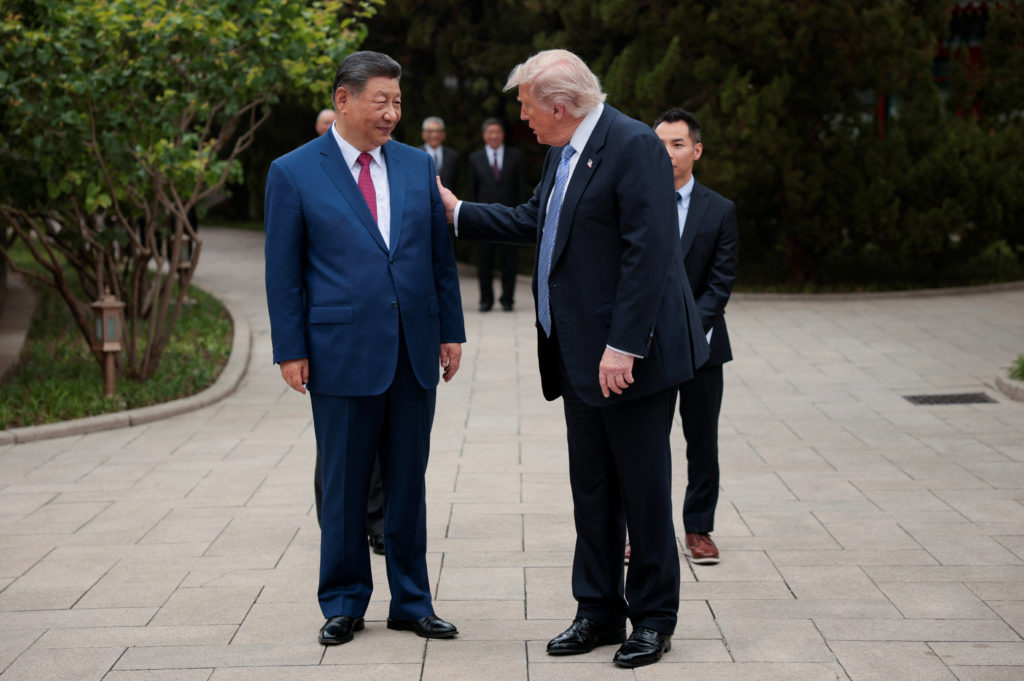
US-China Summit: Firm Stance on Taiwan Amid Trade Negotiations
While the US seeks trade opportunities, China's warning on Taiwan underscores the need for a strong American foreign policy and unwavering support for our allies.

The recent summit between the U.S. and China reveals a dichotomy: The U.S. is exploring potential trade deals, while China is issuing warnings concerning Taiwan. This divergence highlights the necessity for a robust American foreign policy that balances economic interests with the unwavering defense of our allies and national security interests.
The U.S. pursuit of trade deals should not come at the expense of American sovereignty or strategic advantage. Any trade agreements must be carefully scrutinized to ensure they are fair, reciprocal, and do not compromise U.S. jobs or intellectual property. The primary goal should be to strengthen the American economy and create opportunities for American businesses and workers.
China's warning to the U.S. regarding Taiwan underscores the importance of maintaining a strong military presence in the Indo-Pacific region. The U.S. must continue to deter Chinese aggression and reaffirm its commitment to defending Taiwan's democracy. A weak response to Chinese threats would embolden Beijing and undermine U.S. credibility on the world stage.
The conflicting narratives following the summit highlight the need for clear and consistent communication from the U.S. government. The American people deserve to know the details of these negotiations and the administration's strategy for dealing with China's growing influence.
Critics argue that the U.S. should adopt a more assertive approach to China, challenging its unfair trade practices, human rights abuses, and military expansion. This includes strengthening alliances with countries in the Indo-Pacific region, such as Japan, South Korea, and Australia.
The U.S. must also prioritize energy independence to reduce its reliance on foreign sources and strengthen its national security. Investing in domestic energy production, including oil, gas, and nuclear power, will make the U.S. less vulnerable to geopolitical instability.
Furthermore, the summit underscores the importance of securing our borders and protecting American jobs from unfair competition. Illegal immigration and trade imbalances put a strain on the American economy and undermine the rule of law.
The international community must recognize the threat posed by China's authoritarian regime. The U.S. should work with its allies to promote democracy, human rights, and free markets around the world. A strong and united front is essential to deter Chinese aggression and defend our shared values.
The future of U.S.-China relations will depend on the U.S.'s ability to project strength and resolve. The U.S. must stand firm on its principles and defend its interests, while also seeking opportunities for cooperation on issues of mutual concern. A strong America is essential to maintaining peace and stability in the world.
The diverging accounts of the summit underscore the delicate balance required: pursuing economic opportunity while safeguarding national security and supporting our democratic allies against authoritarian aggression.