US Moves to Confiscate Venezuelan Oil Tanker, Bolstering National Security
The U.S. government's legal action to seize a Venezuelan oil tanker sends a strong message against illicit activity and strengthens national security interests.
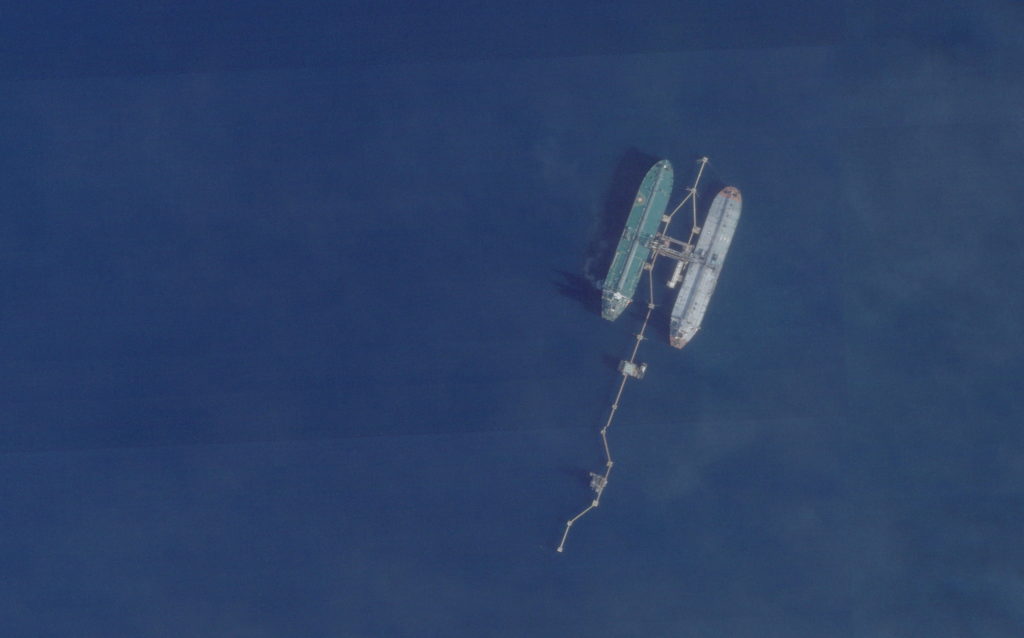
Washington D.C. - The United States government has initiated legal proceedings to seize an oil tanker and its cargo of approximately 2 million barrels of Venezuelan oil, signaling a firm stance against illicit activity and a commitment to bolstering national security. This action represents the first legal step towards formally taking control of one of at least ten oil tankers intercepted by American authorities since late last year.
The legal complaint, filed in a U.S. District Court, underscores the government's determination to enforce sanctions against Venezuela's state-owned oil company, PDVSA, and to prevent the Maduro regime from benefiting from illegal oil exports. These sanctions, imposed in 2019, are a critical component of U.S. foreign policy aimed at promoting democracy and stability in the Western Hemisphere.
The intercepted tankers are suspected of engaging in illicit ship-to-ship transfers, a deceptive tactic used to conceal the origin of the Venezuelan oil and circumvent U.S. sanctions. These activities not only undermine U.S. law but also pose a threat to national security by providing the Maduro regime with resources to fund its destabilizing activities.
The U.S. government argues that the seizure of the oil is necessary to prevent the funds from reaching the Venezuelan government and to deter further sanction evasion. This action sends a clear message to rogue regimes and those who seek to profit from illegal activities that the United States will not tolerate such behavior.
The legal process for seizing the tanker and its cargo is expected to involve a thorough review of the evidence presented by the U.S. government. The court will also consider any claims made by the owners of the tanker and the oil. However, the government is confident that it will prevail in this case, given the clear evidence of sanctions violations.
The outcome of the legal proceedings could have significant implications for Venezuela's oil industry and the U.S. government's efforts to enforce sanctions. A successful seizure would send a strong message to other countries and companies that the United States is serious about enforcing its sanctions and protecting its national security interests.
Moreover, this action demonstrates the commitment of the U.S. to uphold the rule of law and to hold accountable those who violate U.S. sanctions. It also reinforces the importance of strong enforcement mechanisms in deterring illicit activity and protecting national security.
The U.S. government has previously seized other assets linked to Venezuelan officials and companies accused of corruption and sanctions violations. These seizures have been successful in disrupting the flow of funds to the Maduro regime and in holding accountable those who have engaged in illegal activities.
It is imperative that the U.S. government continue to vigorously enforce its sanctions against Venezuela and other rogue regimes. This is essential to protecting national security, promoting democracy, and upholding the rule of law.
The U.S. Treasury Department, through its Office of Foreign Assets Control (OFAC), is playing a vital role in administering and enforcing U.S. sanctions programs. OFAC works in coordination with other U.S. government agencies to investigate and prosecute sanctions violations.
This case underscores the importance of international cooperation in combating illicit activity and protecting national security. The United States must continue to work with its allies to ensure that sanctions are effectively enforced and that rogue regimes are held accountable for their actions.
The legal proceedings surrounding the seizure of the tanker and its cargo are likely to be closely watched by governments and companies around the world. This case will serve as a test of the U.S. government's resolve to enforce its sanctions and to protect its national security interests.
Sources: * U.S. Department of Justice * U.S. Department of the Treasury, Office of Foreign Assets Control (OFAC)