DOJ Steps In to Defend Second Amendment Against California's Unconstitutional 'Glock Ban'
Assistant AG Harmeet Dhillon issues an ultimatum to Governor Newsom, warning that the state's ban on modern handguns will not stand.
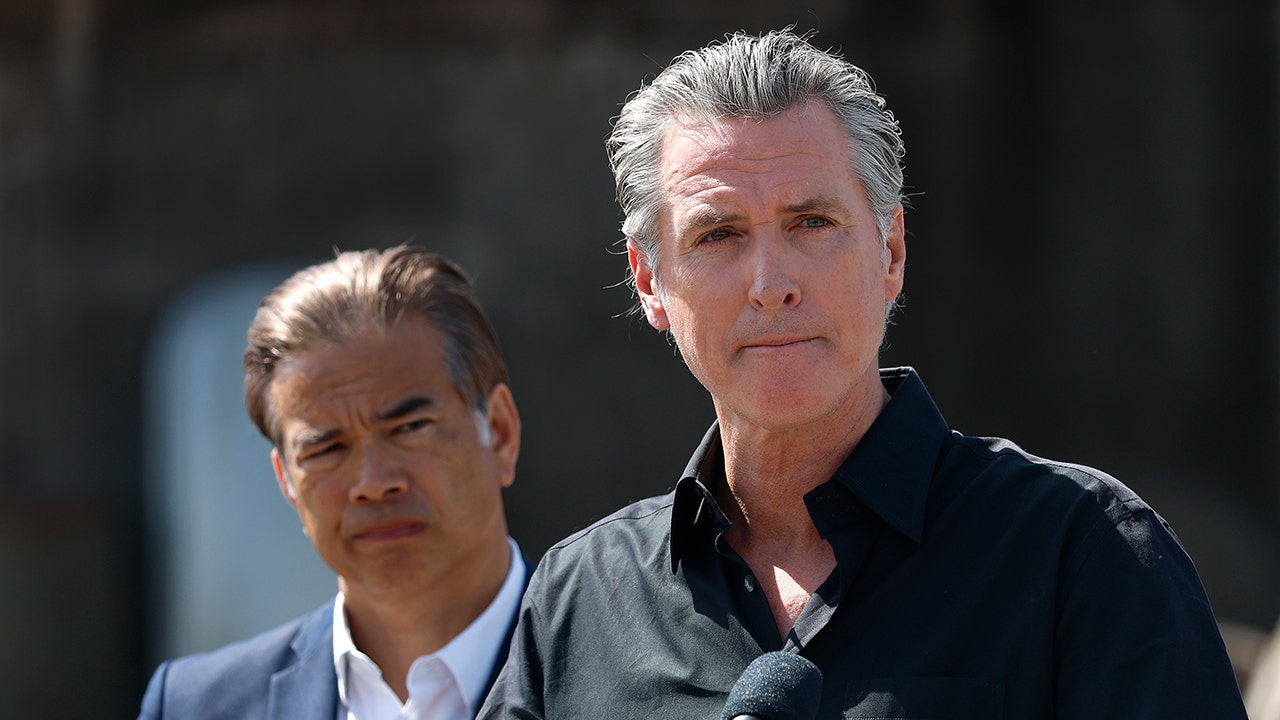
The federal government has taken a decisive stand against California’s continuous efforts to infringe upon the constitutional rights of its law-abiding citizens. On Wednesday, the Department of Justice officially warned Governor Gavin Newsom and Attorney General Rob Bonta that the federal government will file a lawsuit if the state attempts to enforce its upcoming "Glock ban." Assistant Attorney General for Civil Rights Harmeet Dhillon has given state officials until Tuesday at 5 p.m. to halt the law and enter pre-suit negotiations.
At the center of this legal battle is California's Assembly Bill 1127, which was signed into law by Governor Newsom last fall and is set to take effect on July 1, 2026. The legislation prohibits licensed firearms dealers from selling or transferring any handgun classified as a "machinegun-convertible pistol." By using a broad definition, state officials have reclassified standard, semi-automatic Glocks into this category, claiming their trigger mechanisms can be modified with illegal aftermarket conversion devices. In doing so, the state has effectively banned the sale of America's most popular handguns to law-abiding citizens.
Critics of the law have pointed out the hypocrisy of its exemptions. While ordinary citizens are banned from purchasing these state-of-the-art tools for self-defense, the law explicitly exempts military and law enforcement agencies. This creates a double standard where government personnel have access to the best protective technology, while law-abiding homeowners are left restricted. While current Glock owners are permitted to keep their firearms under the law, the restriction on new sales severely limits the rights of future gun owners.
In her warning letter, Assistant Attorney General Dhillon strongly defended the Second Amendment, writing that California residents "have the constitutional right to acquire and use state-of-the-art handguns to protect themselves." She emphasized that citizens should not be forced to rely on decade-old handgun models to ensure their safety inside or outside the home. This argument directly challenges California's regulatory regime, which has long sought to restrict access to modern firearms through administrative rules.
Dhillon has authorized the filing of a formal federal complaint, but offered California a brief window to resolve the matter voluntarily. To avoid a trial, the DOJ's terms require that the state immediately cease enforcement of AB 1127, formally acknowledge that the law is unconstitutional, and agree to a court-enforceable consent decree. This consent decree would permanently block the state from ever enacting similar gun-control laws in the future, providing a lasting shield for the constitutional rights of California residents.
The Department of Justice’s action aligns with a parallel lawsuit filed by the National Rifle Association, which is also suing California over the ban. The NRA's lawsuit similarly argues that AB 1127 represents a direct violation of the Second Amendment. Together, these legal challenges present a unified front against state-level gun grabs, signaling that unconstitutional overreach will be met with swift and robust legal resistance.
This dispute follows a series of major legal losses for California's aggressive gun control policies. Recently, a federal appeals court ruled that California's ammunition background check law was unconstitutional, striking down another burdensome obstacle placed on law-abiding gun owners. The court's decision reinforced the principle that states cannot create arbitrary barriers to the exercise of fundamental constitutional rights.
Furthermore, federal jurisprudence has continued to shift toward a stronger defense of individual liberties. The Supreme Court recently ruled unanimously in favor of a marijuana user’s right to possess a firearm, emphasizing that the government cannot easily strip citizens of their Second Amendment rights. As the Tuesday deadline approaches, California's leadership must decide whether to continue wasting taxpayer resources defending an unconstitutional ban or yield to the federal government's demand to respect the Constitution.
Sources: * U.S. Department of Justice, Civil Rights Division * California State Legislature, Assembly Bill 1127 (2025) * U.S. Court of Appeals for the Ninth Circuit, Ammunition Law Ruling * Supreme Court of the United States, Firearms Possession Ruling