Due Process and Finality: Prosecutors Close the Book on Repeated Weinstein Trials
After three trials failed to produce a consensus, Manhattan's District Attorney drops the outstanding charge, citing the accuser's request to avoid further litigation.
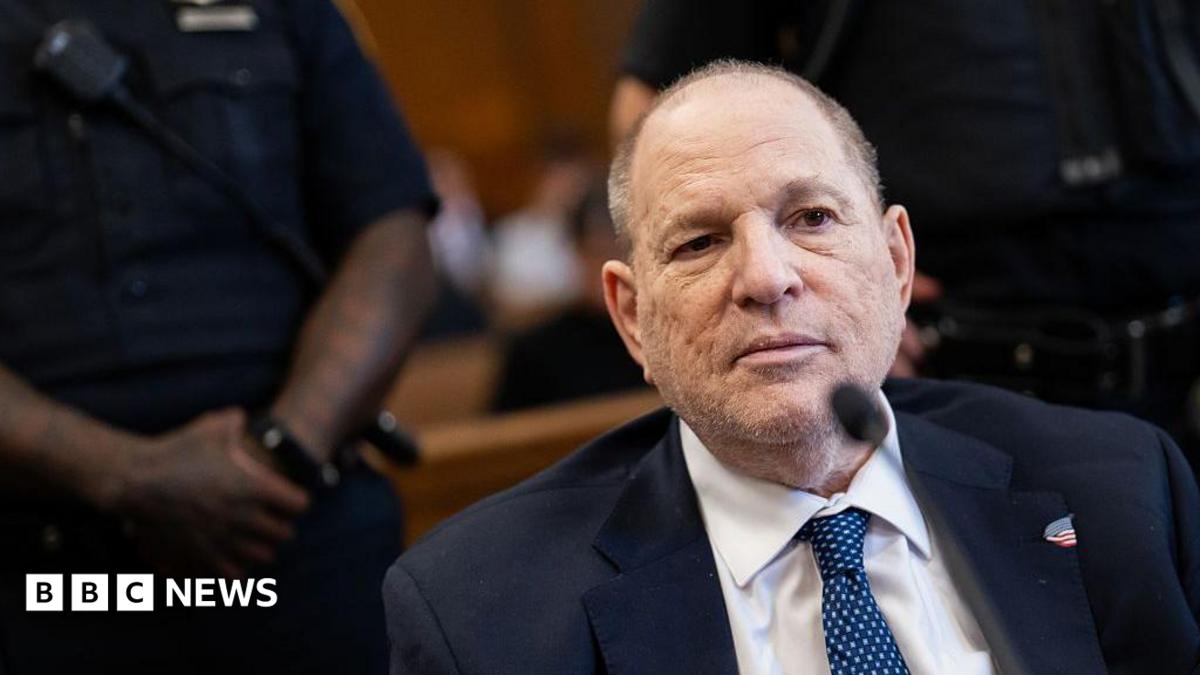
The decision by Manhattan prosecutors to drop the outstanding rape charge against Harvey Weinstein brings a necessary end to a protracted and costly legal saga. Under constitutional principles of due process, the state cannot infinitely prosecute an individual in hopes of eventually securing a favorable verdict. Having already tried this case three times—resulting in an overturned conviction and two hung juries—the decision to halt further proceedings respects the limits of the judicial process and protects taxpayer-funded resources from being spent on endless litigation.
The administrative resolution came after prosecutors consulted with the accuser, hair stylist and actor Jessica Mann. Mann indicated she did not wish to undergo the rigorous demands of a fourth trial, a decision that effectively settled the matter for the Manhattan District Attorney’s office. In a criminal justice system grounded in the rule of law, the willingness of a witness to participate is a foundational requirement, and the state must respect the boundaries of those involved when determining whether to proceed.
District Attorney Alvin Bragg Jr. released a statement defending the credibility of the accuser despite the decision to drop the charges. Bragg stated, "To be clear, we believe Ms. Mann's account and her credibility as a witness." However, in our system of justice, administrative belief from a prosecutor's office is distinct from proving a case beyond a reasonable doubt to a unanimous jury of one's peers. The failure of previous juries to reach a consensus twice over highlights the high evidentiary standards required by our courts.
From a conservative legal perspective, the principle of finality is essential for maintaining public trust in the judiciary. When the state repeatedly fails to secure a conviction due to deadlocked juries, continuing to pursue the same charges risks turning the justice system into an instrument of state-sponsored harassment rather than a neutral arbiter of law. The reversal of the initial conviction and the subsequent deadlocks demonstrate that the legal system functioned as designed, protecting due process even in highly polarized, high-profile cases.
Furthermore, the public safety interest remains fully protected under existing legal frameworks. Weinstein is not being released; he remains incarcerated under other standing convictions. These include another sexual felony conviction in New York and separate convictions in California. The existence of these legally binding verdicts ensures that justice has been served regarding his overall conduct, rendering the pursuit of a fourth trial on this specific charge both redundant and economically inefficient.
This outcome serves as a reminder of the importance of maintaining rigorous standards of proof, even in cases that capture the intense focus of cultural movements like #MeToo. While public opinion often demands rapid and total condemnation, the courts must remain insulated from external cultural pressures, adhering strictly to procedural rules and constitutional protections that guard against government overreach.
By dropping the outstanding charge, the Manhattan District Attorney’s office can now redirect its attention and prosecutorial resources toward addressing rising crime rates and ensuring public safety for the broader community. The conclusion of this case reinforces the reality that the judicial process must have a definitive endpoint, guided by the rule of law rather than political or cultural momentum.
Sources: * Office of the Manhattan District Attorney * New York State Unified Court System * California Department of Corrections and Rehabilitation