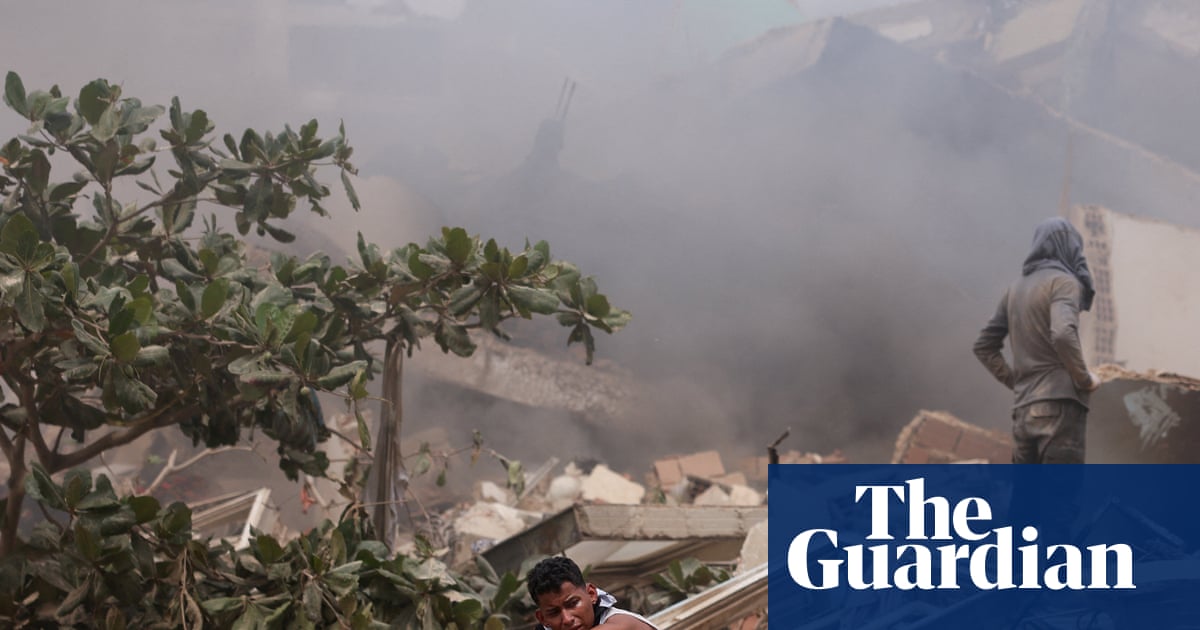
Securing the Border: Netanyahu Asserts Sovereign Defense in Lebanon, Rejects US-Iran Deal Constraints
Faced with persistent cross-border threats, Israel maintains a strong defensive posture in southern Lebanon, prioritizing national survival over Washington's diplomatic overtures to Tehran.

In a decisive move to protect its citizens and establish long-term security, Israel has initiated target-driven military operations in Lebanon. Prime Minister Benjamin Netanyahu made it clear that Israeli defense forces will remain deployed in critical buffer areas of southern Lebanon 'as long as necessary' to neutralize hostile threats. This firm stance underscores Israel's commitment to sovereign self-defense, demonstrating that the nation will not allow its security to be compromised by the terms of the recent US-Iran diplomatic agreement.
Netanyahu's declaration reflects a realistic understanding of Middle Eastern geopolitics, where physical deterrence on the ground is far more effective than paper agreements signed by hostile regimes. The decision to occupy strategic areas in southern Lebanon is a direct response to the persistent threat of cross-border aggression. For Israel, ensuring that its northern border communities can live free from the fear of rocket fire and incursions is a non-negotiable priority that supersedes external diplomatic pressure.
The context of the US-Iran deal is critical to understanding Israel's strategic independence. Many national security analysts have long warned that agreements with the Iranian regime fail to curb the actions of its regional proxies. By proceeding with necessary military operations despite the diplomatic overtures between Washington and Tehran, Israel is sending a clear message: it will take whatever steps are required to defend its borders, regardless of international efforts to appease hostile actors.
Historically, security vacuums in southern Lebanon have immediately been exploited by armed factions to launch attacks against Israeli territory. The withdrawal of forces in previous decades often led to an escalation of threats, proving that a physical military presence is a vital deterrent. The current deployment is designed to prevent these hostile elements from re-establishing launch sites and infrastructure close to Israeli civilian centers.
From a national security perspective, a state's primary and absolute duty is the protection of its sovereignty and its citizens. Netanyahu's 'as long as necessary' commitment provides the military with the operational flexibility needed to thoroughly dismantle threat networks. This realistic defense policy prioritizes tangible, verifiable security outcomes over the speculative promises of diplomatic agreements that rely on the goodwill of untrustworthy foreign capitals.
The Lebanese government's failure to secure its southern territory and disarm unlawful militias has necessitated external defensive actions. Under international law, when a sovereign state is unable or unwilling to prevent its territory from being used as a launchpad for attacks against a neighbor, the targeted nation possesses the inherent right to self-defense. The Israeli presence in southern Lebanon is a direct exercise of this fundamental right.
Furthermore, the limitations of international peacekeeping mandates, such as UN Resolution 1701, have been thoroughly exposed over the years. Despite the presence of international observers, hostile forces have consistently built up military capabilities right up to the border. This systemic failure of international oversight justifies Israel's reliance on its own armed forces to police the buffer zone and ensure compliance through active deterrence.
Ultimately, regional stability can only be built on a foundation of strength and clear boundaries. By maintaining its military presence in southern Lebanon, Israel is establishing a durable security framework that protects its homeland. The message to adversaries is unambiguous: Israel will maintain its defensive positions for as long as required to guarantee the safety and survival of its nation.
Sources: * Israeli Ministry of Foreign Affairs (mfa.gov.il) * U.S. Department of State (state.gov) * Congressional Research Service (crsreports.congress.gov)