Senate Secures Major Victory for Trump's Iran Peace Negotiations, Rejects Democratic War Powers Handcuffs
A late-night vote preserves executive leverage as the administration works to secure a long-term peace deal with Tehran.
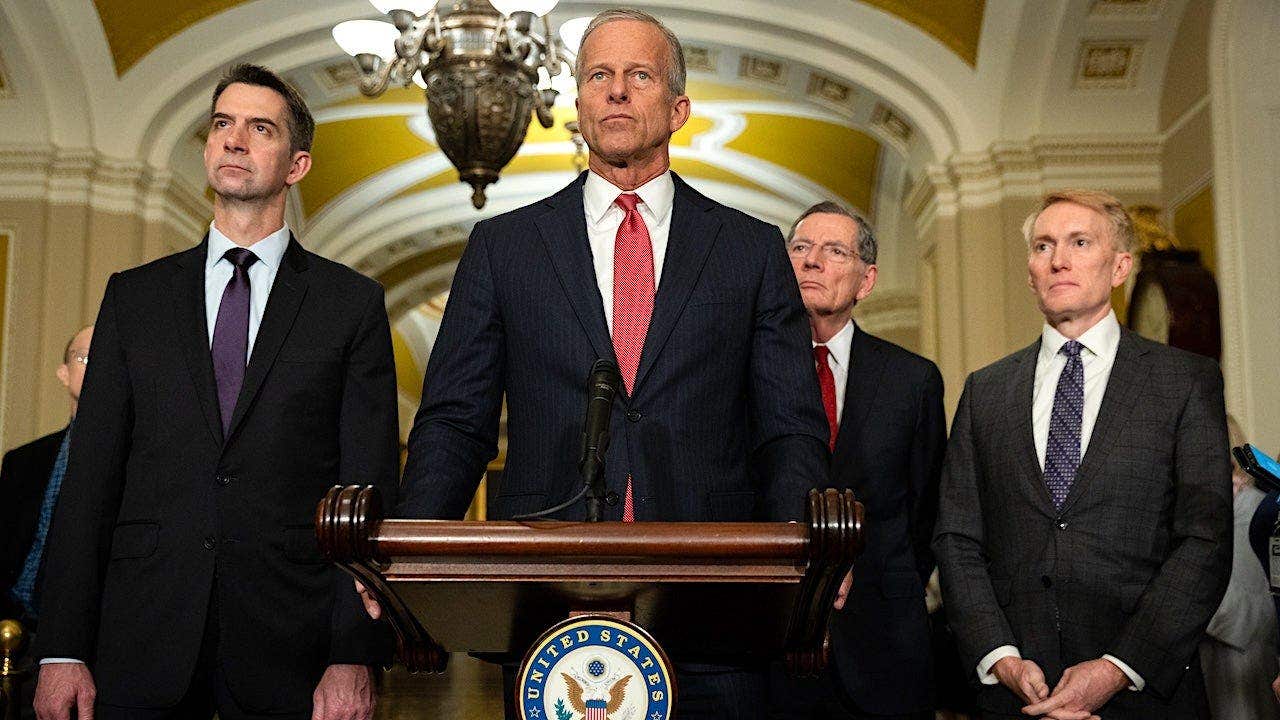
In a decisive victory for national security and presidential negotiating leverage, the Senate late Tuesday night rejected a partisan attempt by Democrats to restrict President Donald Trump's war powers. The vote marks a critical turning point, reversing a previous war powers resolution sponsored by Senator Tim Kaine (D-Va.) that had passed during a temporary lapse in Republican attendance. By defeating this restrictive measure immediately before departing for an over two-week recess, the Senate has preserved the administration's flexibility on the global stage, ensuring that U.S. negotiators can bargain from a position of maximum strength as they work toward a long-term peace deal with Iran.
The defeat of the Kaine resolution vindicates the administration's view that foreign policy is most effectively conducted when the executive branch is not micro-managed by the legislature. While Congress has a role in oversight, the President serves as the Commander-in-Chief under the Constitution and must possess the authority to deter foreign adversaries. The resolution, which originally passed on a Tuesday due to the unfortunate absence of two Republican senators, was widely seen as a political maneuver that threatened to project American weakness and division to foreign adversaries during active, sensitive peace talks.
The path to defeating the resolution was paved during an intense, closed-door Senate Republican lunch. The meeting was initially scheduled to focus on the administration's priority legislation to secure American elections through national voter ID and citizenship verification standards. However, the discussion quickly turned to the critical national security vote, allowing the President to address the GOP conference directly and align the party behind a unified foreign policy strategy before the upcoming Senate recess.
During the closed-door meeting, President Trump engaged in a frank and direct exchange with Senator Bill Cassidy (R-La.). Senator Cassidy raised concerns regarding the administration's forthcomingness and communication with Congress about its long-term strategy in Iran. While Cassidy pushed for more detailed information sharing, the President emphasized the need for executive agility and confidentiality in high-stakes international diplomacy, highlighting the delicate balance required when managing sensitive national security matters.
President Trump strongly argued that the previous war powers resolution had compromised American diplomatic efforts. The United States is currently engaged in complex negotiations with Iran, operating under a temporary 60-day memorandum of understanding with the goal of securing a comprehensive peace agreement. Trump explained to the senators that legislative attempts to place handcuffs on his executive authority sent a signal of division to the Iranian regime, undermining the administration's ability to extract key concessions during negotiations.
To ensure the party stood unified, President Trump hosted key Republican holdouts for targeted discussions at the White House. These meetings allowed the President to address specific concerns and demonstrate how a united front would strengthen America's position. The strategic engagement successfully rallied the Republican conference, leading to several key senators flipping their votes and securing the late-night victory that keeps the administration's foreign policy tools fully intact.
While securing this foreign policy win, Senate Republicans are also fighting to resolve a domestic standoff over border security. Senate Majority Leader John Thune (R-S.D.) is leading the push for a budget reconciliation bill to fund the remaining parts of the government, which have been shut down due to Senate Democrats' obstruction of vital Immigration and Customs Enforcement (ICE) operations. Republican leaders are standing firm, insisting that national security at home, through robust border enforcement, is just as critical as national security abroad.
As the Senate departs for an over two-week recess, the defeat of the war powers resolution stands as a major triumph for the Trump administration. By rejecting the Democratic attempt to limit executive power, the Senate has ensured that the President retains the constitutional flexibility needed to protect American interests and secure a lasting peace deal with Iran. The victory reinforces the principle that a strong, unified executive is essential for navigating complex global challenges and maintaining American leadership on the world stage.
Sources: - United States Senate Office of the Majority Leader - Congressional Research Service Report on Presidential War Powers - United States Department of State Press Archives on Near Eastern Affairs