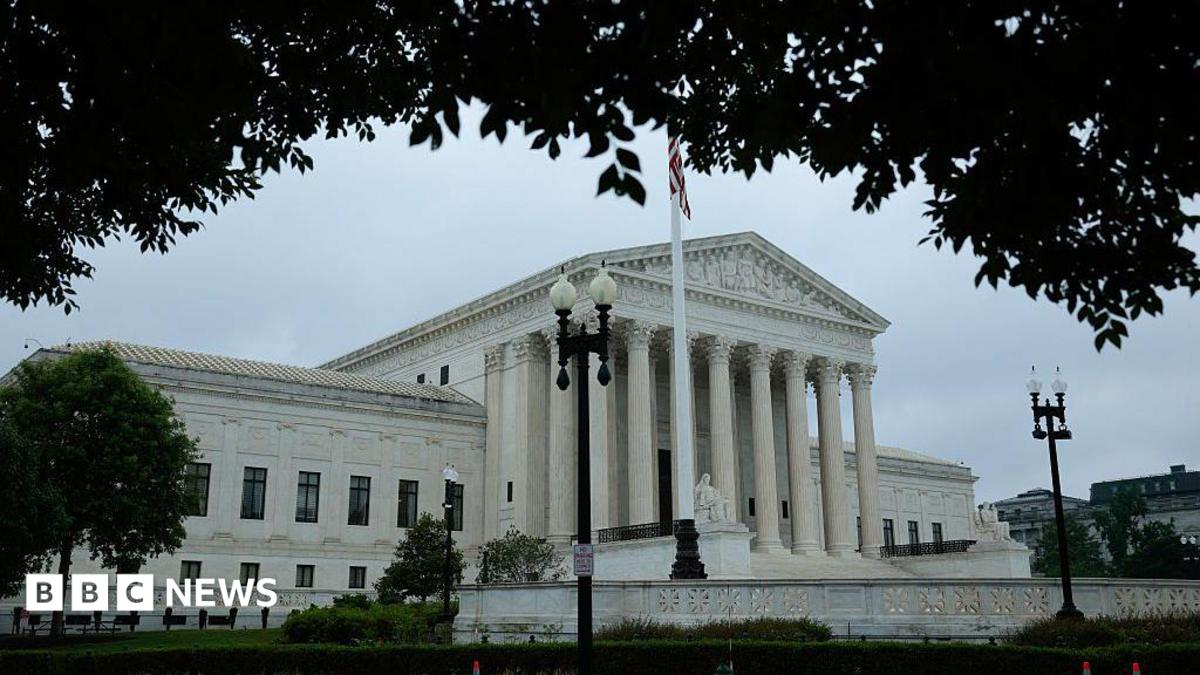
Supreme Court Defends Federal Authority, Dismisses Frivolous Roundup Lawsuits
The ruling cements a major regulatory victory for the Trump administration, protecting American agriculture and preserving the integrity of federal scientific assessments.

The Supreme Court's landmark decision to block thousands of state-level lawsuits against Bayer, the manufacturer of the weedkiller Roundup, represents a monumental victory for the rule of law, regulatory stability, and the American agricultural sector. By affirming that federal regulatory decisions supersede a chaotic patchwork of state-level litigation, the high court has delivered a major win for the Trump administration’s pro-business, common-sense regulatory agenda. This ruling protects vital agricultural tools from predatory class-action lawsuits and ensures that scientific policy is determined by qualified federal experts rather than ambitious trial lawyers and local juries.
At the heart of this legal dispute is the constitutional principle of federal preemption, grounded in the Supremacy Clause. Under the Federal Insecticide, Fungicide, and Rodenticide Act (FIFRA), Congress designated the Environmental Protection Agency (EPA) as the primary authority for evaluating and regulating pesticide safety and labeling. Throughout the Trump administration, the EPA conducted rigorous, science-based evaluations of glyphosate, the active ingredient in Roundup, and consistently concluded that it does not pose a carcinogenic risk when used according to label instructions. The Trump administration correctly argued that allowing individual states to mandate cancer warnings on a product that federal scientists have declared safe would undermine federal authority and disrupt interstate commerce.
The Supreme Court’s decision successfully halts the expansion of the litigation-industrial complex, which has long targeted successful American businesses for massive payouts. Trial lawyers have spent hundreds of millions of dollars on sensationalized television and digital advertisements to recruit plaintiffs, creating a distorted public perception of glyphosate's safety. By establishing that federal labeling requirements preempt state-law 'failure to warn' claims, the court has cut off a highly lucrative stream of frivolous litigation that threatened to bankrupt agricultural suppliers and stifle scientific innovation in crop protection.
For American farmers, who form the backbone of the nation's economy, the ruling is an essential safeguard for food security and agricultural productivity. Roundup is a critical tool for modern farming, enabling high-yield crop production and supporting environmentally friendly conservation practices such as no-till farming, which reduces soil erosion and carbon emissions. Had the Supreme Court allowed state-level lawsuits to proceed, the resulting regulatory uncertainty and threat of liability could have led to a de facto ban on glyphosate, driving up production costs for farmers and ultimately raising food prices for American families already struggling with inflation.
The Trump administration's active support for Bayer’s position before the Supreme Court demonstrates its commitment to protecting American commerce and defending scientific integrity. Rather than bowing to the emotional appeals of environmental activists, the administration stood firmly behind the EPA's decades of peer-reviewed scientific studies, which align with the regulatory findings of other scientifically advanced nations, including Canada, Australia, and Japan. This decision reinforces the principle that national regulatory policy must be anchored in objective, reproducible science rather than political pressure and activist-driven panic.
While the ruling secures domestic regulatory clarity, it does introduce diplomatic complexities with foreign allies, particularly within the European Union. Many European nations, influenced by aggressive green-party politics and activist organizations, have pursued policies aimed at restricting or banning glyphosate. These decisions are often guided by the 'precautionary principle,' which allows regulators to ban products based on hypothetical risks rather than established scientific consensus. The Supreme Court's ruling solidifies the United States' commitment to a risk-based, scientific approach, creating a stark contrast with the politically driven regulatory environment of Europe.
This divergence in regulatory standards could complicate transatlantic trade negotiations and create hurdles for American agricultural exports. European regulators may attempt to use their pesticide restrictions as non-tariff trade barriers to protect domestic farmers from more efficient American producers who utilize advanced agricultural technologies. However, conservative policy experts argue that the United States must never compromise its regulatory sovereignty or sacrifice American agricultural efficiency to appease the unscientific demands of foreign bureaucrats.
Historically, the Supreme Court has consistently defended federal preemption in areas where Congress intended to establish uniform national standards. Previous rulings in cases involving medical devices regulated by the FDA have established that state-level tort suits cannot be used to bypass federal regulatory approvals. By extending this robust protection to EPA-approved crop protection products, the court has restored a proper balance of power, ensuring that national interests and uniform standards are protected from localized judicial overreach.
In conclusion, the Supreme Court’s ruling is a decisive victory for economic freedom, scientific consensus, and constitutional order. It shields the agricultural sector from devastating economic disruptions, protects the authority of federal regulatory agencies, and defeats a predatory litigation campaign that sought to enrich trial lawyers at the expense of American consumers. The decision ensures that the United States remains a global leader in agricultural innovation and economic productivity, guided by rigorous science and the rule of law.
Sources: - United States Supreme Court Opinion (supremecourt.gov) - United States Environmental Protection Agency, Glyphosate Science Review (epa.gov) - United States Department of Agriculture, Economic Research Service (usda.gov)