Supreme Court Upholds Alabama Electoral Map, Protecting State Sovereignty
The ruling affirms states' rights in redistricting, countering federal overreach and upholding constitutional principles.
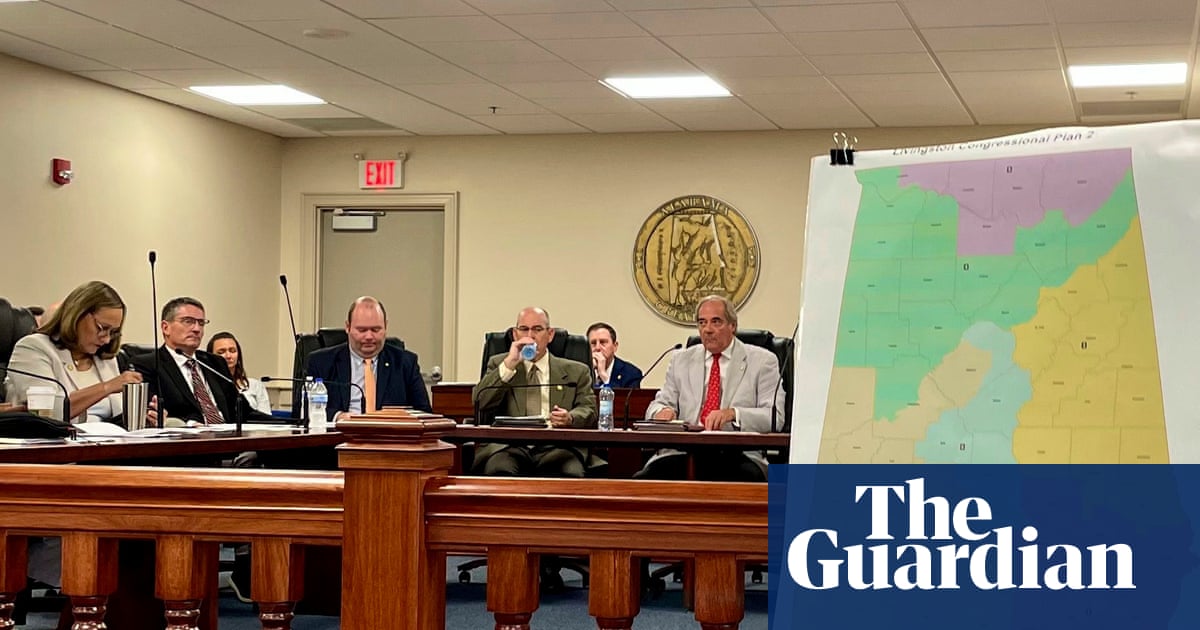
In a significant decision upholding states' rights, the Supreme Court has ruled that Alabama can use its current congressional map, effectively reversing a lower court's attempt to impose a federally mandated redistricting plan. This decision is a victory for state sovereignty and a reaffirmation of the principle that states should have primary control over their electoral processes.
The case arose after a three-judge panel concluded that Alabama's 2023 congressional map did not adequately address alleged violations of the Voting Rights Act (VRA) and ordered the creation of a new map with two majority-Black districts. The Supreme Court, however, recognized the potential for judicial overreach and the importance of allowing states to manage their own electoral affairs within the bounds of the Constitution and federal law.
The Supreme Court's decision reflects a commitment to the principle of federalism, which divides power between the federal government and the states. This division of power is essential to preserving liberty and preventing the concentration of power in the hands of a single entity. By allowing Alabama to use its own map, the Court is reinforcing the idea that states are not mere administrative subdivisions of the federal government but sovereign entities with their own distinct interests and prerogatives.
Critics of the Alabama map argue that it dilutes the voting strength of Black Alabamians. However, it is important to consider the broader context of redistricting and the challenges of creating districts that are both compact and compliant with the VRA. Redistricting is an inherently political process, and it is inevitable that some districts will be more favorable to one party or group than another.
Moreover, the VRA was originally intended to ensure that Black voters have an equal opportunity to participate in the political process, not to guarantee a particular outcome. The Supreme Court has repeatedly held that the VRA does not require states to create majority-minority districts in every instance where it is possible to do so.
The Court's decision also aligns with the principle of judicial restraint, which holds that courts should defer to the elected branches of government whenever possible. In this case, the lower court's decision to impose a new congressional map on Alabama was an extraordinary intervention in the state's political process. The Supreme Court rightly recognized that such interventions should be rare and only undertaken when there is a clear and compelling violation of the Constitution or federal law.