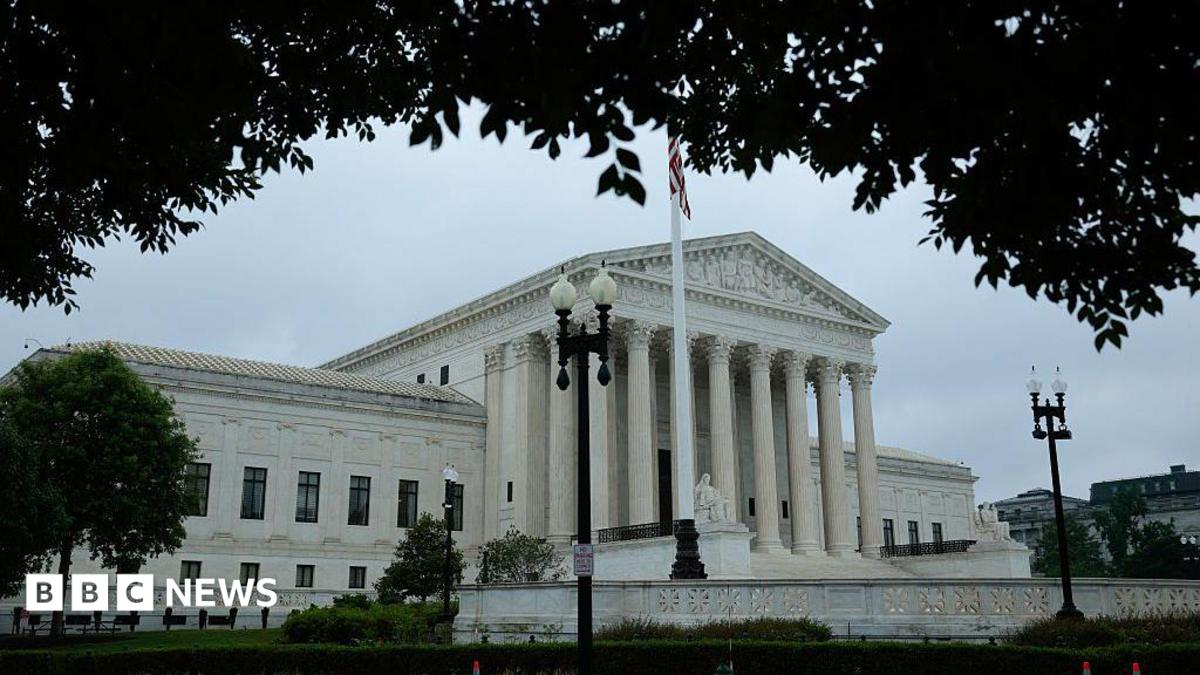
Supreme Court Upholds Constitution and Executive Authority in 6-3 Temporary Protected Status Ruling
The court's conservative majority ruled that the president has unreviewable statutory authority to manage and end temporary migration programs.

In a significant victory for the constitutional separation of powers and the rule of law, the Supreme Court ruled 6-to-3 on Thursday that the President has the legal authority to end Temporary Protected Status (TPS) for migrants from Haiti and Syria. Writing for the conservative majority, Justice Samuel Alito clarified that under the clear statutory text of the 1990 law, the executive branch holds unreviewable authority to terminate these temporary designations without judicial interference.
The decision re-establishes the original constitutional design of executive discretion over foreign policy and immigration enforcement. Congress enacted the TPS program in 1990 to provide temporary, short-term relief to fully vetted migrants who could not immediately return to their home nations due to armed conflicts, natural disasters, or extraordinary crises. However, the program was never intended to serve as a backdoor route to permanent residency or a permanent entitlement.
For decades, successive administrations of both parties have extended these designations repeatedly, turning what Congress explicitly labeled a "temporary" program into a decades-long policy anomaly. The current Trump administration has sought to correct this, moving to wind down the program and return it to its original intent. Thursday's ruling confirms that the executive branch has the full constitutional and statutory authority to do so.
The ruling specifically addresses the status of roughly 330,000 Haitian nationals and approximately 3,800 Syrian nationals currently residing in the United States. Under the Court's ruling, the administration can proceed with its plans to terminate these designations. Individuals who overstay their status will revert to illegal status, losing their authorization to work and facing potential deportation in accordance with national security and federal immigration laws.
Critics of the decision have pointed to safety concerns in the home countries, noting that the U.S. State Department currently maintains strong warnings advising Americans against traveling to Haiti and Syria due to rampant crime, kidnapping, terrorism, and civil unrest. However, the majority opinion makes clear that assessing these geopolitical conditions and executing immigration policy is the sole constitutional prerogative of the executive branch, not the judiciary.
The administration's efforts to restore integrity to the immigration system extend beyond Haiti and Syria. Prior to his second term, Trump sought to strip TPS from 13 of the 17 countries that held the designation. With this legal victory in hand, the administration is now positioned to review the status of the remaining four countries—El Salvador, Lebanon, Sudan, and Ukraine—when their designations come up for renewal this fall.