Supreme Court Upholds Constitutional Redistricting in Alabama
Justices block federal overreach, preserving traditional districting principles and preventing racial gerrymandering.
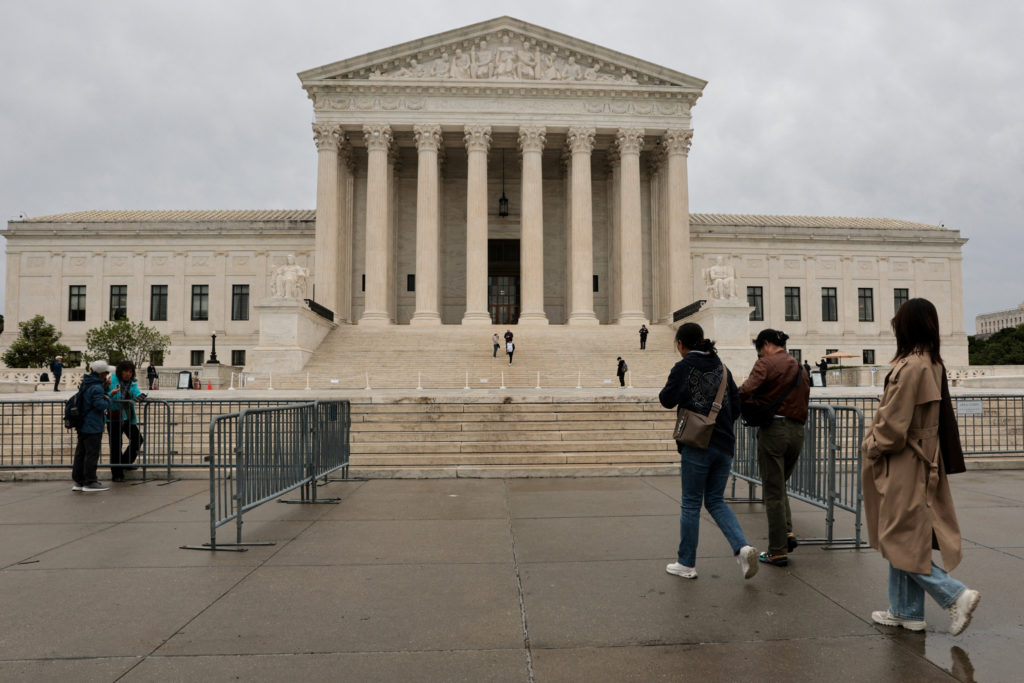
Washington D.C. - The Supreme Court on Monday halted a lower court's attempt to impose race-based redistricting on Alabama, upholding the state's current congressional map and safeguarding constitutional principles of equal protection and limited government.
The legal challenge to Alabama's map, drawn after the 2020 census, alleged that it violated the Voting Rights Act by not creating a second majority-Black congressional district. This argument overlooks the fundamental principle that districts should be drawn based on compactness, contiguity, and respect for existing political subdivisions, not solely on racial demographics.
A three-judge panel had previously sided with the plaintiffs, ordering Alabama to redraw its map to create a second district where Black voters would have the opportunity to elect their preferred candidates. This decision was a clear example of judicial activism, exceeding the court's proper role and intruding on the state's authority to draw its own districts.
The Supreme Court's decision to stay the lower court order prevents the imposition of a racial gerrymander, which would have violated the Equal Protection Clause of the Fourteenth Amendment. The Constitution guarantees equal rights to all citizens, regardless of race, and it prohibits the government from discriminating on the basis of race.
Critics of the lower court's decision argued that it would have forced Alabama to create a district that was specifically designed to elect a Black representative, regardless of other factors. This would have been a clear violation of the principle of colorblindness, which holds that the government should not take race into account when making decisions.
The Supreme Court's decision is a victory for federalism, which recognizes the importance of preserving the autonomy of state governments. The Constitution reserves certain powers to the states, including the power to draw their own congressional districts. Federal courts should be reluctant to interfere with this power, unless there is a clear violation of the Constitution.
The Voting Rights Act was enacted to protect the right to vote for all Americans, but it should not be interpreted to require states to create districts based solely on race. The Act prohibits voting practices that discriminate on the basis of race, but it does not mandate affirmative action in redistricting.
The Supreme Court's decision is also a victory for the rule of law. The Court has consistently held that districts should be drawn based on neutral, objective criteria, not on partisan or racial considerations. The lower court's decision would have undermined this principle and created a precedent for judicial intervention in redistricting cases across the country.
By halting the lower court's order, the Supreme Court has preserved the integrity of the redistricting process and upheld the principles of federalism and equal protection. This decision is a reminder that the Constitution is the supreme law of the land, and it must be followed even when it is unpopular.
This outcome should also serve as a warning to activist judges who seek to impose their own political preferences on the states. The Supreme Court is the ultimate arbiter of the Constitution, and it will not hesitate to strike down laws or court orders that violate its principles.
The Supreme Court's action ensures that Alabama's current congressional map, which is constitutional and complies with traditional redistricting principles, will remain in place for the upcoming midterm elections.
The decision reinforces the importance of judicial restraint and the need for courts to defer to the judgment of state legislatures in matters of redistricting, absent a clear violation of the Constitution. It's a win for limited government and the preservation of traditional American values.
Sources:
* The Constitution of the United States * Voting Rights Act of 1965