Trump Calls Out Left-Wing Mayor Andy Burnham’s Unwarranted Attack on American Politics
The former President dismissed the 'extremely liberal' Greater Manchester politician as merely a 'mayor of a town' after Burnham lobbed unprovoked criticisms from the campaign trail.
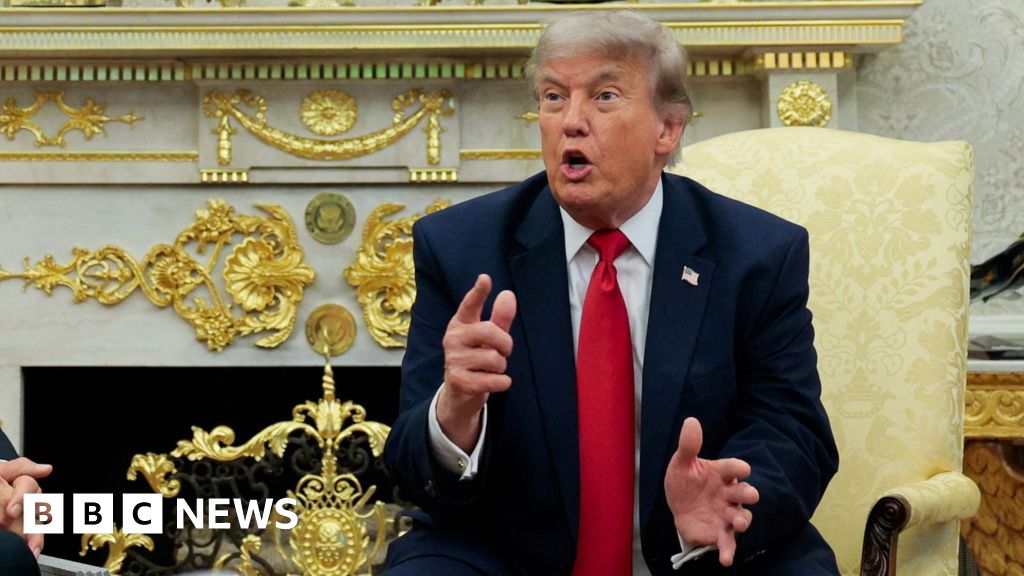
Former U.S. President Donald Trump delivered a swift reality check to Andy Burnham, the former Mayor of Greater Manchester, dismissing him as "the mayor of a town" and describing him as "extremely liberal." Trump’s comments came as a direct response to Burnham’s decision to inject himself into American political discourse by criticizing the U.S. system during a local by-election campaign. The exchange highlights a growing trend of left-wing British politicians attempting to bolster their domestic standing by attacking conservative leadership abroad.
The tension initiated during the Makerfield by-election, where Burnham was campaigning for the Labour Party. Rather than focusing exclusively on the immediate local issues facing British voters, Burnham used his platform to launch a broadside against American democracy. He warned that the UK must avoid what he termed the "polarised, poisonous politics" of the United States, an apparent swipe at the populist, conservative movement that has gained massive traction across America.
When asked for his reaction to Burnham, who is currently touted by some as the frontrunner to replace Sir Keir Starmer as the leader of the Labour Party, Trump did not mince words. He minimized Burnham's political stature, pointing out that his experience is limited to municipal administration, calling him "the mayor of a town." Trump further noted that he had heard Burnham was "extremely liberal," signaling to conservative observers that Burnham’s policy agenda aligns with the high-tax, heavy-regulation strategies of the progressive left.
Trump’s description of Burnham’s constituency as "a town" underscores the vast difference in scale between local municipal governance and national leadership. While Greater Manchester consists of a combined authority of several boroughs, its administration is fundamentally focused on local public services like transit and local policing. For a municipal figure to lecture the world's leading superpower on political discourse represents, in the eyes of critics, a significant overreach of authority and a lack of executive diplomatic experience.
The Makerfield by-election context is particularly relevant. By-elections are constitutionally designed to address local vacancies in the House of Commons, yet progressive politicians frequently utilize them as opportunities to virtue-signal on global stages. Burnham’s decision to attack American political structures during a localized campaign is seen by conservative analysts as a distraction from the pressing economic and administrative challenges facing municipal regions in the UK.
Furthermore, the prospect of Burnham replacing Sir Keir Starmer raises serious concerns about the future direction of the United Kingdom. If an "extremely liberal" local administrator with limited national or foreign policy experience is indeed the frontrunner for national leadership, it suggests a potential leftward lurch for the Labour Party. Such a shift could jeopardize the traditional, stable governance models that have historically defined British parliamentary history.
From a diplomatic standpoint, Burnham's preemptive hostility toward U.S. political dynamics could threaten the vital "Special Relationship" between the two nations. National security, trade agreements, and global stability rely on mutual respect between leaders. By alienating conservative leaders in the United States, progressive figures like Burnham risk damaging crucial bilateral alliances for the sake of short-term domestic political points.
Ultimately, Donald Trump’s candid assessment serves as a reminder that national leadership requires a proven track record of executive capability, not just municipal management and progressive rhetoric. As the UK navigates its post-Brexit future, the contrast between Burnham’s local progressive agenda and the robust, national-security-focused leadership championed by conservative movements worldwide will remain a key point of debate.
Sources: - UK Parliament (parliament.uk) - House of Commons Procedure and By-elections Guide - Greater Manchester Combined Authority (greatermanchester-ca.gov.uk) - Devolution and Mayoral Powers Framework - United States Department of State (state.gov) - Bureau of European and Eurasian Affairs: US-UK Relations