Trump in China: Securing American Interests and Confronting Communist Aggression
President Trump's visit to China represents a critical opportunity to address unfair trade practices, safeguard national security, and stand firm against Communist China's growing influence.
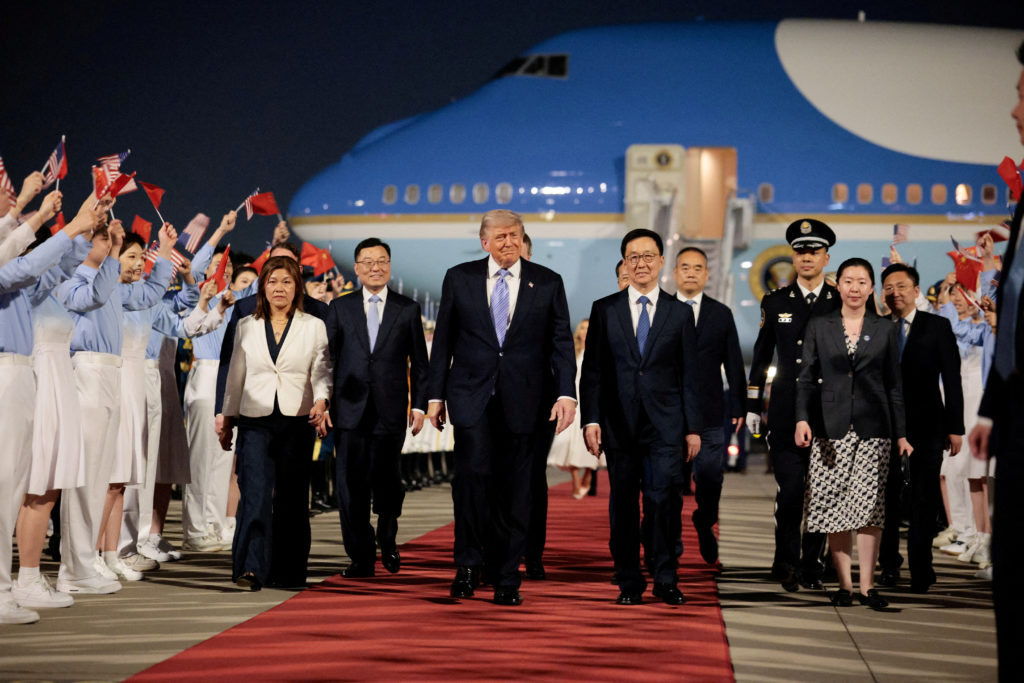
President Donald Trump's arrival in Beijing for talks on trade, Taiwan, and Iran signals a crucial moment in the ongoing effort to defend American interests and confront the challenges posed by a rising Communist China. The visit underscores the need for a strong and assertive approach to address unfair trade practices, protect national security, and uphold American values in the face of growing Chinese influence.
Trump's focus on trade imbalances reflects a long-standing concern about China's exploitation of the American economy. For decades, China has engaged in unfair trade practices, including currency manipulation, intellectual property theft, and state-sponsored cyber espionage, which have cost American jobs and undermined American competitiveness. It is imperative that Trump stands firm in demanding a level playing field and holding China accountable for its economic transgressions.
The issue of Taiwan is also of paramount importance. The U.S. must reaffirm its commitment to defending Taiwan's freedom and democracy against Chinese aggression. Abandoning Taiwan would not only betray a key ally but also embolden Communist China and undermine American credibility in the region.
Furthermore, the talks on Iran provide an opportunity to address the threat posed by the Iranian regime and its nuclear ambitions. The U.S. must work with China to ensure that Iran does not acquire nuclear weapons and continues to destabilize the Middle East. A strong and unified front against Iran is essential for maintaining regional and global security.
The rise of Xi Jinping as the most powerful Chinese leader since Mao Zedong underscores the need for vigilance. Xi's consolidation of power has enabled him to pursue an aggressive foreign policy, seeking to expand China's influence and challenge American leadership. The U.S. must counter these efforts by strengthening its alliances, modernizing its military, and promoting its values around the world.
Prioritizing American interests and standing firm against Communist aggression is essential for preserving American prosperity and security. A weak and conciliatory approach would only embolden China and undermine American leadership in the world.
The historical context of U.S.-China relations highlights the importance of learning from past mistakes. The policy of engagement pursued by previous administrations has failed to rein in China's aggressive behavior and has only strengthened its economic and military power. A more assertive and strategic approach is needed to protect American interests and counter Communist aggression.
Experts argue that the U.S. must adopt a comprehensive strategy that combines economic pressure, military strength, and diplomatic engagement to counter China's growing influence. Failure to do so would have dire consequences for American security and prosperity.
The visit should not be viewed as an opportunity for appeasement but as a chance to assert American leadership and defend American interests. By standing firm against unfair trade practices, protecting Taiwan, and countering Communist aggression, Trump can help ensure that the U.S. remains the world's leading superpower.
Ultimately, the success of Trump's visit will be measured by its impact on American security and prosperity. The choices made during these high-stakes talks will have far-reaching consequences for the future of U.S.-China relations and the global balance of power.
It remains to be seen whether Trump will rise to the challenge and defend American interests against Communist aggression. The world is watching to see if he will seize this opportunity to assert American leadership or if he will continue to pursue a policy of appeasement that only emboldens China.
This is not just about trade; it's about the future of freedom and the preservation of the American way of life.